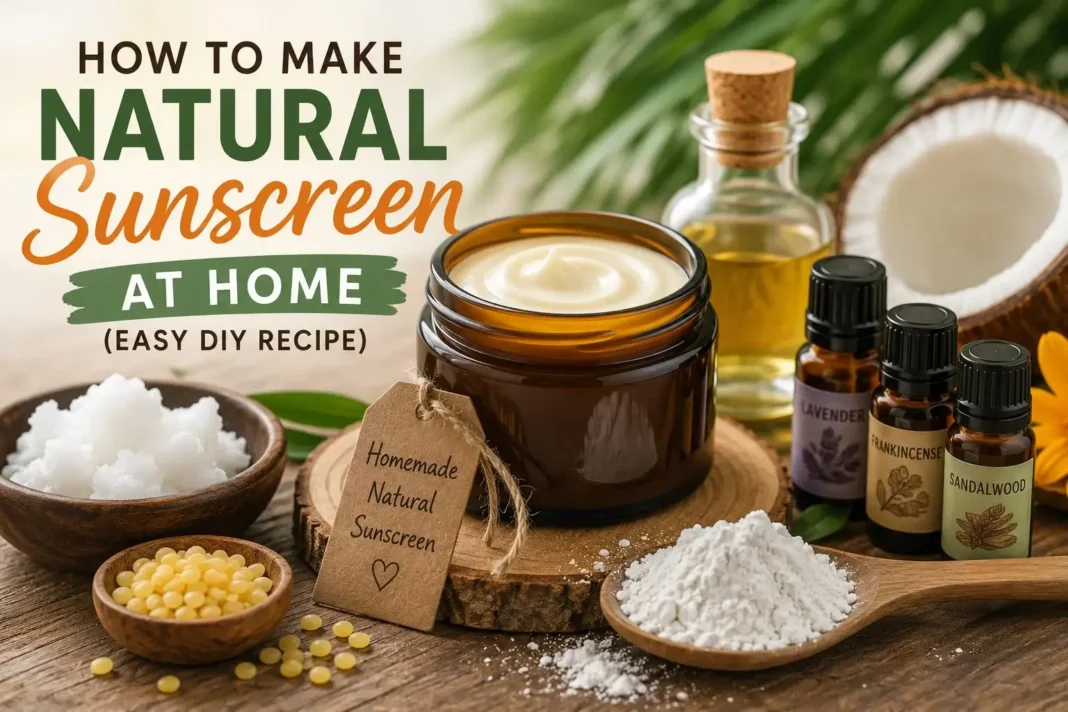
If you’ve ever wondered how to make natural sunscreen at home, you’re not alone. Summer is here, and so is that yearly question, what am I actually putting on my skin? I used to grab whatever sunscreen was on sale at the store. Then one day I flipped the bottle over and couldn’t pronounce half the ingredients. That’s the moment I started learning how to make sunscreen at home myself.
Turns out, it’s a lot simpler than I expected. You don’t need fancy tools or a chemistry degree. Just a handful of natural ingredients, a pot of hot water, and about 15 minutes of your time.
In this post, I’ll walk you through an easy homemade sunscreen recipe, the best ingredients to use, how to adjust it for your skin, and the honest safety facts you should know before trying a DIY sunscreen without chemicals.
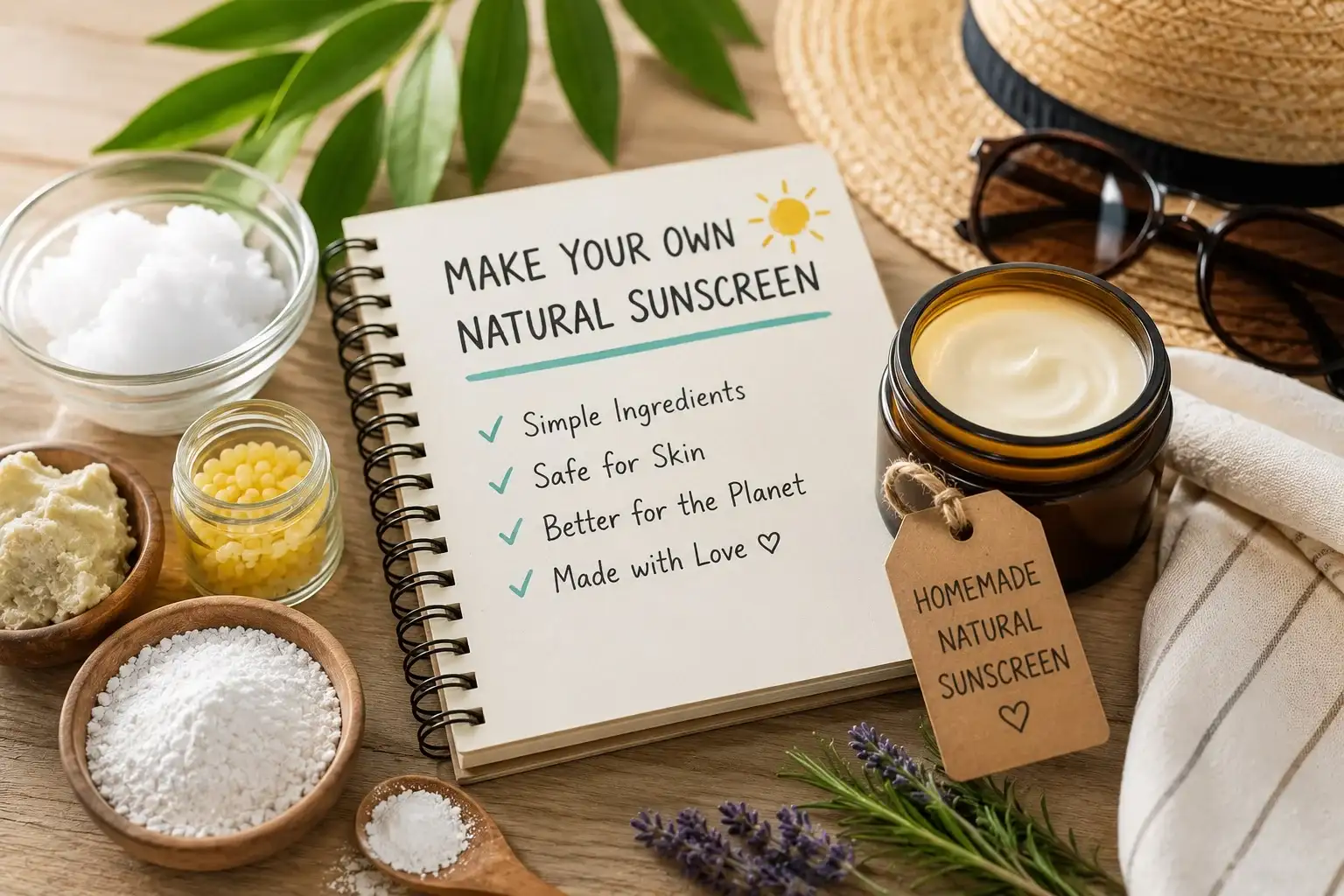
Why Make Your Own Natural Sunscreen?
Store-bought sunscreens often contain chemicals like oxybenzone and avobenzone. These ingredients soak into your skin, and studies have found they can even show up in your bloodstream after just one use. Not exactly comforting.
There’s also the ocean to think about. Chemical sunscreens have been linked to coral reef damage, which is why so many people now search for a reef safe sunscreen recipe instead. Millions of people swim in the ocean every summer, and a lot of that sunscreen washes right off into the water.
Making your own toxin free sunscreen recipe means you control exactly what goes into it. No mystery chemicals, no guessing games, just simple, skin-friendly ingredients you can actually recognize.
Does Homemade Natural Sunscreen Actually Work?
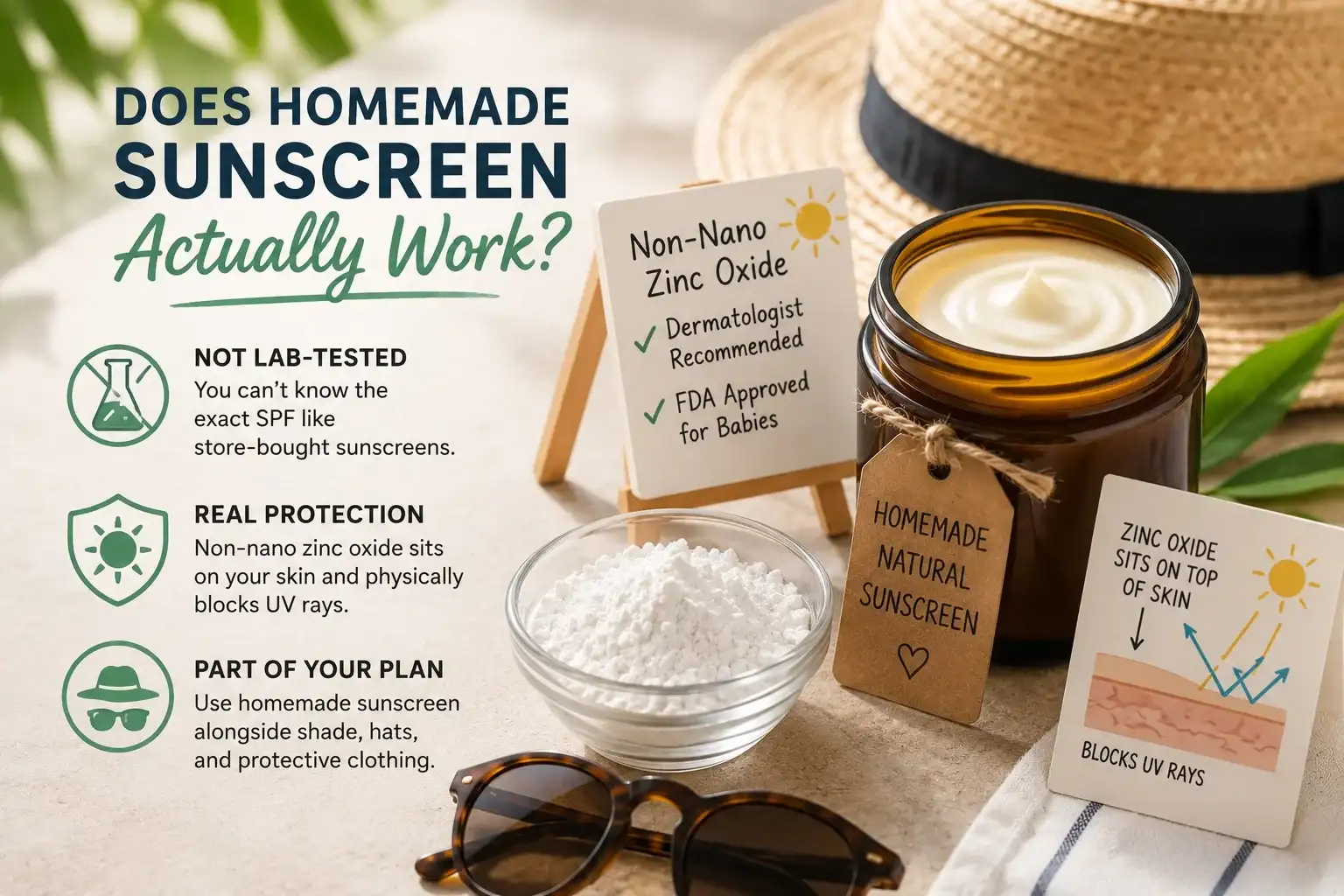
Let’s be honest here, because this matters a lot. Homemade sunscreen isn’t lab-tested, so you can’t know the exact SPF number the way you can with a store-bought bottle. There’s no official natural sunscreen SPF calculator that gives you a guaranteed number.
But that doesn’t mean it does nothing. The key active ingredient in any effective zinc oxide sunscreen recipe is non-nano zinc oxide. This is the same mineral dermatologists recommend, and it’s even approved by the FDA for babies. Zinc oxide sits on top of your skin and physically blocks UV rays instead of soaking into your body.
So yes, a well-made natural sunscreen can offer real protection. Just don’t expect the exact same guarantees you’d get from a regulated product. Think of it as one part of your sun protection plan, alongside shade, hats, and covering up during peak sun hours.
What Ingredients Do You Need for Natural Sunscreen?
Here’s what goes into a solid, tried-and-tested homemade sunscreen with natural ingredients:
- Coconut oil – moisturizing, with a small natural SPF boost
- Shea butter – soothing and great for dry skin
- Beeswax – thickens the mixture and helps it stay on your skin
- Non-nano zinc oxide powder – the real sun-blocking ingredient
- Vitamin E oil (optional) – helps the sunscreen last longer
- Essential oils (optional) – for scent, but be careful which ones you pick
If you’re wondering what oils have natural SPF, coconut oil, olive oil, and almond oil all offer mild, low-level sun protection on their own. They’re not strong enough to rely on by themselves, but they make a great base for the best carrier oils for natural sunscreen, especially when combined with zinc oxide.
A quick note on zinc oxide: always choose non-nano. Nano-sized particles are small enough to be absorbed into your skin, which defeats the whole purpose of avoiding chemical sunscreens in the first place.
How Do You Make Natural Sunscreen at Home?
This is the fun part, and it really is an easy homemade sunscreen recipe once you’ve done it once.
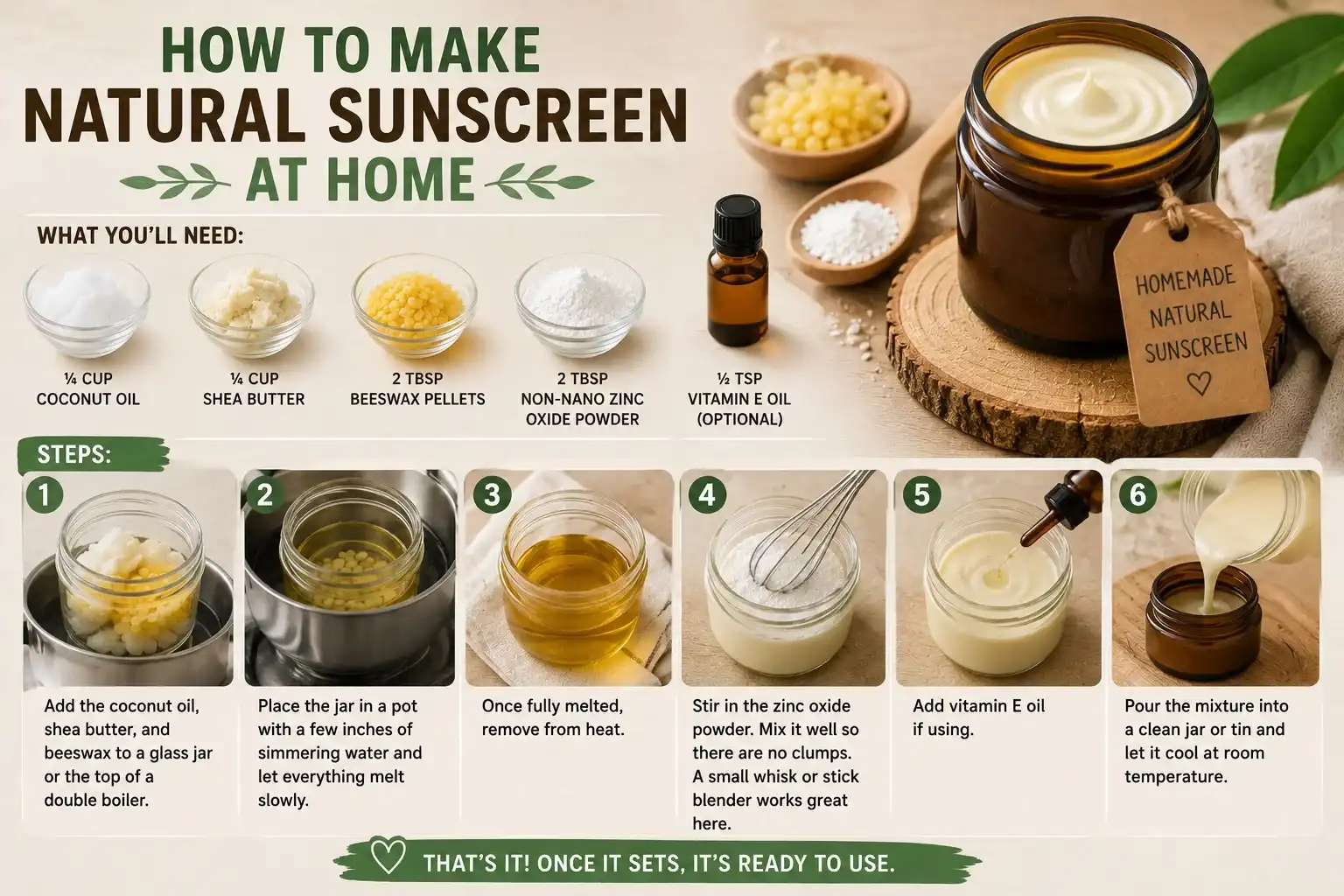
What you’ll need:
- ¼ cup coconut oil
- ¼ cup shea butter
- 2 tablespoons beeswax pellets
- 2 tablespoons non-nano zinc oxide powder
- ½ teaspoon vitamin E oil (optional)
Steps:
- Add the coconut oil, shea butter, and beeswax to a glass jar or the top of a double boiler.
- Place the jar in a pot with a few inches of simmering water and let everything melt slowly.
- Once fully melted, remove from heat.
- Stir in the zinc oxide powder. Mix it well so there are no clumps. A small whisk or stick blender works great here.
- Add vitamin E oil if using.
- Pour the mixture into a clean jar or tin and let it cool at room temperature.
That’s it. Once it sets, your shea butter sunscreen DIY is ready to use.
One important safety tip: don’t breathe in the zinc oxide powder while mixing. It’s fine on your skin, but you shouldn’t inhale it. Stir gently, or wear a simple mask if you’re worried about it.
How Do You Make Natural Sunscreen for Your Face?
If the base recipe feels too heavy for your face, you can make a simple natural sunscreen recipe for face use by cutting the beeswax in half. Less beeswax means a lighter, more spreadable texture that absorbs faster without leaving your skin feeling greasy.
You can also swap coconut oil for a lighter oil like jojoba if your face tends to get oily or breaks out easily. This works especially well for an organic sunscreen for face routines where you want something gentle enough for daily wear.
How Can You Increase the SPF in Homemade Sunscreen?
This is one of the most common questions people ask, and it’s a fair one. The amount of zinc oxide you use directly affects your protection level.
- 5% zinc oxide gives you roughly SPF 2-5
- 10% zinc oxide gives you roughly SPF 6-11
- 15% zinc oxide gives you roughly SPF 12-19
- 20% zinc oxide gives you roughly SPF 20 or higher
If you want to increase SPF in homemade sunscreen, simply add more zinc oxide powder to the mix. Keep in mind these numbers are estimates based on ingredient ratios, not official lab-verified ratings.
Can You Make Natural Sunscreen for Different Skin Types?
Yes, and it’s an easy swap depending on your skin.
If you have oily or acne-prone skin, coconut oil might not be your best friend since it can clog pores. Swap it out for jojoba oil or sweet almond oil instead for a homemade sunscreen for oily skin that won’t leave you shiny.
If you have sensitive skin, stick to the basic recipe without added essential oils. Fewer ingredients usually means fewer chances of irritation with a natural sunscreen for sensitive skin.
For babies or young kids, talk to your pediatrician first. Zinc oxide is generally considered safe for infants, but every child’s skin reacts differently.
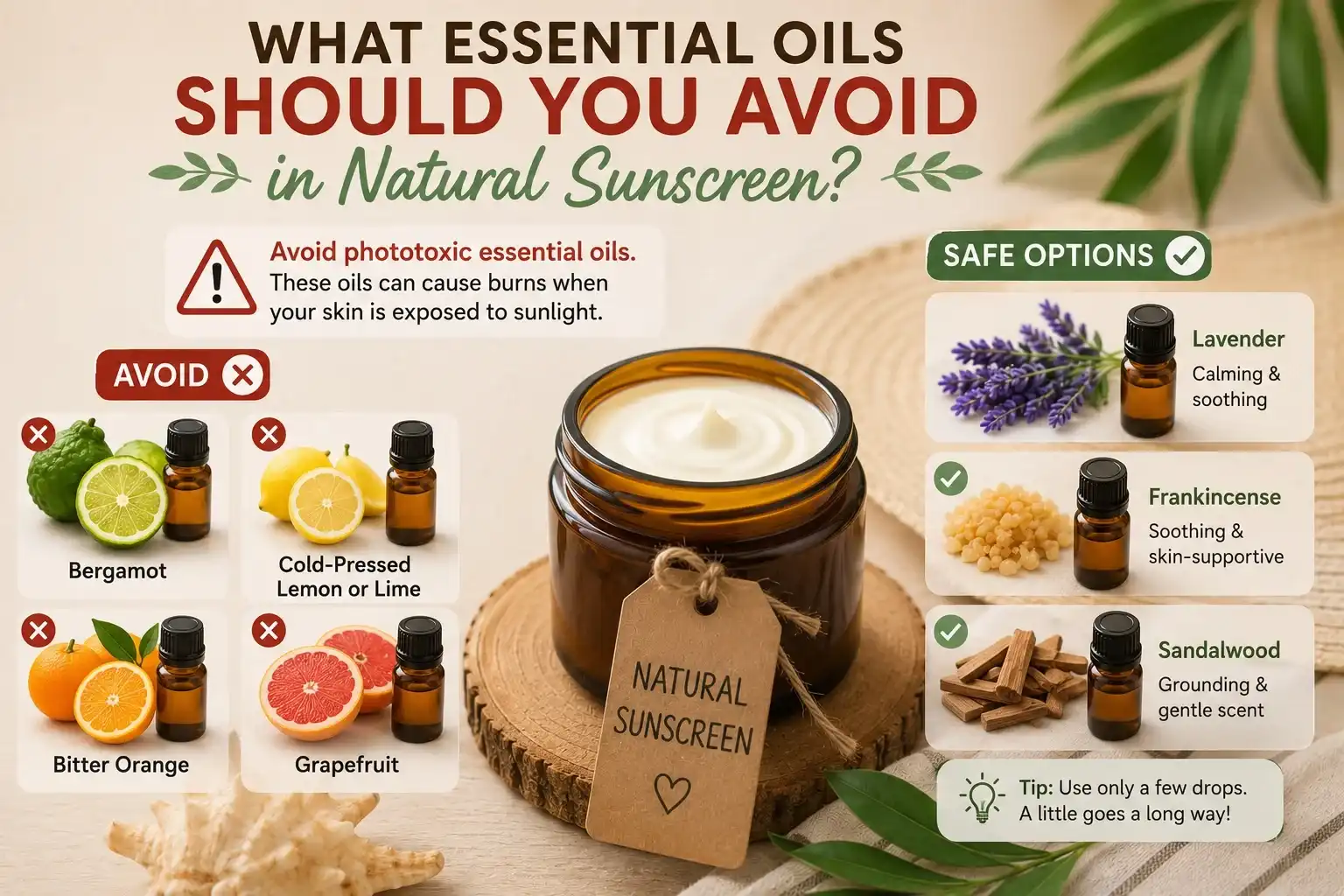
What Essential Oils Should You Avoid in Natural Sunscreen?
If you want to add a nice scent, go ahead, but skip anything phototoxic. These oils can actually cause burns when your skin is exposed to sunlight.
Avoid:
- Bergamot
- Cold-pressed lemon or lime
- Bitter orange
- Grapefruit
Safe options include lavender, frankincense, or sandalwood. A few drops go a long way.
How Long Does Homemade Sunscreen Last?
Stored in a cool, dry place, your natural sunscreen should last several months. Keeping it in the fridge can extend its shelf life even longer.
Just remember, homemade sunscreen isn’t waterproof. You’ll need to reapply it every two hours, and definitely after swimming or heavy sweating, just like you would with a store-bought version.
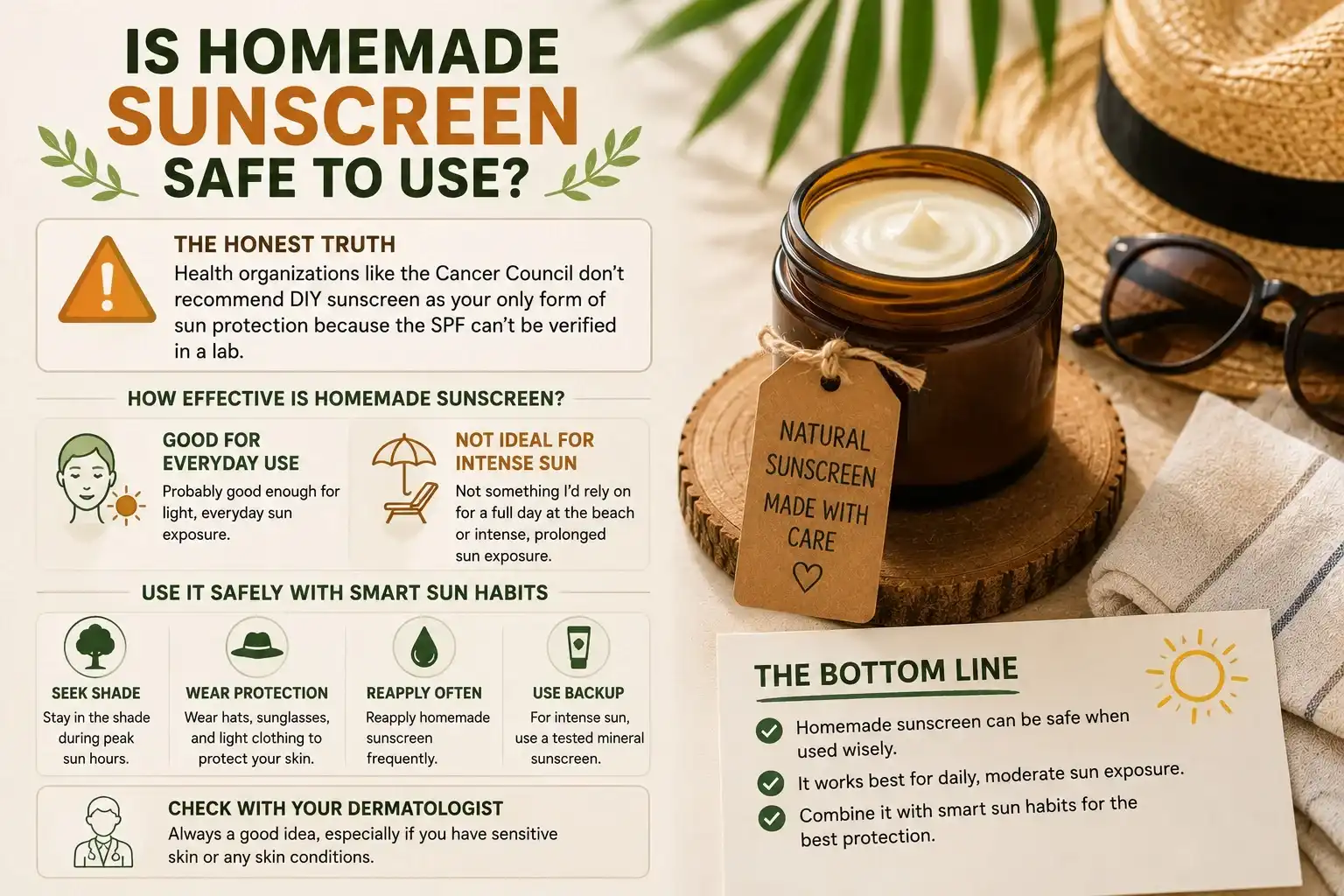
Is Homemade Sunscreen Safe to Use?
This is where I want to be completely honest with you. Health organizations like the Cancer Council don’t officially recommend DIY sunscreen as your only form of sun protection, mainly because the SPF can’t be verified in a lab. So how effective is homemade sunscreen compared to a regulated product? Probably good enough for light, everyday sun exposure, but not something I’d rely on for a full day at the beach.
That said, plenty of people use natural sunscreen safely every summer by combining it with common sense sun habits: seeking shade during peak hours, wearing hats and light clothing, and reapplying often.
If you’re heading somewhere with intense, prolonged sun exposure, it might be smart to use a tested mineral sunscreen from the store as backup and save the homemade version for everyday, moderate exposure.
Always a good idea to check with your dermatologist too, especially if you have sensitive skin or any skin conditions.
What’s the Best Natural Alternative to Sunscreen?
Sunscreen isn’t the only tool in the box. If you’re looking for the best natural alternative to sunscreen, or just want extra backup on very sunny days, try these:
- Wide-brimmed hats
- UPF-rated clothing
- Staying in the shade between 10 a.m. and 4 p.m.
- Sitting under an umbrella at the beach
None of these replace sunscreen entirely, but combined with your homemade formula, they make a solid, low-chemical sun protection routine.
Not Ready to DIY? Try These Instead
If mixing your own sunscreen isn’t for you, there are some genuinely good store-bought options out there now. When shopping, look for mineral sunscreen ingredients you can actually buy online and recognize on the label, ideally with non-nano zinc oxide as the main active ingredient. Brands that focus on simple, short ingredient lists tend to be the safest bet if you’d rather buy than make your own.
Frequently Asked Questions
Can I make sunscreen without zinc oxide?
Not really, not one that actually blocks UV rays. Oils like coconut and shea butter offer very mild natural SPF, but zinc oxide is the ingredient doing the real work.
How long does homemade sunscreen take to make?
About 15 minutes of active time, plus some cooling time for it to set.
Is natural sunscreen better than chemical sunscreen?
It depends on your priorities. Natural sunscreen avoids hormone-disrupting chemicals and is gentler on coral reefs, but chemical sunscreens are lab-tested for exact SPF ratings. Many people use a mix of both.
Final Thoughts
Making your own natural sunscreen is one of those small changes that feels good once you start doing it. You know exactly what’s in it, it’s kind to your skin, and it’s kinder to the ocean too.
Start with the basic recipe, adjust the zinc oxide to match the protection you need, and pair it with smart sun habits like shade and hats. Your skin will thank you, and so will the planet.

