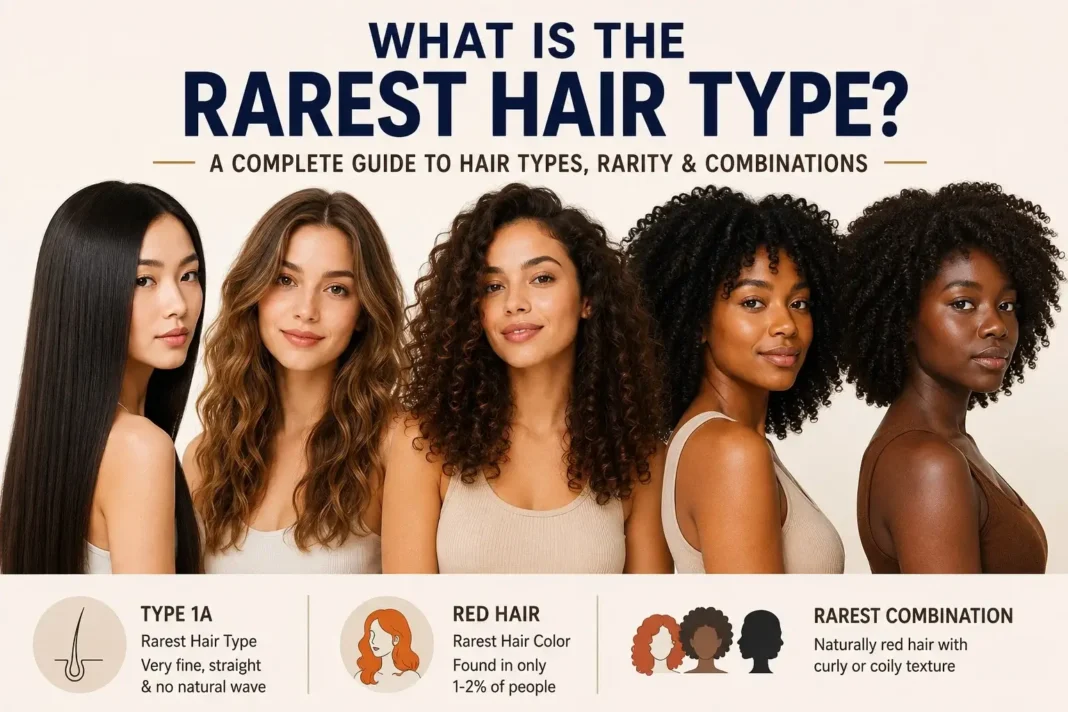
Look around any room full of people and you will spot curls, waves, coils, and straight strands in every direction. But every once in a while, someone walks in with hair so flat, so fine, and so stubbornly straight that not even a curling iron can leave a mark on it by the next morning. That is not just straight hair. That is the rarest hair type on the planet, and most people who have it do not even realize how uncommon it really is.
Quick answer: The rarest hair type in the world is Type 1A, which is completely straight, very fine, and holds no natural wave at all. When it comes to hair color, red is the rarest, found in only 1 to 2 percent of people. Put the two together, and naturally red hair with a curly or coily texture becomes the rarest combination of all.
So where does your hair actually land on that scale? Stick around, because this guide breaks down exactly why Type 1A is so rare, how it stacks up against red hair and coily textures, and how to spot it (or rule it out) on your own head in under five minutes.
Is Hair Type the Same Thing as Hair Texture?
Before we get into rarity, it helps to clear up a common mix-up. Hair type and hair texture are not the same thing, even though people use the words interchangeably.
Your hair type is the overall pattern your hair naturally forms, whether that is straight, wavy, curly, or coily. Your hair texture is about the individual strand itself, meaning how fine, medium, or coarse each hair is. So two people can both have curly hair, but one might have fine, thin strands while the other has thick, coarse ones. Put together, type and texture give you the full picture of how your hair behaves.
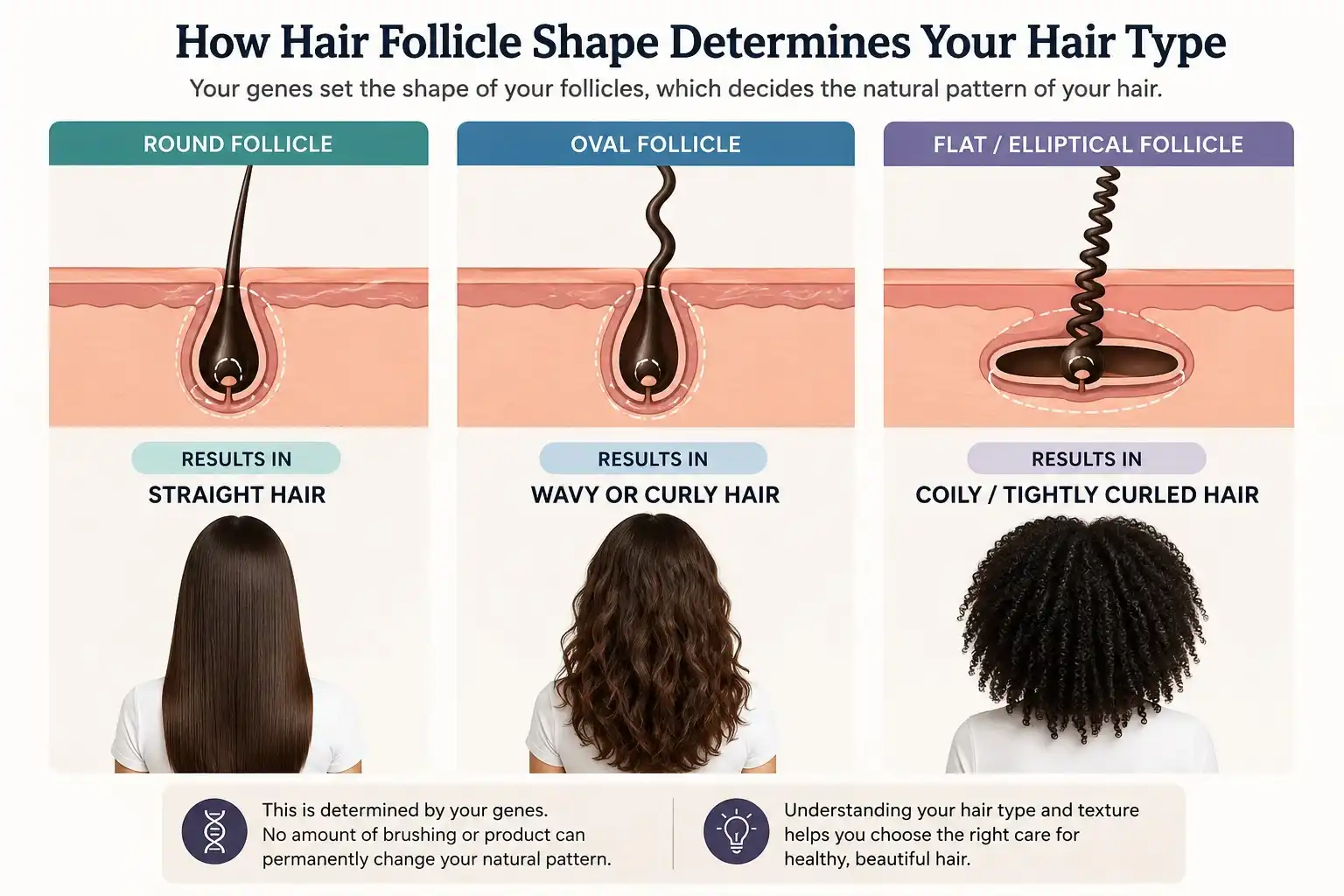
So what actually decides which pattern you get? It comes down to the shape of your hair follicles, the tiny openings in your scalp where each strand grows. Round follicles tend to produce straight hair. Oval follicles usually lead to wavy or curly hair. Flat or elliptical follicles are behind coily, tightly curled hair. This is set by your genes before you are even born, which is why no amount of brushing or product can permanently change your natural pattern.
What Is the Rarest Hair Type in the World?
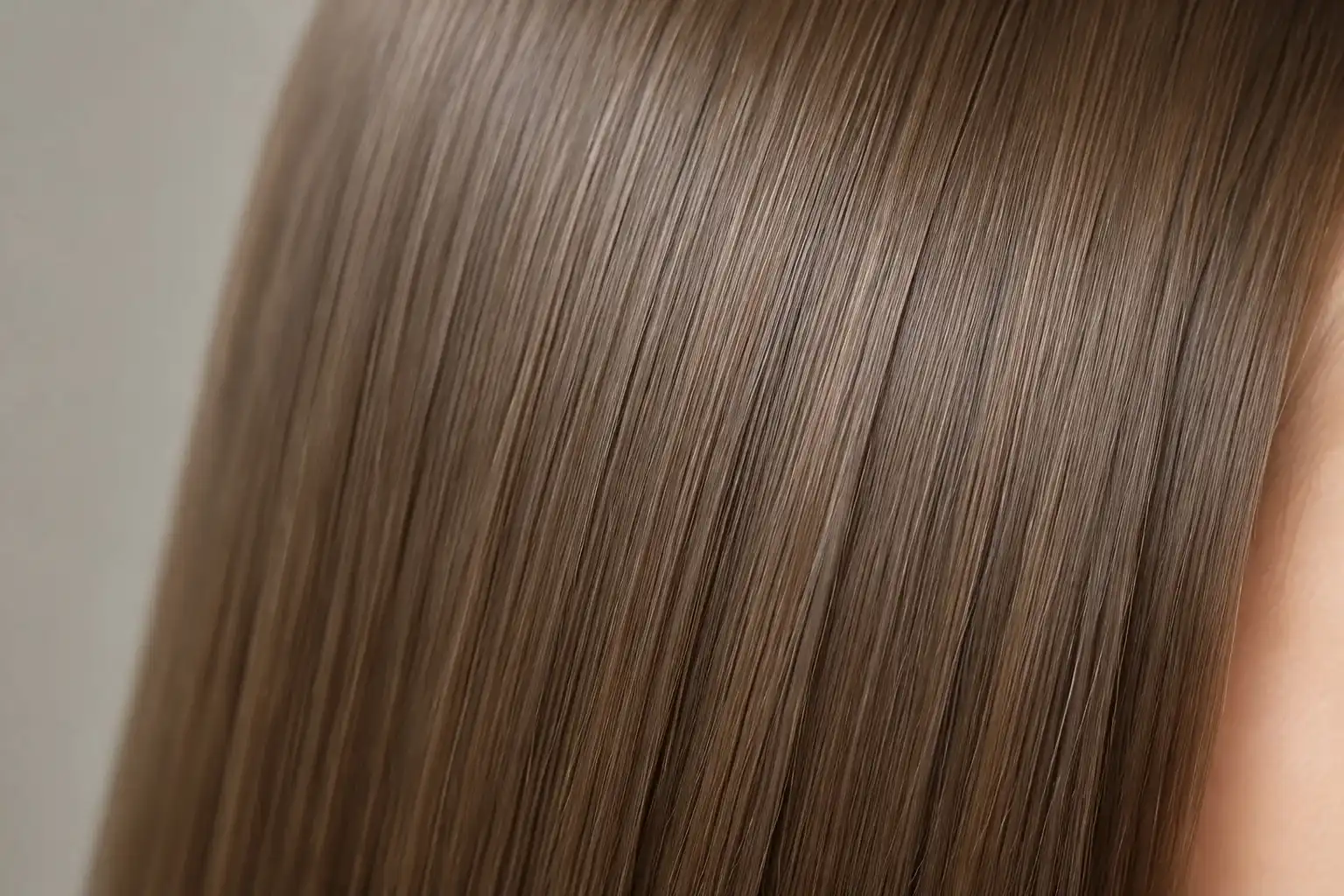
The rarest hair type is Type 1A. This is hair that is completely straight, very fine, and has no bend or wave at all, even when it is wet. It lies flat against the scalp and has almost no natural volume.
Type 1A is rare because it needs two things to line up at the same time: straight hair and fine hair. Straight hair on its own is actually common. Fine hair on its own is also common. But the exact combination of both, with zero natural wave, is uncommon almost everywhere in the world.
Curly and wavy genes are dominant in most populations, so most people end up with at least a small bend in their hair. Type 1A skips that entirely, which is what makes it stand out.
What Does Type 1A Hair Look Like?
If you are trying to figure out whether you have this hair type, here is what to look for:
- Hair lies completely flat from root to tip
- No wave, bend, or curl pattern at all, even after air drying
- Very fine strands, sometimes fine enough that you can see your scalp through it
- A smooth, shiny look because light reflects easily off the flat hair cuticle
- Hair that gets oily fast because sebum from the scalp travels down the strand with nothing to slow it down
The best way to check your hair type is simple. Wash your hair, skip every product, and let it air dry completely. Whatever shape it naturally falls into is your true hair type.
Why Is Type 1A Hair So Hard to Style?
This hair type is low maintenance in some ways and high maintenance in others. On one hand, it usually air-dries smooth and never needs taming. On the other hand, getting it to hold a curl, a wave, or even simple volume can feel nearly impossible.
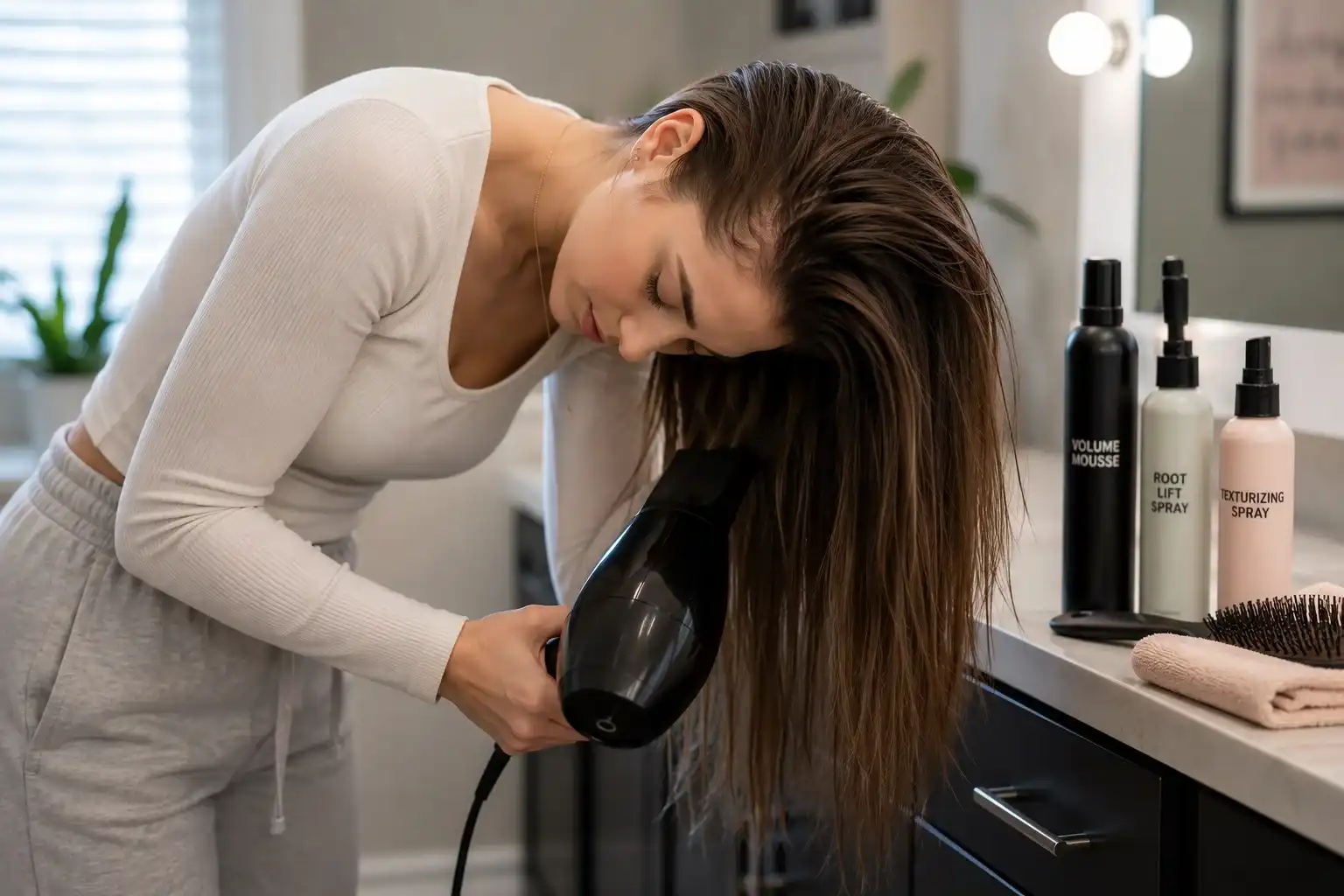
The fine, flat strand structure means curls drop out within hours, sometimes even before you leave the house. A single wash resets everything back to flat. If you want volume or curl that actually lasts, you need strong hold products like mousse, root-lift spray, or a texturizing spray, along with a good heat protectant before using any hot tools.
How Is Type 1A Different From Type 1B Hair?
People often mix up 1A and 1B hair because both are straight. The difference comes down to thickness and how the hair behaves.
Type 1A is extremely fine, has almost no volume, and will not hold a curl even with heat styling. Type 1B is a little thicker, has more natural body, and can hold a soft bend or a curl for a few hours after styling. If your straight hair has even the slightest wave near the roots or holds a curl for part of the day, you likely have 1B, not 1A.
Is Red Hair Rarer Than Straight 1A Hair?
This is where things get interesting. Type 1A is the rarest hair texture. But red hair is the rarest natural hair color, found in only about 1 to 2 percent of people worldwide.
Red hair happens because of a mutation in the MC1R gene, which also affects skin tone and how the body handles pain and vitamin D. Since the red hair gene is recessive, both parents need to carry it for a child to be born with natural red hair, even if neither parent has red hair themselves.
So texture and color are actually two separate categories of rarity, and they do not overlap most of the time.
What Is the Rarest Hair Combination Overall?
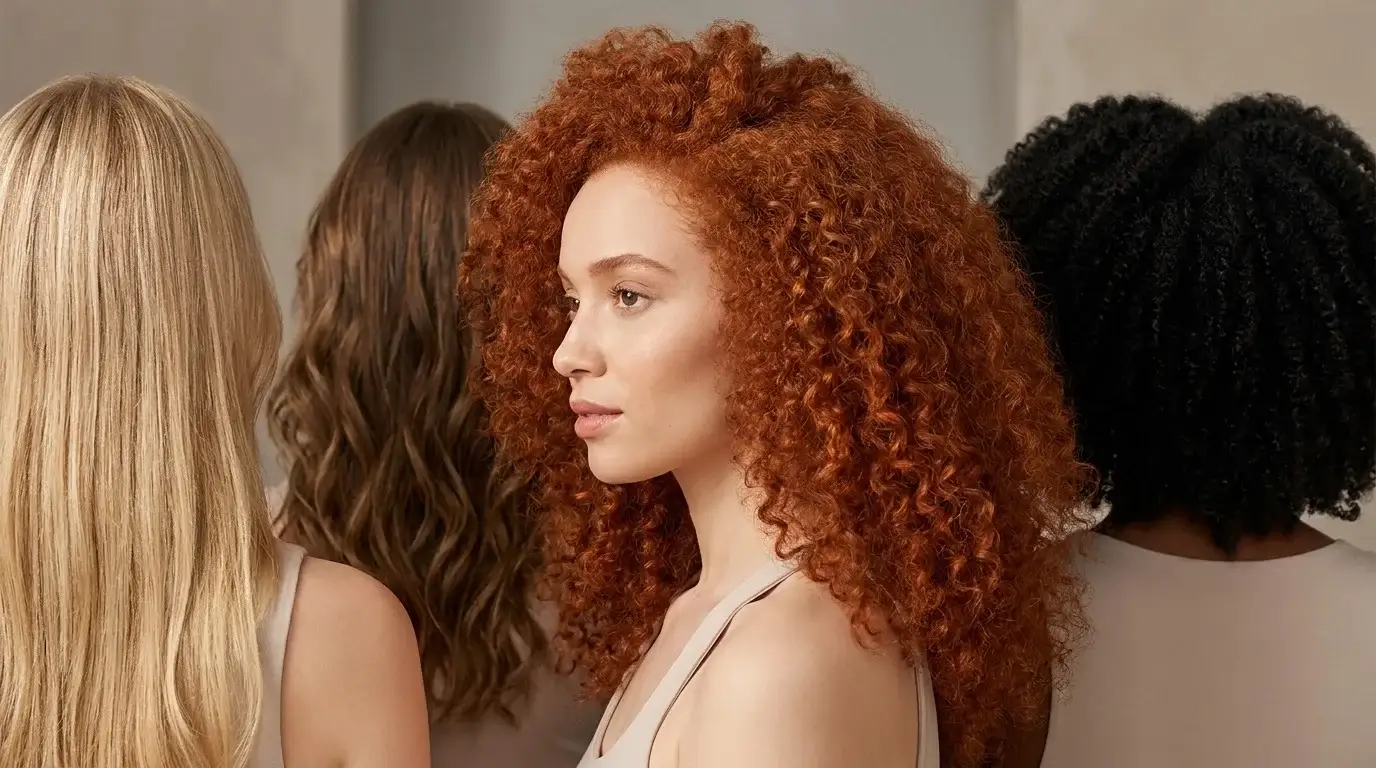
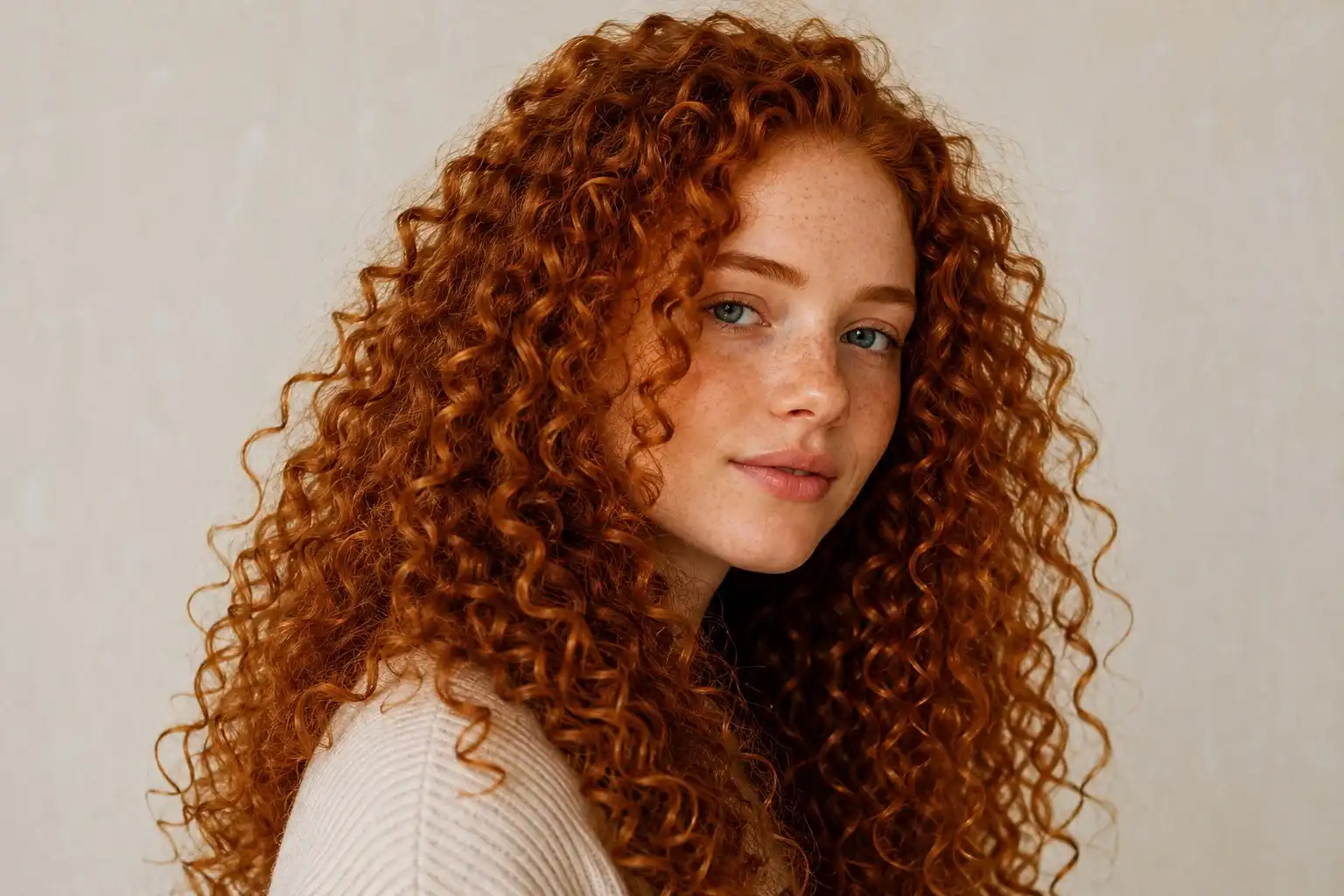
If you combine both categories, the single rarest hair type in the world is naturally red hair with a curly or coily texture. This combination is rare because red hair itself is uncommon, and pairing it with a tight curl or coil pattern makes it even less likely to occur genetically.
Other unusual combinations worth mentioning include naturally white or silvery hair appearing at a young age, and light blond hair paired with very tight curls. Neither of these is as rare globally as red combined with curls, but both are considered unusual by most hair experts.
Is 4C Coily Hair Rare Too?
Type 4C hair, known for its tight coils and high shrinkage, is sometimes listed as rare on a global scale. But this needs some context. While 4C hair may be less common when you look at the entire world population, it is widely present and deeply valued within Black and Afro-diasporic communities.
So calling 4C “rare” only works from a strictly global percentage standpoint. It is not rare within the communities where it naturally occurs most, and reducing it to just a rarity statistic misses the cultural importance this hair type holds.
To put this in perspective, some estimates suggest coily and kinky hair types, ranging from 4A to 4C, make up only about 10 percent of the population in the United States. That number shows exactly why rarity depends so much on location. A hair type can be common in one part of the world and genuinely rare in another.
How Does the Hair Typing System Actually Work?
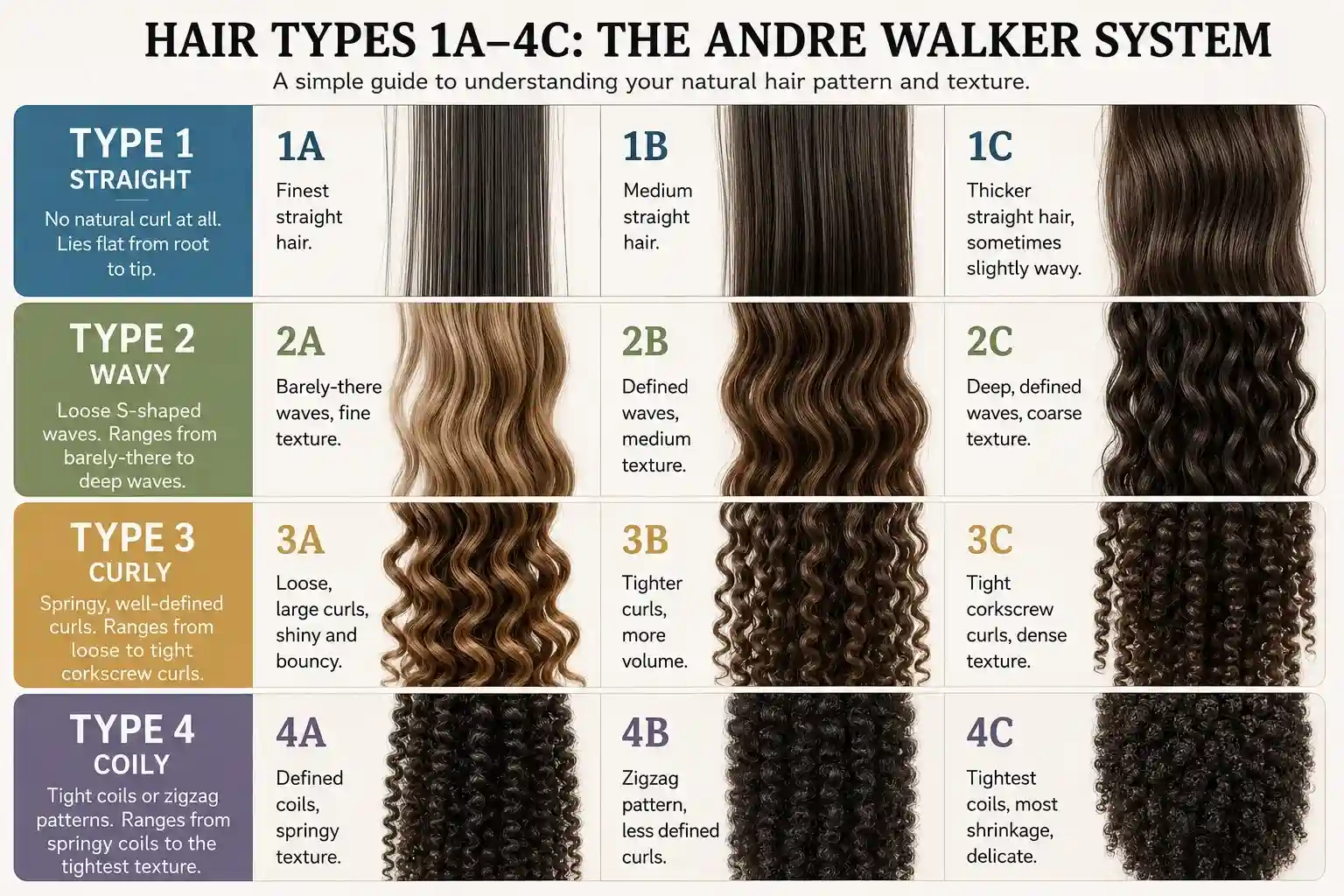
Most hair type conversations trace back to a system created by celebrity hairstylist Andre Walker, best known for his work with Oprah Winfrey. His chart splits hair into four main types, and each type has three subcategories based on thickness and texture.
Here is a quick breakdown:
- Type 1 (Straight): No natural curl at all, ranges from 1A (finest) to 1C (thicker, sometimes slightly wavy)
- Type 2 (Wavy): Loose S-shaped waves, from 2A (barely-there waves) to 2C (deep, defined waves)
- Type 3 (Curly): Springy, well-defined curls, from 3A (loose curls) to 3C (tight corkscrew curls)
- Type 4 (Coily): Tight coils or zigzag patterns, from 4A (springy coils) to 4C (tightest coils, most shrinkage)
This system is not perfect, and plenty of people fall between two subtypes rather than fitting neatly into one box. But it is still the easiest starting point for understanding your own hair.
Roughly How Common Is Each Hair Type?
While there is no single official global study measuring exact percentages for every hair type, industry estimates generally place things in this order, from rarest to most common:
- Type 1A: rarest, often estimated under 5 percent globally
- Type 4C: uncommon on a global scale, though common within specific populations
- Type 3A and other tight curl patterns: less common outside regions where they occur most
- Type 2A and other wavy patterns: fairly common across many populations
- Type 1B: the most common hair type worldwide, especially prevalent across East Asia and beyond
Keep in mind these are general estimates, not exact scientific counts, since hair type can vary across a single head and even change over a person’s lifetime.
How Do You Take Care of Rare Hair Types?
If you have 1A hair, the biggest challenge is balancing oil control with keeping enough volume. A few habits help:
- Wash daily or every other day, since oil travels down fine straight hair quickly
- Skip heavy oils, butters, and thick creams that will weigh your hair down
- Use lightweight, volumizing shampoo and conditioner, and keep conditioner away from your roots
- Try dry shampoo between washes to soak up oil and fake some lift
- Always use a heat protectant before blow drying or styling, since fine hair damages easily
- Get trims every 8 to 12 weeks to avoid split ends creeping up the strand
If you have red hair, curly hair, or a mix of both, moisture is your main focus. Red hair tends to be more sensitive to sun damage, so a UV-protecting spray or a hat outdoors goes a long way. Curly and coily textures need regular deep conditioning since natural oils struggle to travel down a curved hair shaft.

Can Your Hair Type Change Over Time?
Yes, to some degree. Hormones, medications, age, and even the climate you live in can shift how your hair behaves. Some people notice their straight hair developing a slight wave later in life, or their curls loosening with age. Genetics set your base pattern, but outside factors can nudge it slightly in one direction or another.
You can also change your texture temporarily using tools like curling irons or straighteners, or longer term with chemical treatments like perms or keratin smoothing. These changes are not permanent, though, and your natural pattern will return once the treatment grows out or washes away.
Final Thoughts
Type 1A stands out as the rarest hair texture in the world, while red hair holds the title for rarest natural color. Put the two together, and you get the rarest hair combination overall: red, curly or coily hair. Every hair type comes with its own quirks, its own care routine, and its own kind of beauty, so knowing where yours falls is really just the first step toward taking better care of it.
Frequently Asked Questions
Is Type 1A hair really the rarest hair type?
Yes. Type 1A is widely recognized as the rarest hair texture because it requires both straight hair and fine hair to occur together, with zero natural wave.
What is the rarest hair color and texture combination?
Naturally red hair paired with a curly or coily texture is considered the rarest combination, since red hair alone is already rare at 1 to 2 percent of the population.
Can Type 1A hair become curly permanently?
No. Your natural hair pattern is set by genetics and cannot be permanently changed. You can use heat tools or chemical treatments to add curl temporarily, but your hair will return to its natural straight pattern once the style washes out or grows out.

