
In This Article
- What Dopamine Decor Means in a Beige Room
- Pick a Palette Before You Buy Anything
- 1. Pick One Lead Color and Repeat It in Two Places
- 2. Recolor the Beige Sofa With Cushions and a Throw
- 3. Let a Patterned Rug Set the Palette From the Floor Up
- 4. Build a Gallery Wall From Colorful Art and Keepsakes
- 5. Add Removable Wallpaper to a Single Wall
- 6. Swap Beige Curtains for Rust or Cobalt Panels
- 7. Warm Up the Light With Lamps and Colored Shades
- 8. Mix Bouclé, Velvet, Knit, and Rattan for Texture
- 9. Add Plants in Colorful Pots
- 10. Bring In One Bold Accent Chair
- How to Keep the Color Joyful, Not Overwhelming
- Start With Cushions and Light, Then Build Out
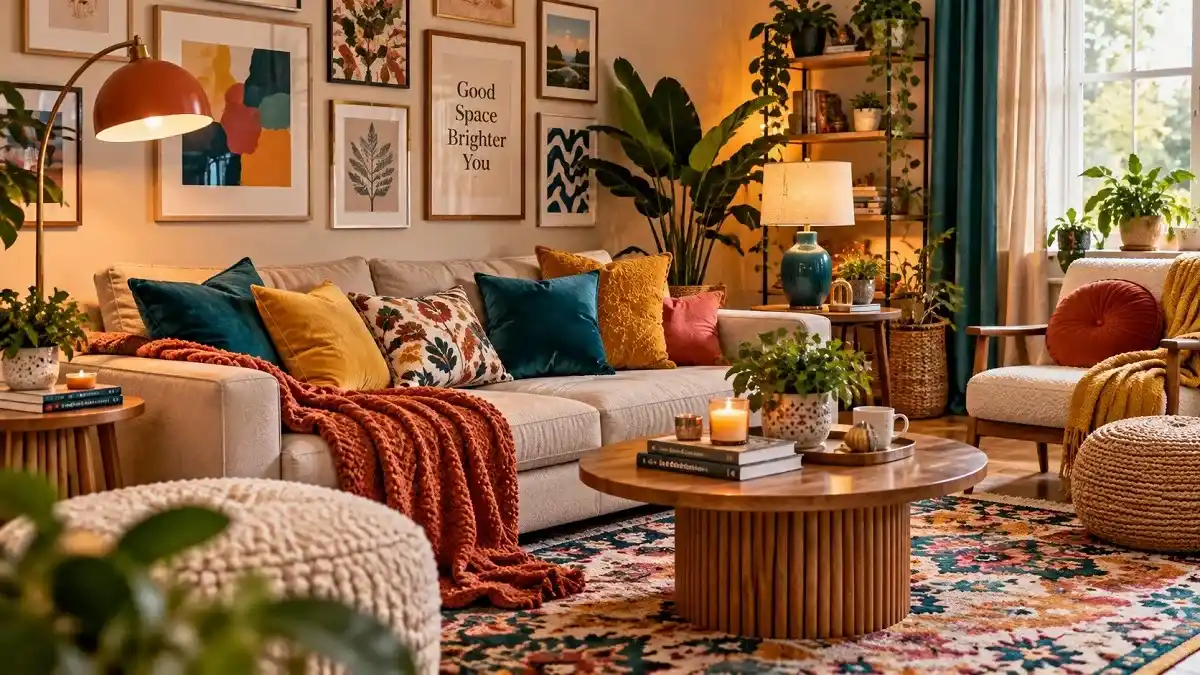
A beige room can feel calm at first and flat a few months later. The walls, sofa, and rug blend into one soft wash, and nothing holds the eye. If you rent, you probably want more color without a full redecoration or a paint job your lease forbids.
These 10 dopamine decor ideas for beige rooms start with a small palette, not a shopping list. One lead color repeats in a few places, two supporting colors stay smaller, and almost everything comes down or comes with you when you move. You’ll get a brighter, more personal room without painting a single wall.
What Dopamine Decor Means in a Beige Room
Dopamine decor means decorating with the colors, patterns, and objects you love looking at. A bright cushion earns its place because it makes you smile, not because a rule says the color is correct. The style mixes color, pattern, light, and texture, and it favors pieces with a story.
It isn’t the same as maximalism, which is about how much is in a room. Dopamine decor is about why each piece is there, so you can follow it with a few strong choices and plenty of beige still showing. Despite the name, it’s a style label, not a proven way to change your brain chemistry or mood. Beige actually helps here: as a neutral backdrop, it lets a strong color read clearly.
Pick a Palette Before You Buy Anything
Check your beige in the room’s own light first. Hold fabric or art samples against the sofa and wall in daylight and again in the evening. Some beige leans warm, with pink, orange, or gold undertones. Some leans cool, with a gray or green cast.
Then pick one lead color and two supporting colors, with the lead taking the largest share. Three palettes work well with a beige sofa:
- Cobalt leads, butter yellow supports, and a small cherry-red accent shows up in a cushion or print.
- Plum leads a softer route, with peach support and moss green in plants or a throw.
- Teal leads, with terracotta support and blush in a lampshade or cushion.
For more help reading undertones, see our guide on how to pick a room color palette.
1. Pick One Lead Color and Repeat It in Two Places
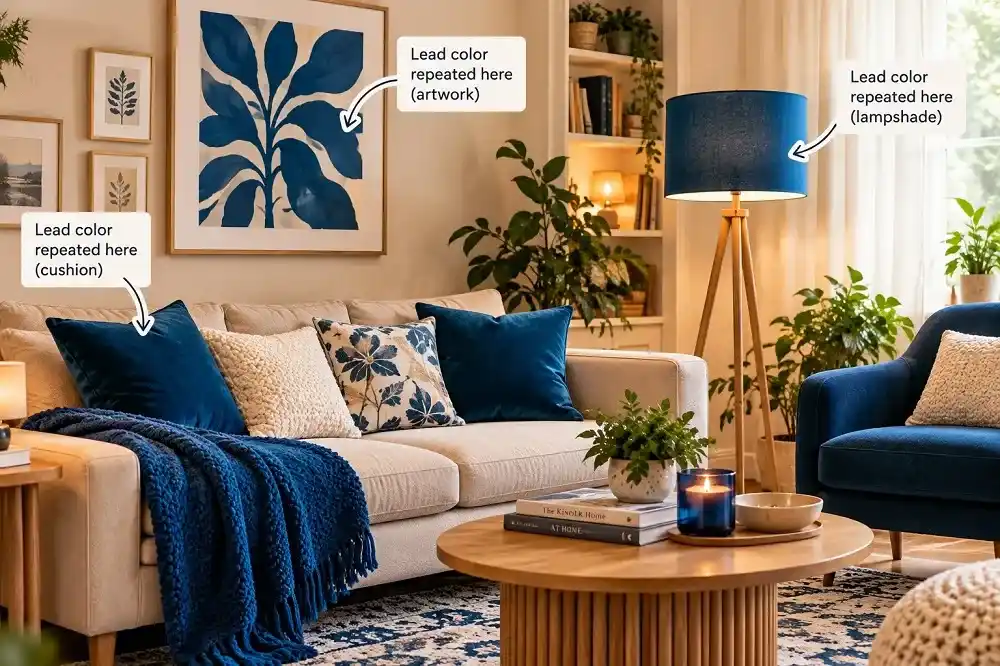
Repeat your lead color in two places at different heights, such as a cushion and a framed print, or a throw and a lampshade. The repeat links the spots, so the color looks planned rather than random. Test it with one cushion and one small print first. If the lead feels too strong, try a softer shade of the same color, and hold off on supporting colors until the lead feels settled.
2. Recolor the Beige Sofa With Cushions and a Throw
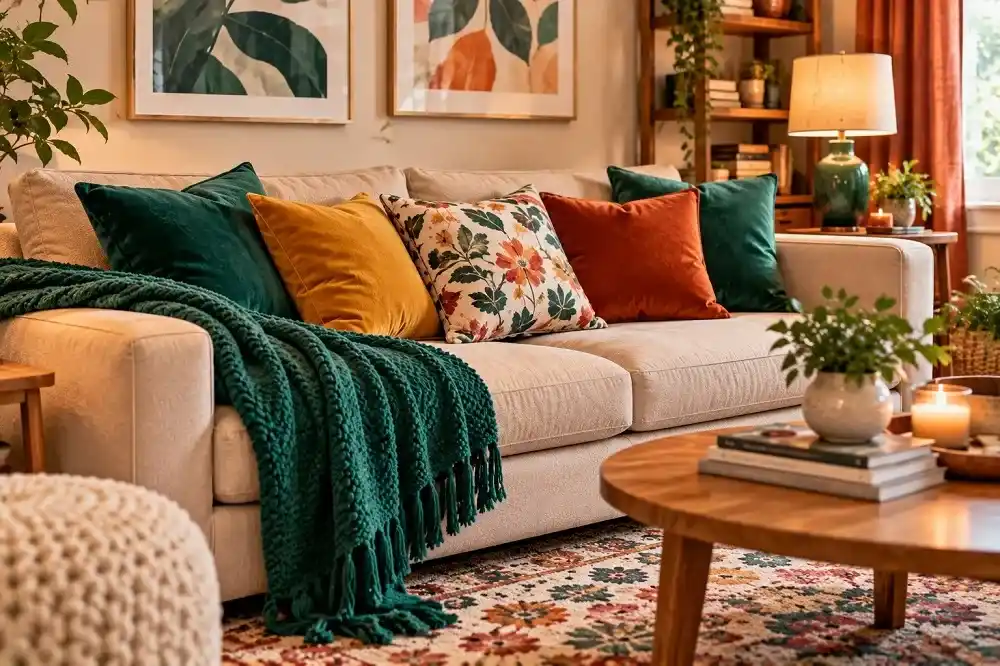
In a living room, the sofa sets the tone, so start there. Two or three cushions in the lead color, plus one in a supporting color, give a beige sofa a new look in minutes. A folded throw in a second palette color adds a soft layer. Keep pattern to a single cushion; if the rug already has a busy pattern, choose a small print for the sofa.
3. Let a Patterned Rug Set the Palette From the Floor Up
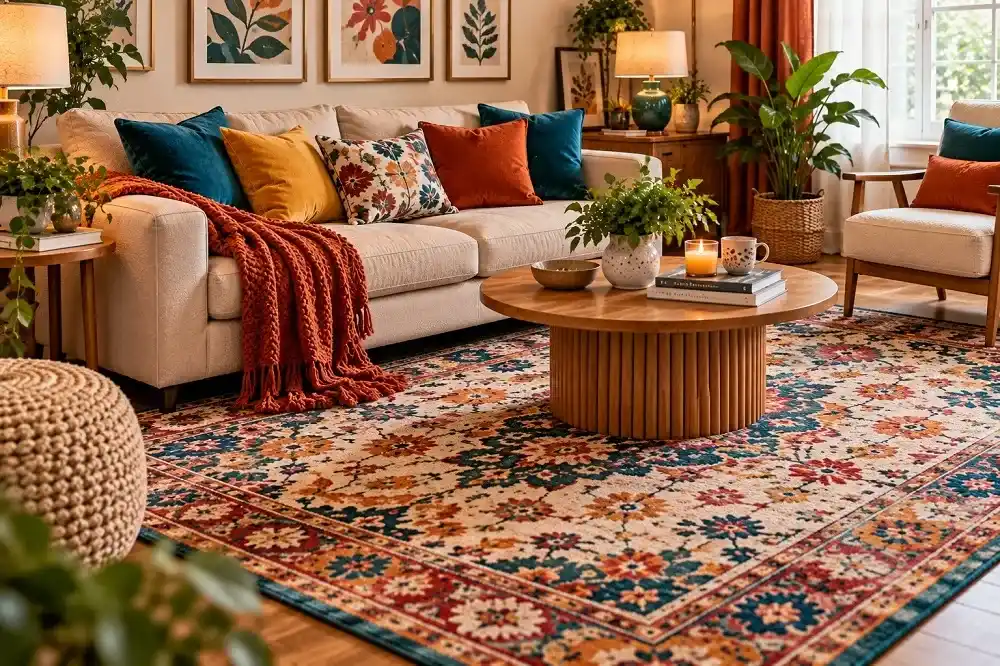
A colorful rug is the largest block of color you can add without touching a wall. Size it so at least the front legs of the sofa sit on it; that anchors the seating area and ties the sofa to the room. Let the pattern carry your lead color and one supporting color, so cushions and lamps can echo what’s already on the floor. A bold rug calls for mostly solid cushions, while a quiet rug lets cushions carry more pattern. When you move, it simply rolls up. Our guide to mixing patterns like a designer covers how to pair prints of different scales.
4. Build a Gallery Wall From Colorful Art and Keepsakes
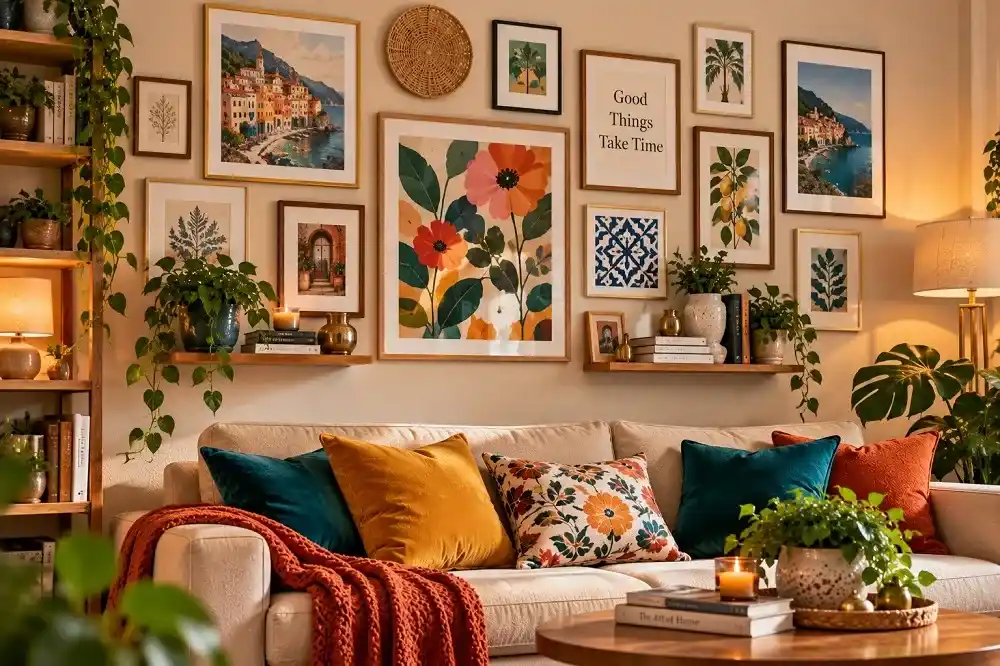
A beige wall gives art room to breathe. Mix frame sizes and styles in a loose group, and leave beige gaps between frames so each piece has space. Use the lead color in two or three pieces, with each supporting color appearing once. Put travel finds and keepsakes on an existing shelf, grouped on a tray so they read as one display instead of clutter. Hang frames with removable strips or hooks rated for their weight, and check the limit on the package before you hang anything heavy.
5. Add Removable Wallpaper to a Single Wall
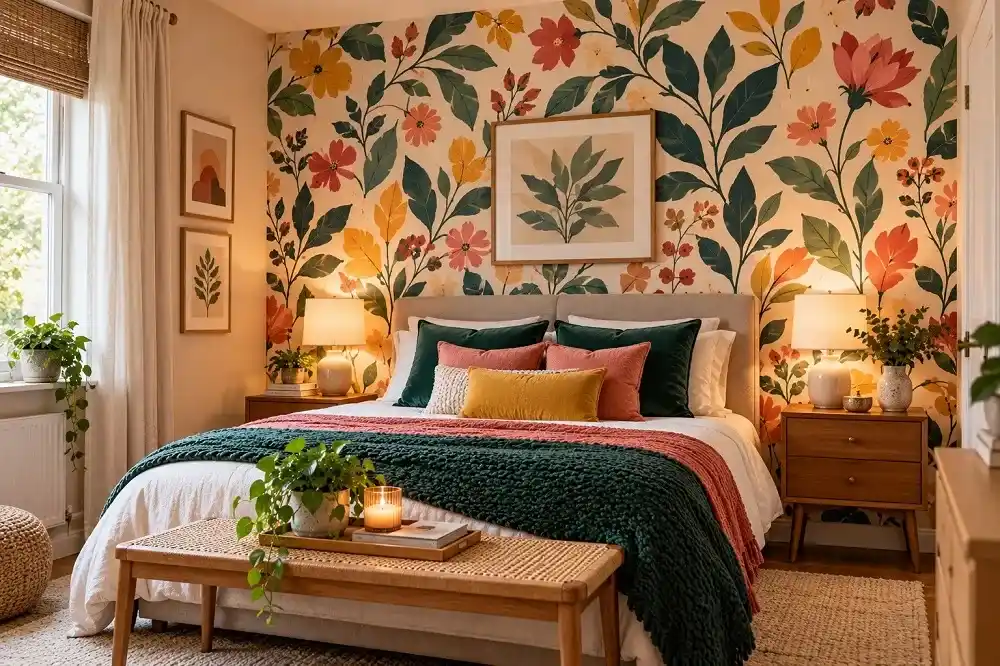
One wall is enough for peel-and-stick wallpaper. The wall behind a sofa, bed, or desk becomes the focal point, while the other walls stay beige and calm the pattern down. Decals work the same way: shapes on one wall add color, but decals on every wall overwhelm a small room. Choose a pattern in your palette, with a large scale for a big wall and a smaller one for a narrow wall. Test a small piece on a hidden patch first, since some paint finishes peel when the paper comes off, and check what your lease says about adhesives. Need pattern ideas? Browse our wallpaper ideas that bring boring walls to life.
6. Swap Beige Curtains for Rust or Cobalt Panels
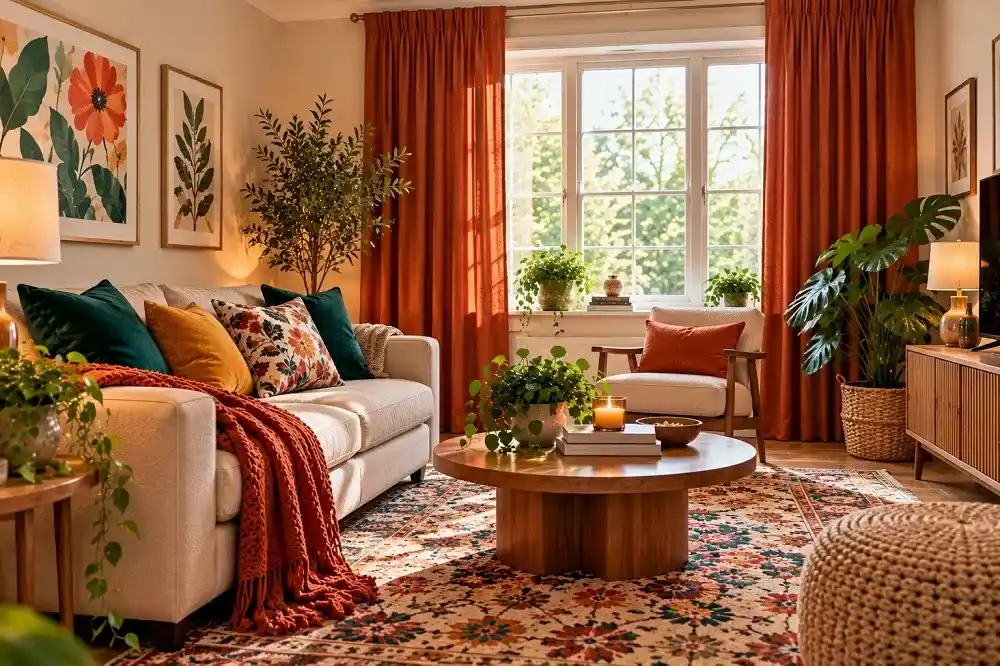
Curtains put a large block of color at eye level, right beside the brightest spot in the room. Solid panels in your lead or a supporting color give the strongest effect with the least risk; rust-orange panels, for example, warm up a beige room instantly. A patterned curtain works when it shares a color with the rug or cushions but uses a different pattern scale. Hang the new panels on the existing rod or track, and fold the landlord’s curtains away for moving day. If the rug and cushions already carry the lead color, curtains in a supporting color keep the balance.
7. Warm Up the Light With Lamps and Colored Shades
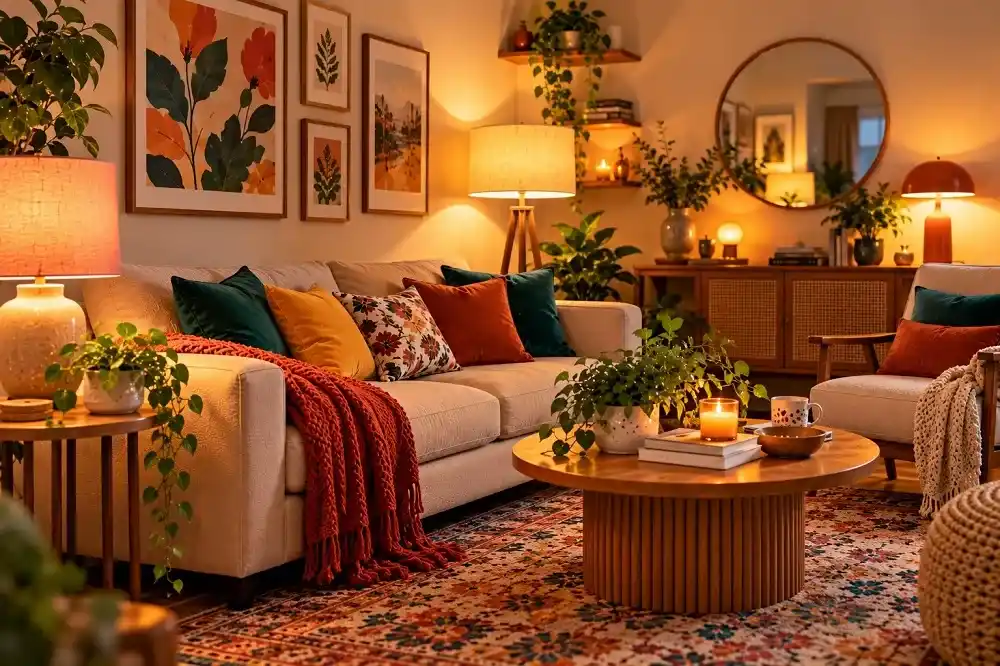
Light changes how color reads after dark, and a single ceiling light flattens a room. Spread lamps at different heights instead: a floor lamp beside the sofa, a table lamp on a side table, and a small lamp on a shelf. Choose warm white bulbs, labeled around 2700K to 3000K, since cool light can turn beige gray. A lampshade in a palette color adds color even when the lamp is off, and a color-changing smart bulb lets you wash a corner in your lead color for an evening. Our guide to interior lighting layers and color temperature goes deeper.
8. Mix Bouclé, Velvet, Knit, and Rattan for Texture
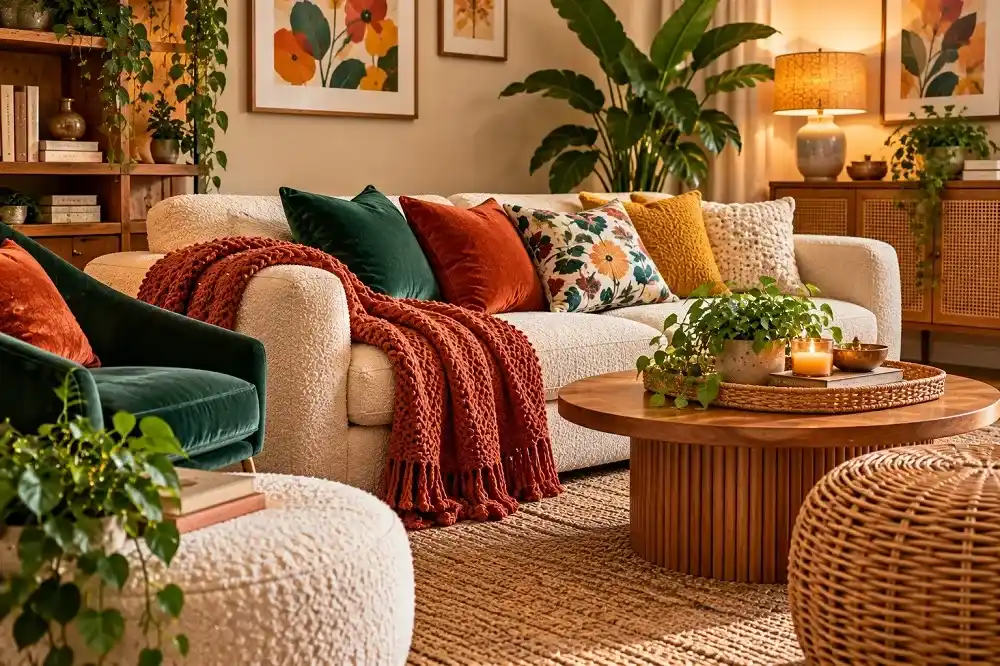
Texture keeps a room from feeling flat while the color stays in a small palette. Layer a nubby bouclé throw over a smooth velvet cushion, drape a chunky knit on a chair, and set a rattan basket beside the sofa. Each surface catches light differently, so beige gains depth without any new color. Contrast matters more than matching: three very different surfaces look richer than three similar ones. Keep every piece inside your palette so texture adds depth, not a competing color.
9. Add Plants in Colorful Pots
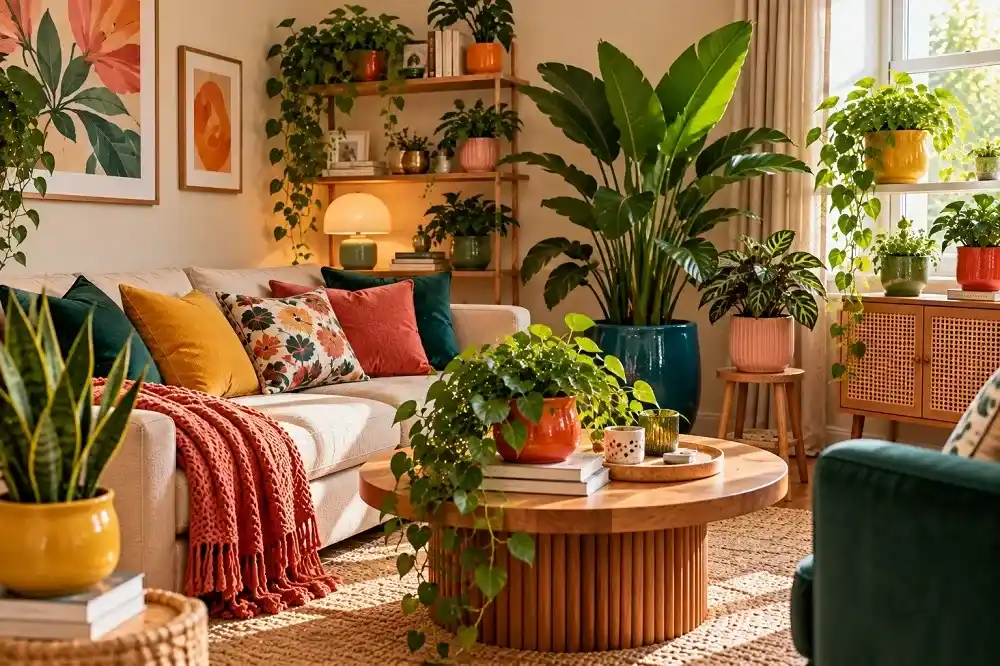
Plants add living green, and the pots can double the effect. A plant in a plain pot adds one note of color; the same plant in a teal or coral pot adds two. Group plants in twos or threes, in pots of different sizes, so each group reads as a display. Put taller plants on the floor and smaller ones on a shelf or sill, matched to the light in each spot. Plants and pots come with you when you move.
10. Bring In One Bold Accent Chair
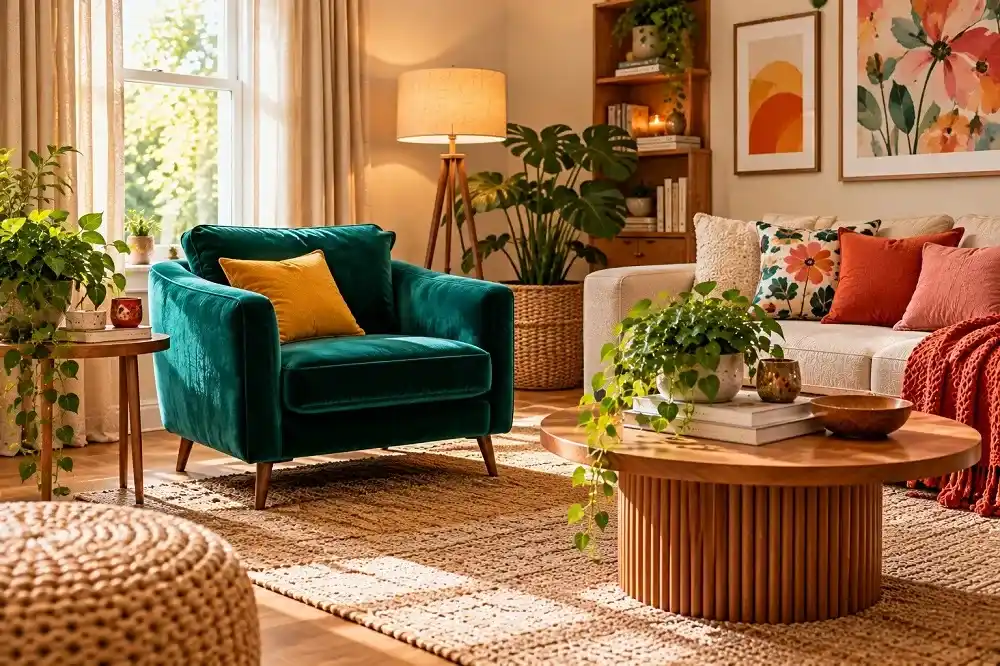
Save your boldest color for one piece of furniture you own, such as an armchair, ottoman, or small side table. An emerald velvet chair beside a beige sofa is big enough to hold the eye and small enough to move. Look for one secondhand, or give a chair you already own a colored slipcover. Pick the lead color or your strongest supporting color, then keep the rest of the room calm around it, with one cushion in a supporting shade to tie it in.
How to Keep the Color Joyful, Not Overwhelming
Color feels joyful until every surface competes at the same volume. Keep the palette to one lead and two supporting colors, and let beige stay visible on walls, floors, and large furniture. Vary pattern scale: one large, one medium, and one small pattern give the eye places to rest. Stop after two or three changes and live with the room for a week before adding more.
Bedrooms need a calmer hand, with softer shades, fewer patterns, and strong color kept to bedding and cushions. In a small beige room, use one color family in lighter and darker shades, plus one bold chair or rug.
Start With Cushions and Light, Then Build Out
Of all these dopamine decor ideas for beige rooms, the easiest wins come first. If you only make two changes this weekend, make them a textile swap in your lead color and a warmer lamp. If the room still feels flat after a week, add the rug or curtains next; if it already feels busy, stop and let the beige do its job. Either way, your beige room keeps its calm base, and the color you add earns its place one choice at a time.