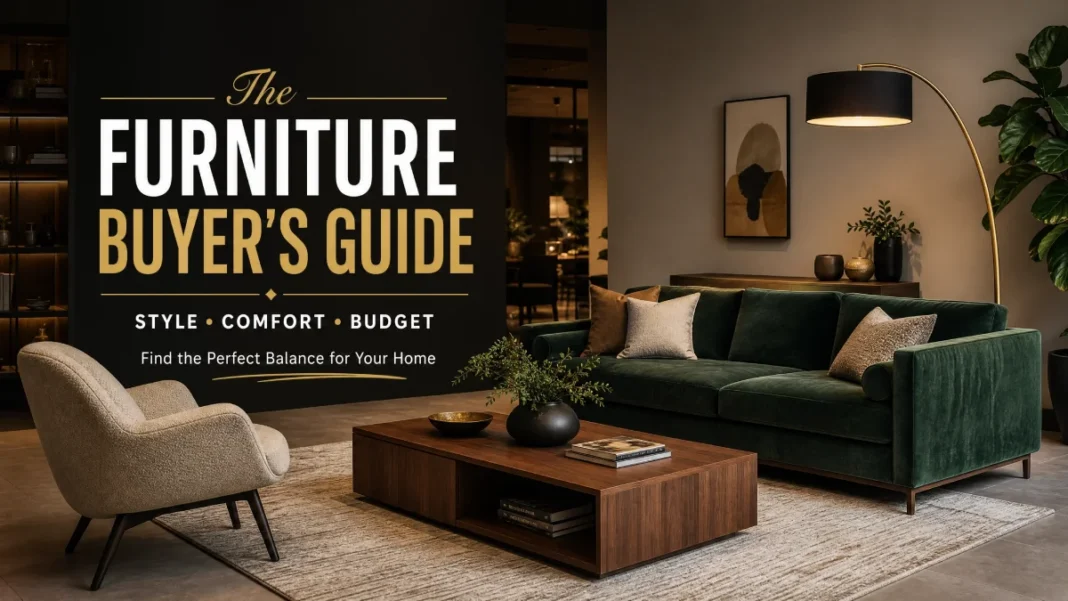
Stepping into a new home or refreshing your current space brings a mix of excitement and overwhelm. You dream of a home that feels effortlessly luxurious, yet furniture shopping can quickly turn that dream into a daunting task.
From deciphering confusing material labels to walking through endless showrooms, it’s easy to feel lost. You might wonder if you’re making the right investment or just another costly mistake. You deserve a home that feels beautiful and built to last — without sacrificing your budget.
Imagine confidently choosing pieces that look stunning and hold up over time. This guide gives you the knowledge to make smart furniture decisions.
By the time you finish reading, you’ll know how to balance style, comfort, and budget — and transform your house into the luxurious, livable home you’ve always envisioned.
Step 1: The Math of the Room (Sizing & Layout)
Before you think about fabric swatches or wood finishes, you need to master the math of your room. This isn’t about complex equations — it’s about precise measurements and thoughtful planning. These steps will save you from costly mistakes and delivery day disappointments.
You want your furniture to fit harmoniously, not overwhelm or get lost in your space. Think of yourself as a spatial architect, ensuring every piece has its perfect place.
Start by measuring the room itself, noting its length and width. Then, consider the flow of traffic: where do you walk? Where do doors open? Where are windows and electrical outlets? These details matter more than most people realize.
Next, measure all entry points — doorways, hallways, and stairwells — that your new furniture will need to pass through. A beautiful sofa is useless if it can’t get past your front door.
Interior designers often suggest taping out the dimensions of potential furniture pieces on your floor with painter’s tape. This simple trick lets you visualize scale and placement, helping you avoid a piece that looks perfect online but eats your entire living room.
Step 2: The Budget Blueprint (Where to Splurge vs. Save)
Creating a budget blueprint is one of the most important steps in furnishing your home with both luxury and practicality in mind. You don’t need an unlimited budget to achieve an ObviousLuxe aesthetic — you need to know where to invest and where to save.
This approach ensures your money works harder for you, focusing on pieces that deliver the most impact and longevity. Consider a tiered approach to your spending.
Splurge on foundational, high-use items that endure daily wear and tear. These include your sofa, mattress, dining table, and primary bedroom pieces. These are the workhorses of your home, and investing in their quality pays off in durability and comfort.
For instance, a high-quality sofa might cost more upfront, but its superior construction means it won’t sag or fall apart after just a few years.
Conversely, save on accent pieces, decorative items, and furniture for lower-traffic areas. Think side tables, decorative chairs, lamps, and accessories. These items can be updated more frequently to refresh your style without a major financial commitment.
Mixing high-end investment pieces with budget-friendly finds is a savvy approach that many interior designers recommend. The goal is a cohesive, luxurious feel — not spending lavishly on every single item.
Step 3: Decoding Quality (Wood, Joints, & Fabrics)
Understanding material quality indicators is the key to buying furniture that endures. You want pieces that not only look good but are built to last, offering real value for your investment.
For wood, the primary distinction is between solid wood and engineered wood products like particleboard or MDF (Medium-Density Fiberboard). Solid wood is natural lumber all the way through — species like oak, walnut, maple, and cherry are prized for their grain patterns and durability.
Solid wood can be repaired and refinished, and often lasts for decades. Pieces made from solid wood are generally heavier and more resistant to scratches and chipping. Look for wood certified by the FSC (Forest Stewardship Council) if sustainability is a priority.
Particleboard
Particleboard is an engineered product made from compressed wood chips and resin. While more affordable, it’s less durable and susceptible to moisture damage. It’s also harder to repair once damaged.
For long-term pieces like dining tables or bed frames, solid wood is almost always the better choice. Look for terms like kiln-dried wood, which indicates the wood has been dried to remove moisture, preventing warping and cracking.
Beyond the material itself, examine the joinery — how the pieces of wood are connected. High-quality furniture uses strong, traditional joinery methods.
Dovetail Joints
Look for dovetail joints on drawer fronts or mortise and tenon joints where pieces meet. These methods create robust connections that withstand daily use.
Avoid furniture held together primarily with staples, nails, or visible glue. These indicate lower quality and a shorter lifespan. You want furniture that feels solid and stable, not wobbly or flimsy.
Fabric Grades
Finally, consider fabric grades for upholstered pieces. Upholstery fabrics are often graded, with higher grades typically indicating greater durability and more complex weaves.
For high-traffic items like sofas, look for performance fabrics that are stain-resistant and easy to clean. The rub count measures how many double rubs a fabric can withstand before showing wear — look for a minimum of 15,000 double rubs for residential use, and 30,000 or more for heavy-use pieces.
Investing in a higher-grade fabric for your most-used upholstered pieces ensures they maintain their look and feel for years.
Step 4: The Showroom “Sit Test” (Comfort Checklist)
Comfort is subjective, but quality comfort has objective indicators. You wouldn’t buy a car without a test drive, so don’t invest in a sofa or chair without a proper “sit test.”
This isn’t just about how soft a cushion feels — it’s about ergonomics, support, and how the piece will perform over time. You want furniture that cradles you after a long day, not one that leaves you stiff and sore.
Here’s your comfort testing checklist for any upholstered piece:
- The Initial Sink: When you first sit down, do you sink too deeply, or is there a firm, supportive base? Cushions filled with high-density foam offer the best balance of plushness and support. Down-wrapped or feather-wrapped cushions feel softer but may need more frequent fluffing. Avoid cushions that don’t rebound quickly.
- Depth and Height: Does the seat depth allow you to sit comfortably with your feet flat on the floor? For most adults, a seat depth of 21–22 inches is ideal. Is the seat height appropriate? You should be able to get in and out with ease.
- Back Support: Does the backrest provide adequate lumbar support? A good sofa or chair should support the natural curve of your spine. Lean back and assess whether you feel supported or you’re slouching.
- Armrest Placement: Are the armrests at a comfortable height for resting your arms? They should be low enough for conversation but high enough for support when relaxing. Test different positions to ensure versatility.
- Frame Integrity: Give the frame a gentle shake. Does it feel solid and stable, or does it wobble or creak? Look for frames built from kiln-dried hardwood — they resist warping and hold up far longer than softwood or engineered alternatives. Any movement or noise signals poor construction.
Step 5: The Style Framework (Cohesion without “Matchy-Matchy”)
Developing a style framework means creating a cohesive, curated look that feels like yours. Avoid the trap of a “matchy-matchy” showroom display.
Your home should reflect your taste, blending pieces that speak to you while maintaining harmony. This is where the “luxe” in ObviousLuxe shines — a space that feels elegant because every element was intentionally chosen.
Start by identifying your core aesthetic. Are you drawn to modern minimalism, mid-century modern, classic traditional, or rustic farmhouse? Pinterest boards and design magazines like Architectural Digest or Elle Decor are solid sources of inspiration.
Once you have a direction, focus on three key elements to create cohesion:
- Color Palette: Choose a primary color, a secondary color, and an accent color. A neutral base with subtle variations often creates the most sophisticated look. Ensure your furniture choices complement this palette.
- Material Mix: Avoid using too much of one material. Mix textures and finishes to add visual interest. Pair a sleek metal coffee table with a plush velvet sofa for a dynamic feel.
- Scale and Proportion: Ensure pieces relate to each other in size. A grand sofa needs appropriately sized accent chairs. Use negative space effectively so the room doesn’t feel cluttered.
Remember, your goal is not to match every item perfectly, but to create a dialogue between them. Each piece should feel like it belongs.
Step 6: The Buyer’s Map (Where to Shop)
Finding the right retailer can be just as challenging as choosing the furniture itself. Your buyer’s map will help you shop smarter.
From high-end showrooms to online marketplaces, each channel offers a different experience. The key is knowing where to look for what.
Where to Invest Big (High-Quality, Long-Term Pieces):
For foundational pieces like your primary sofa or dining table, consider reputable furniture stores that specialize in solid wood construction. Brands like Pottery Barn, West Elm, Crate & Barrel, and Ethan Allen are known for quality craftsmanship and often offer strong warranties and customer service.
These stores let you physically inspect the furniture and perform your “sit test.” While the upfront cost is higher, the longevity of these pieces makes them a wise long-term choice. Look for local stores that prioritize quality and personalized service.
Where to Save (Accent Pieces, Temporary Solutions):
For accent pieces or items you might want to update frequently, online retailers and big-box stores offer excellent value. Websites like Wayfair, Amazon, and IKEA have extensive selections at competitive prices.
However, exercise caution: read reviews carefully and pay close attention to material descriptions. Thrift stores and Facebook Marketplace are also good resources for unique, budget-friendly finds.
Delivery and Warranty Considerations:
Beyond the sticker price, always factor in delivery and warranty. Delivery costs can add substantially to your total, ranging from curbside drop-off to white-glove service.
Understand what’s included and what’s extra. Similarly, scrutinize warranty details. A good warranty covers defects in materials and workmanship for a reasonable period.
Extended protection plans for spills or accidental damage can be worthwhile for high-traffic pieces. Understanding these details upfront will prevent unwelcome surprises.
Conclusion
Furnishing a home can feel like a complex puzzle, but you’re now equipped to solve it with confidence. You’ve learned everything from precise measurements to balancing your budget.
By understanding the nuances of wood, joinery, and fabrics, you’ve become a more informed buyer. The goal isn’t just to fill a space — it’s to create a sanctuary that reflects your taste.
Start by revisiting your own spaces with a measuring tape and a fresh perspective. Identify those key pieces where a strategic investment will yield the greatest return.
Don’t be afraid to mix and match, to splurge where it counts, and to save creatively. What’s the first piece of furniture you’ll be evaluating with your newfound knowledge? Share your plans in the comments below!

