
In This Article
- How to Choose a Viking Haircut
- 1. Undercut With a Single Warrior Braid
- 2. Braided Ponytail With an Undercut
- 3. Double Braids With Shaved Sides
- 4. Mohawk Braid With a Fade
- 5. Temple Shave With Long Hair
- 6. Viking Fade With a Top Knot
- 7. Half-Up Knot With Loose Length
- 8. Long Hair With Side Braids and a Beard
- 9. Slicked-Back Undercut With a Braided Beard
- 10. Short Textured Crop With a Fade
- What to Tell Your Barber
- Viking Haircut Maintenance and Care
- Are Viking Haircuts Historically Accurate?
- Which Viking Haircut Should You Try?
Viking haircuts for men do not share one shape. Some keep all the length loose, some shave only the temples, some blend the sides into a fade, and one needs no braid length at all. What ties them together is contrast between short sides and a longer top, finished with a braid, a knot, or a sharp fade.
The ten cuts below run from long, braid-led styles to a short crop you can get this week. Each one comes with the length it needs and what to ask your barber for.
How to Choose a Viking Haircut
Start with the length you have now. As a rough guide, a simple three-strand braid can work from 2 to 3 inches, most hanging braids need 4 to 6 inches, and a braid that reaches the nape needs 8 to 10 inches on top. French and Dutch braids grip closer to the scalp and need a little more length than a simple hanging braid. Scalp hair grows about half an inch a month on average, so going from a short cut to a nape-length braid takes well over a year.
Texture matters as much as length. Straight hair shows a clean braid line, wavy hair adds volume, and curly hair grips braids well without much product. Very fine, straight hair slips out of braids easily, so it suits knots, layered length, or a textured crop better.
1. Undercut With a Single Warrior Braid
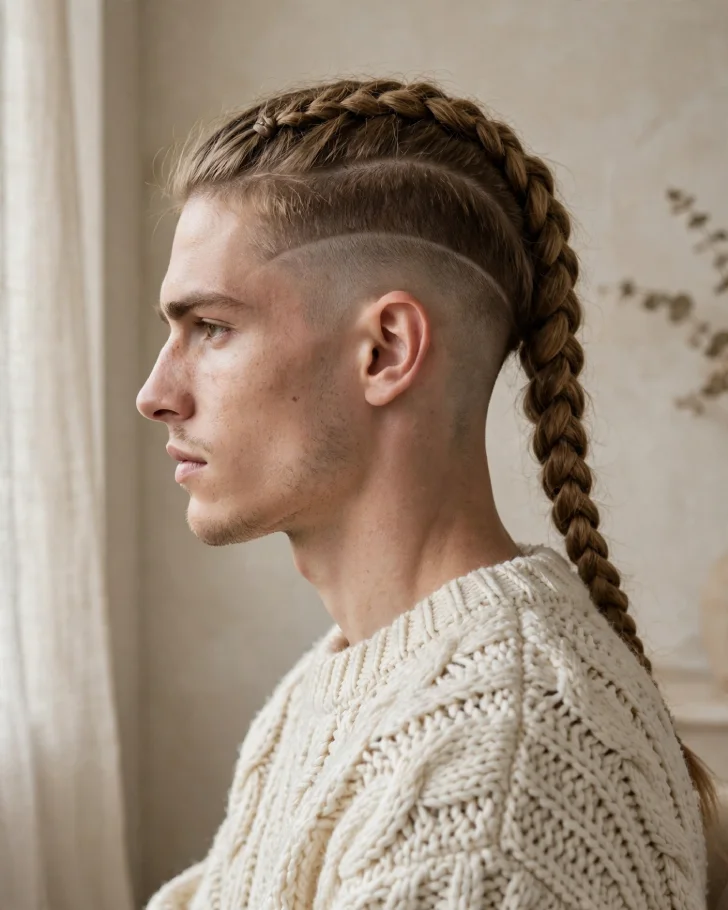
The sides are cut short and disconnected from the top, and the long top is braided into one thick central braid that runs down the back. “Warrior braid” is a styling label rather than a barber term, so bring a photo. You need 8 to 10 inches on top for the braid to reach the nape.
2. Braided Ponytail With an Undercut
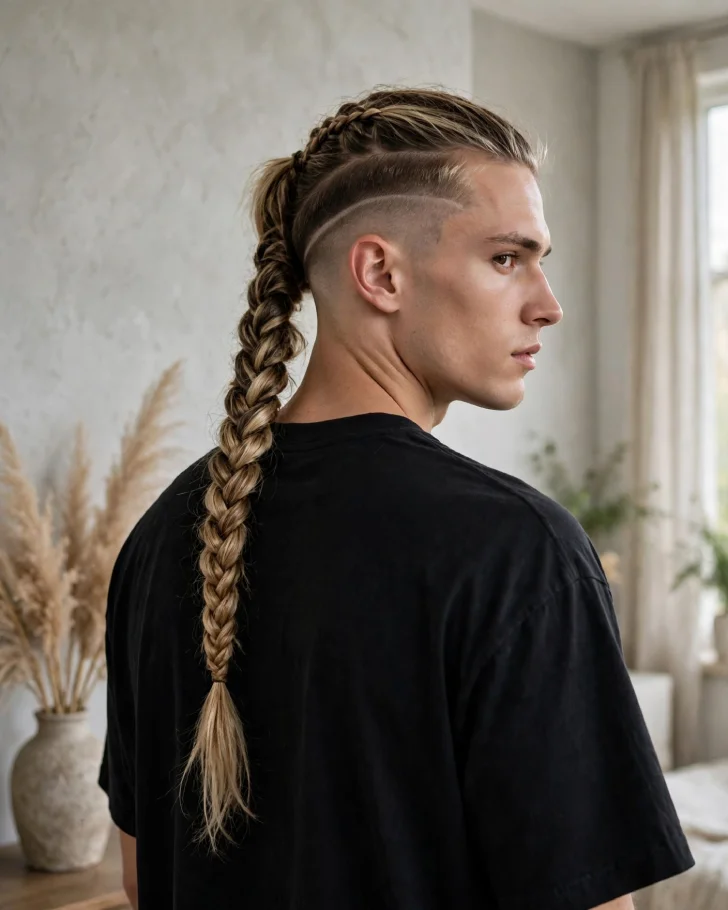
Here the hair is gathered low at the back first and braided down from the tie, rather than braided from the hairline. It suits straight and wavy hair best, because the tail hangs cleanly. Your hair should reach at least the nape, and more length gives a fuller tail. Keep the undercut disconnected so the ponytail reads as one piece.
3. Double Braids With Shaved Sides
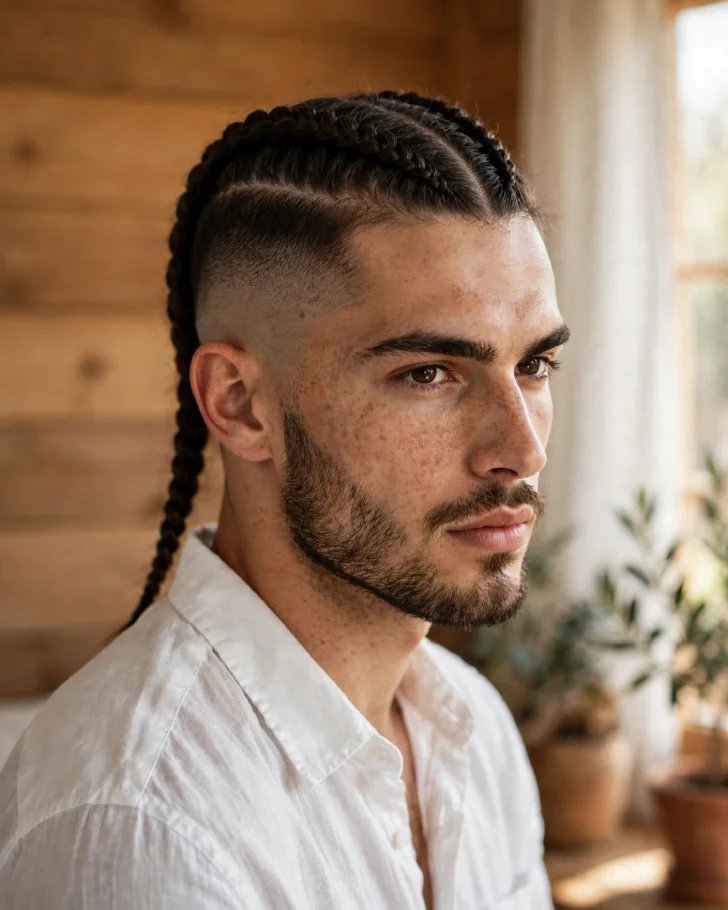
Two braids run from the front hairline toward the back, anchored close to the scalp, with the sides shaved close. Because the braids cover the whole top, they are the hairstyle rather than an accent. The style suits medium to long hair. If your top is around 4 inches, ask your barber to test one braid before committing to both.
4. Mohawk Braid With a Fade
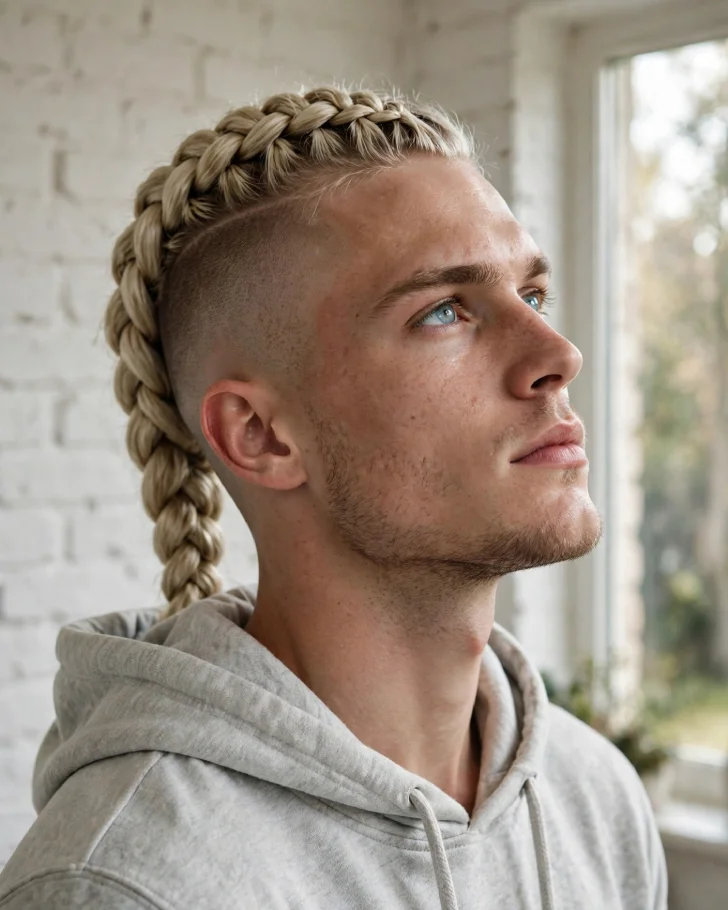
A single braid runs front to back along a center strip of hair, while the sides fade through blended guard lengths. A Dutch braid, which crosses strands under instead of over, makes the braid sit raised on top of the strip. Because the braid anchors to the scalp, the top only needs to be medium length. At the barber, ask for a center strip left long, a mid or high fade, and agree on the shortest guard before cutting.
5. Temple Shave With Long Hair
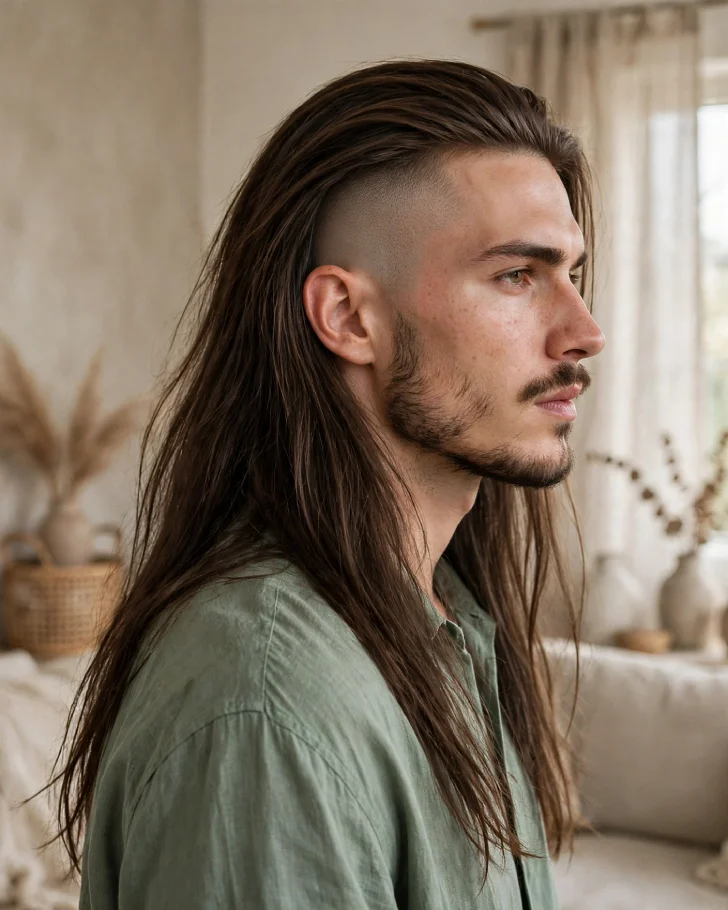
A temple shave takes the hair short at one or both temples while the rest stays long. It is the lowest-commitment way into the look: wear the length loose to hide the shave, or sweep it back to show it off. Ask for the temples taken short with the rest of the length left alone, and the cut grows out easily if you change your mind.
6. Viking Fade With a Top Knot
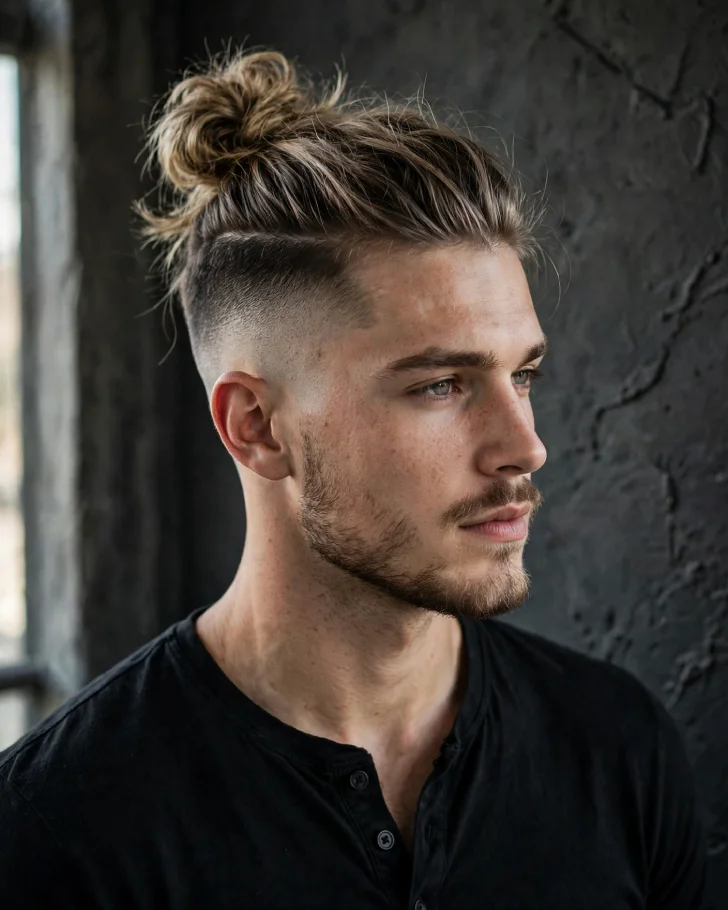
Faded sides pair with a knot at the crown that keeps long hair off your face. “Viking fade” is a barbershop label rather than a historical name, so a photo helps more than the term. The top must be long enough to gather and tie without pulling. A low fade keeps more weight on the sides, while a high fade gives sharper contrast with the knot.
7. Half-Up Knot With Loose Length
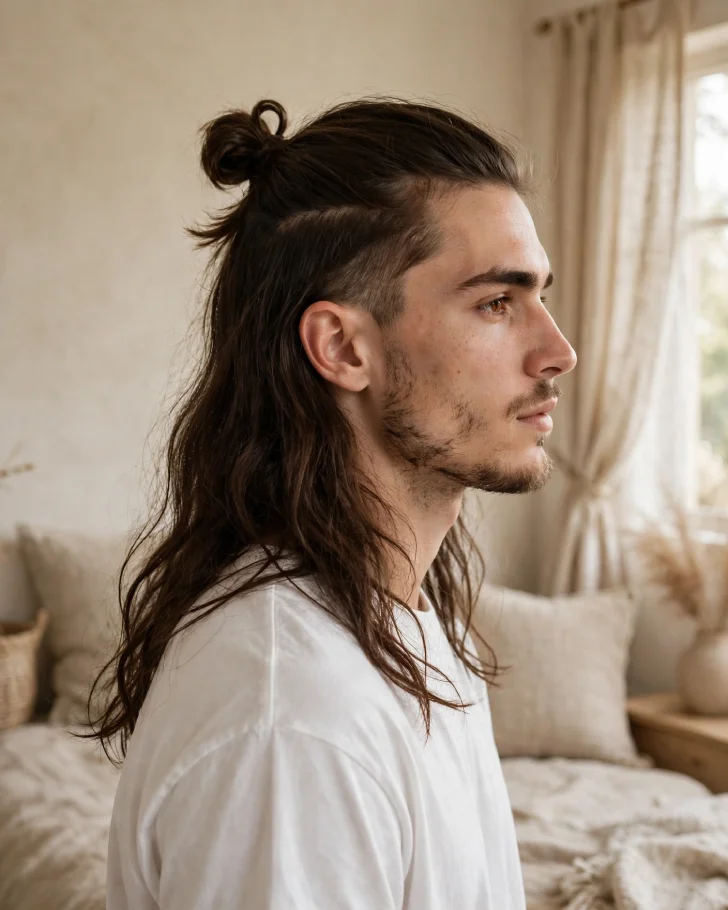
Only the top section goes into a small knot, and the rest hangs loose down the back. Compared with a full top knot, most of your length stays visible. The top needs enough length to knot, and the loose hair looks best at shoulder length or longer.
8. Long Hair With Side Braids and a Beard
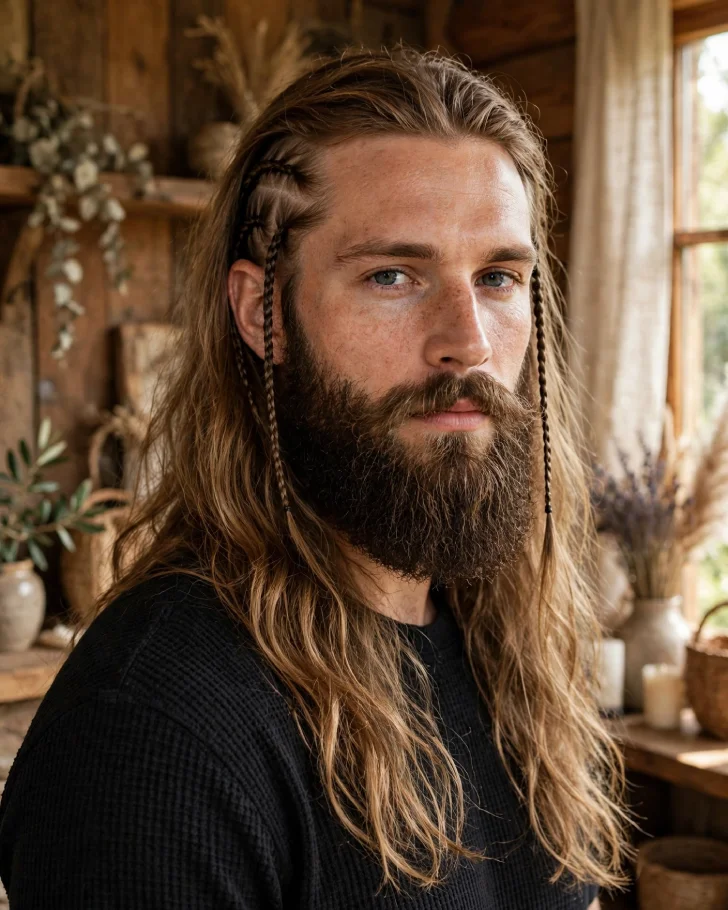
Thin braids at each temple frame your face while the rest of the hair stays long and loose. This gives a Viking feel without shaved sides or a fade. The temple braids need only a few inches, so try one before doing both sides. A full beard balances the length and makes the look read as Norse rather than boho.
9. Slicked-Back Undercut With a Braided Beard
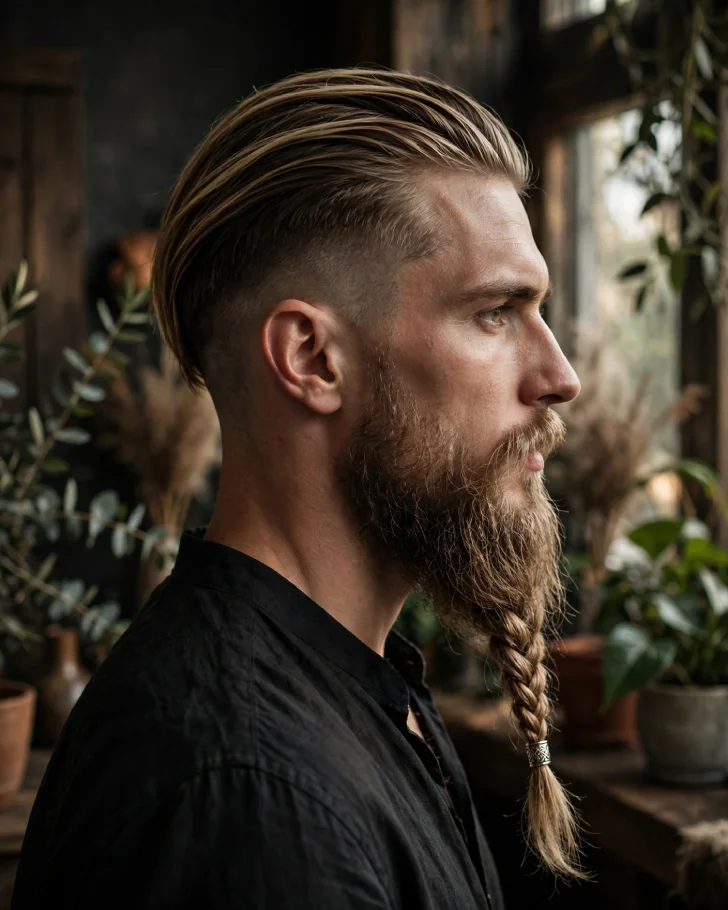
The hair is swept back over an undercut, and the beard carries the braid instead of the hair. It works with medium-length hair and a full beard long enough to gather and plait without pulling at the skin. A small metal bead or ring at the end of the beard braid finishes the look.
10. Short Textured Crop With a Fade
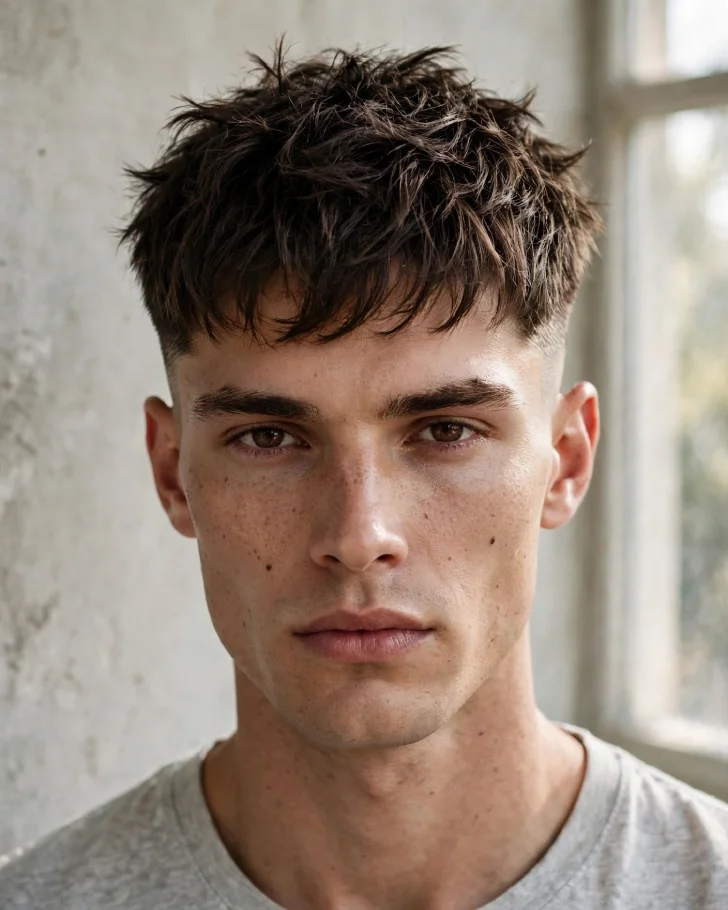
A Viking-inspired cut does not need braids. This crop keeps 1 to 2 inches of choppy texture on top with tightly faded sides, so you get the same short-sides, strong-top contrast. Ask for a textured top of about 1 to 2 inches, point-cut for movement, with a fade at the sides and back. It is also the cut to grow from if you want braids later.
What to Tell Your Barber
Bring a photo, since it shows side contrast, braid placement, and beard shape better than words. Say “undercut” for a sharp, disconnected line and “fade” for sides that blend from short to shorter. Then name two things separately: where the fade sits and the shortest guard. For more on how top and side lengths work together, see our guide to the 3:2:1 rule for haircuts.
Standard clipper guard sizes are below, though brands differ slightly.
| Guard | Length left | What it sets |
|---|---|---|
| 0, no guard | Under 1/16 inch | Shortest finish |
| 1 | About 1/8 inch | Very short side length |
| 2 | About 1/4 inch | Short side length |
| 3 | About 3/8 inch | Blending length |
| 4 | About 1/2 inch | Fuller side length |
Fade placement controls where the transition sits. A low fade starts just above the ears and neckline, a mid fade sits around the temples, and a high fade climbs toward the top of the head. A clear request names both, for example: “low fade, number 1 as the shortest, and leave some weight above it.”
Viking Haircut Maintenance and Care
Sharp undercuts and shaved lines usually need a trim every two to three weeks to stay crisp, softer fades can stretch to three or four weeks, and long hair without a fade needs a trim every six to eight weeks to keep the ends healthy.
A braid you do yourself each morning usually needs redoing every few days, because sleep and weather loosen it. Tighter braids done by a stylist hold for longer, often a few weeks. Either way, keep braids loose enough that they don’t pull at your scalp, and take out any braid that hurts. Matte clay or sea salt spray adds grip and texture for braiding, and beard oil keeps a braided beard soft.
Are Viking Haircuts Historically Accurate?
Partly. The famous shaved-sides-and-long-braid look owes more to television than to history: it was popularized by Travis Fimmel’s Ragnar Lothbrok in the History series Vikings, which premiered in 2013. No surviving Viking Age carving or text shows that exact combination, so call it Viking-inspired.
The real record points to a different shape. Around the year 1000, the English abbot Ælfric of Eynsham scolded a man for dressing “in Danish fashion, with bared neck and blinded eyes,” which medievalist Thijs Porck reads as a cropped neck with a long fringe falling over the eyes. Picture stones from Gotland add detail: a survey in Internet Archaeology notes that most men on them have short hair, while about a third wear a plait. Combs also turn up frequently in Viking Age graves, a sign that grooming mattered.
Which Viking Haircut Should You Try?
Pick the cut that fits the hair you have today and the upkeep you’ll actually do. If you already have shoulder length, start with side braids, a half-up knot, or a temple shave. If your top is medium length, a mohawk braid or double braids with shaved sides work now. If your hair is short, get the textured crop and grow toward a braid. Agree on your trim rhythm before you leave the chair, and the cut will still look right weeks later.