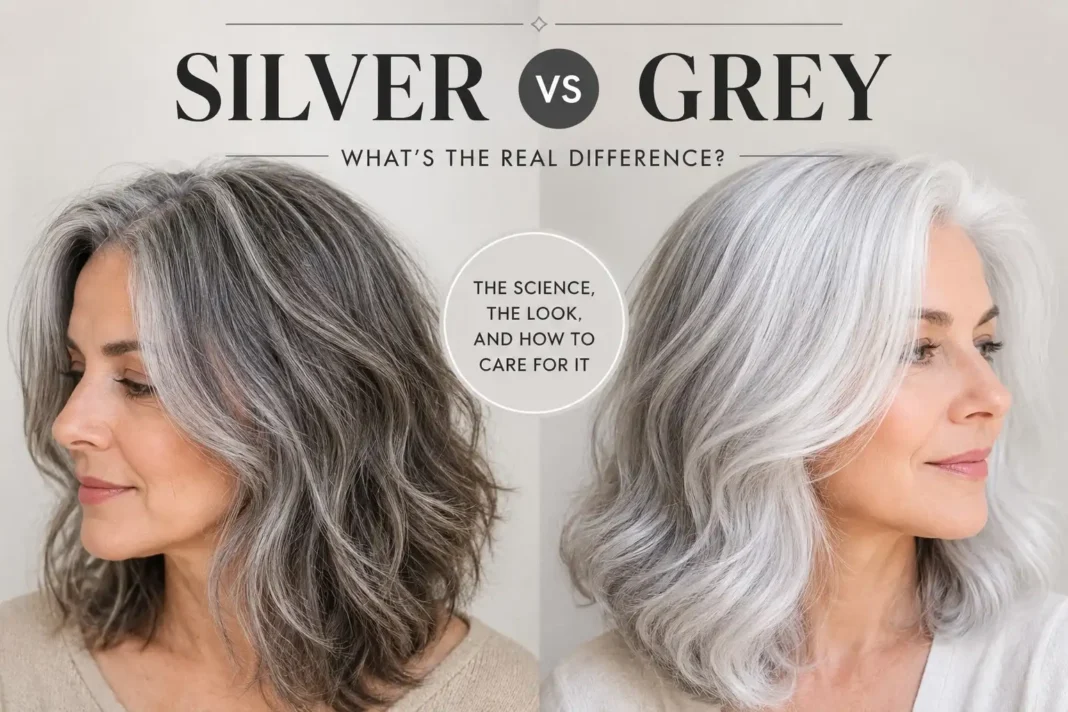
You catch a strand in the bathroom mirror. In one light it looks dull and flat. Tilt your head a little, and suddenly it’s shimmering like tinsel. So when it comes to silver vs grey hair, which one are you actually looking at?
Here’s the thing nobody tells you: you’re not imagining it. That same strand can really look like two different colors depending on the light, how healthy your hair is, and how much pigment it has left. That’s the real story behind silver vs grey hair, and why so many women aren’t sure which word actually fits their hair.
Good news, you don’t need a dermatologist or a chemistry degree to understand this. Once you know what’s actually happening inside each strand, the whole thing suddenly makes a lot more sense, and you’ll probably look at your own hair a little differently too.
Quick answer: Silver vs grey hair comes down to one thing: how much pigment is left and how much light your hair reflects. Grey hair and silver hair start from the same process, losing melanin, but they’re not identical. Grey hair is a blend of pigmented and white strands that reads as a flat, muted tone. Silver hair is mostly or fully unpigmented hair with a smooth cuticle that reflects light, giving it that bright, shiny look. In short: grey is the mix, silver is the shine.
Is Silver Hair the Same as Grey Hair?
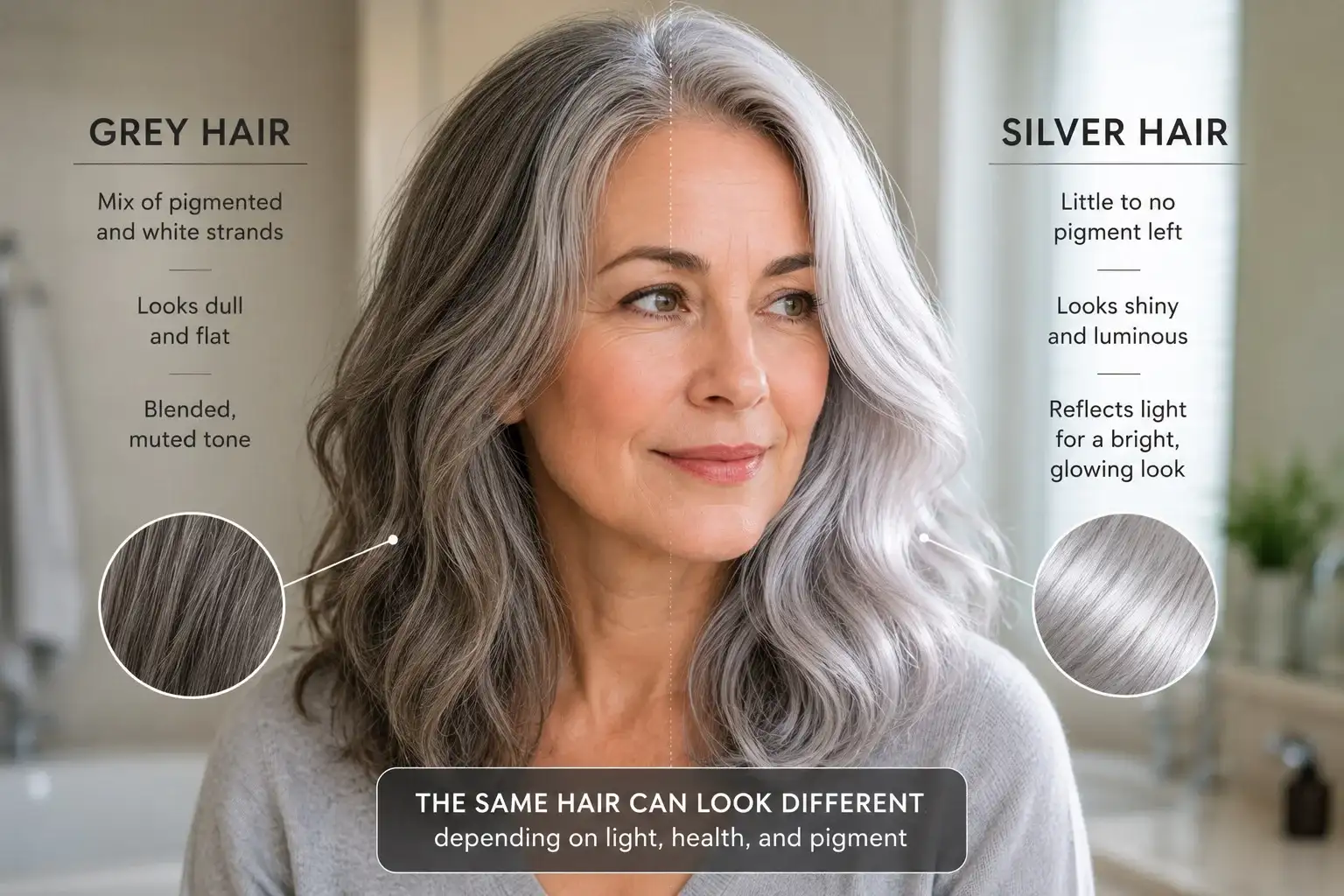
Not exactly, but they’re close cousins. When people ask about silver vs grey hair, they’re usually trying to figure out which stage their own hair is in.
Grey hair happens when you have a mix of pigmented strands and unpigmented (white) strands growing together. From a distance, your eye blends them into one grey tone.
Silver hair usually refers to hair that’s mostly or fully unpigmented and catches the light in a bright, shiny way. It’s less about a different biological process and more about how that same white hair looks and behaves.
So technically, silver hair is often just white hair with a healthy shine. Grey hair is the mixed, in-between stage most people pass through first.
In plain terms, grey hair meaning simply points to that blended, in-progress look, while silver hair meaning leans more toward the finished, shiny result. Neither one is a strict scientific label. They’re just the words we’ve settled on to describe two ends of the same journey.
What Causes Grey Hair and Silver Hair?
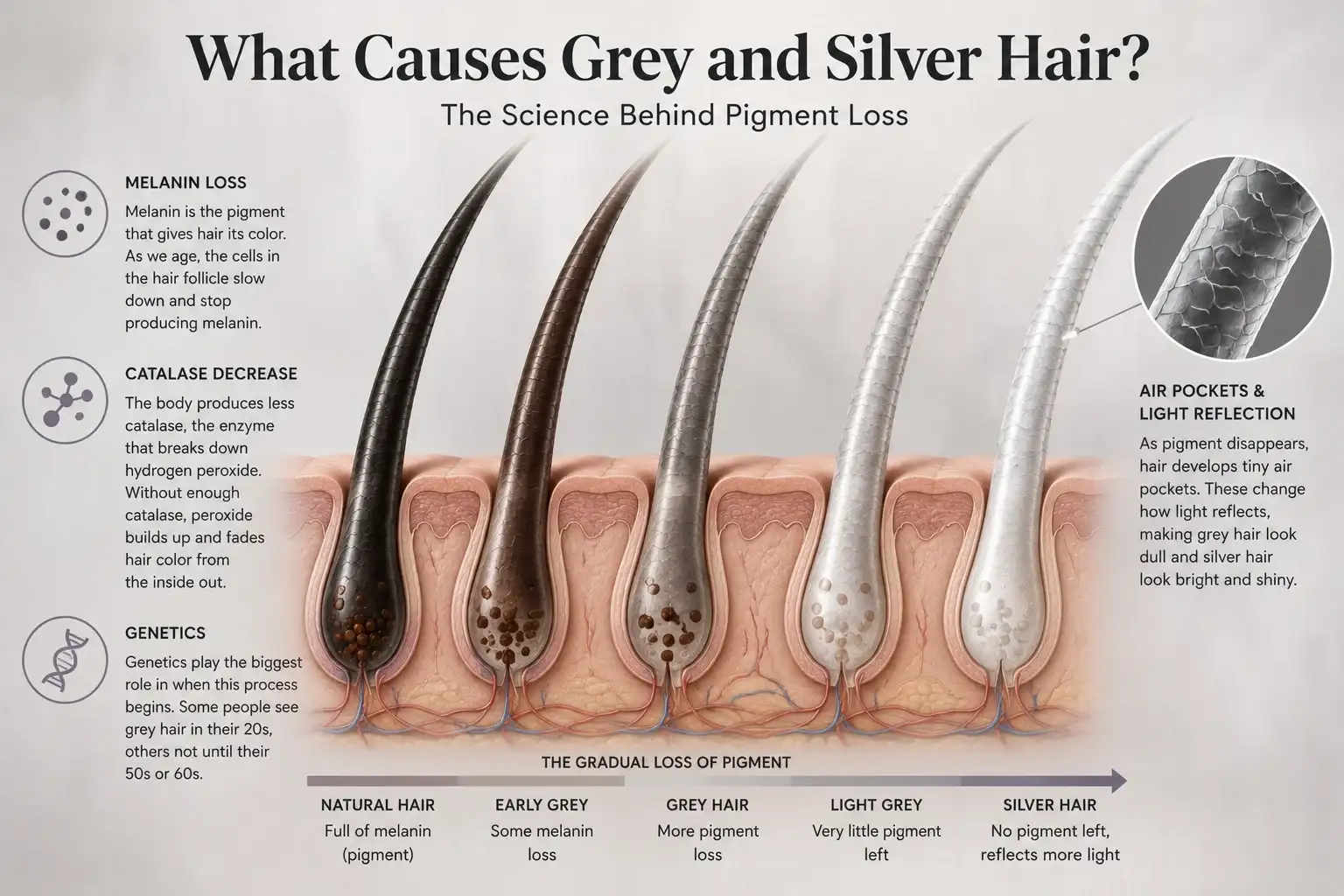
Your natural hair color comes from melanin, a pigment made by tiny cells inside each hair follicle. As you get older, these cells slow down. Eventually they stop making melanin altogether. This one process is what causes both grey hair and silver hair. They’re just different stages of the same story.
At the same time, your body makes less of an enzyme called catalase. This enzyme normally breaks down a substance called hydrogen peroxide in your hair. Without enough catalase, that peroxide builds up and fades the color from the inside out. Your hair also fills with tiny air pockets, which changes the way it reflects light.
Does genetics affect silver hair timing? Yes, almost entirely. Genetics decide when this starts. Some women notice their first strands in their twenties. Others don’t see it until their fifties or sixties.
Why Does Grey Hair Look Grey Instead of White?
Grey hair isn’t really its own color. It’s more of a visual trick, created when hair with color and hair without color sit next to each other on your head.
If you have dark hair and about a third of your strands have lost their color, your head reads as a brownish grey from a distance. The darker your natural hair, the more contrast you’ll see between the white strands and the ones that still have pigment. That’s what people usually call “salt and pepper” hair.
Blondes and redheads often skip this stage almost completely. Their natural color is already light, so there isn’t enough contrast to create that grey blend. Their hair tends to fade straight into white or silver instead.
Why Does Some Hair Look Silver Instead of Grey?
This comes down to two things: how much pigment is left, and how the hair cuticle reflects light.
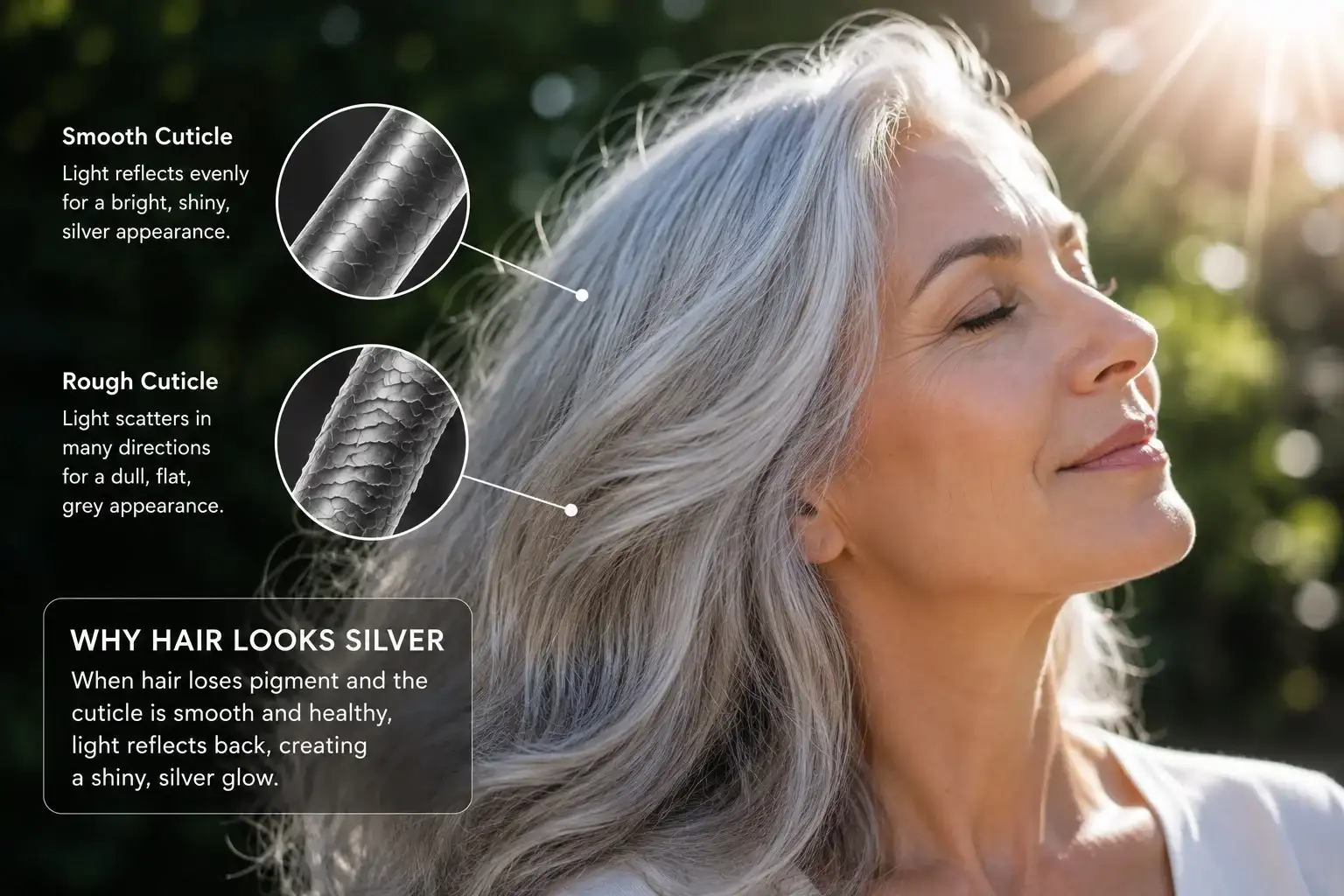
Once a strand has no color left, it turns see-through. Instead of soaking up light like colored hair does, it bounces light back out. If your hair’s outer layer (called the cuticle) lies flat and smooth, that light bounces off in a concentrated way, giving you that bright, shiny look people describe as silver.
If the cuticle is rougher or drier, the light scatters in every direction instead of bouncing back cleanly. That same white hair ends up looking flat or dull instead of shiny.
So silver hair isn’t a different type of hair biologically. It’s white hair with a smooth, healthy cuticle that reflects light well.
Is Silver Hair Rare, and Does Everyone Get Grey Hair?
Almost everyone goes grey eventually, it’s just a matter of when. What’s less common is landing on that bright, even silver look, since it depends on genetics, hair texture, and how well the cuticle has held up over the years. In that sense, yes, truly silver-looking hair is a bit rarer than plain grey.
And to be clear, silver hair is completely natural. It’s not a sign that something has gone wrong with your hair. It’s simply what happens when unpigmented strands have a smooth, healthy cuticle to reflect light off of.
Some women also skip the grey stage entirely and go straight to white or silver. This usually happens to naturally blonde or red-haired women, since their hair doesn’t have enough dark pigment left in the mix to create that grey, salt-and-pepper contrast in the first place.
Silver Hair vs Grey Hair: A Quick Comparison
| Feature | Grey Hair | Silver Hair |
|---|---|---|
| Pigment | Mix of pigmented and white strands | Little to no pigment left |
| Appearance | Flat, muted, blended tone | Bright, shiny, metallic |
| Light reflection | Moderate | High |
| Common stage | Transitional phase | Often the later or end stage |
| Texture feel | Can vary | Often smoother, well-maintained |
Keep in mind these aren’t fixed medical categories. They’re descriptive terms, and different people use them differently based on how their hair looks and feels to them.
Does Silver Hair Mean You’re Older Than Someone With Grey Hair?
Not necessarily. Age at onset depends almost entirely on genetics, not on whether your hair ends up looking grey or silver.
Some women reach a fully white, silver-looking head of hair by their forties. Others stay in the grey, salt-and-pepper phase well into their seventies. Your natural hair color also plays a role. Very dark hair tends to show a longer, more visible grey phase, while naturally light hair moves through it faster because there’s less contrast to notice.
Hair texture matters too. Fine, straight hair often shows off that reflective silver shine more easily than coarse or curly hair, simply because the light has an easier surface to bounce off of.
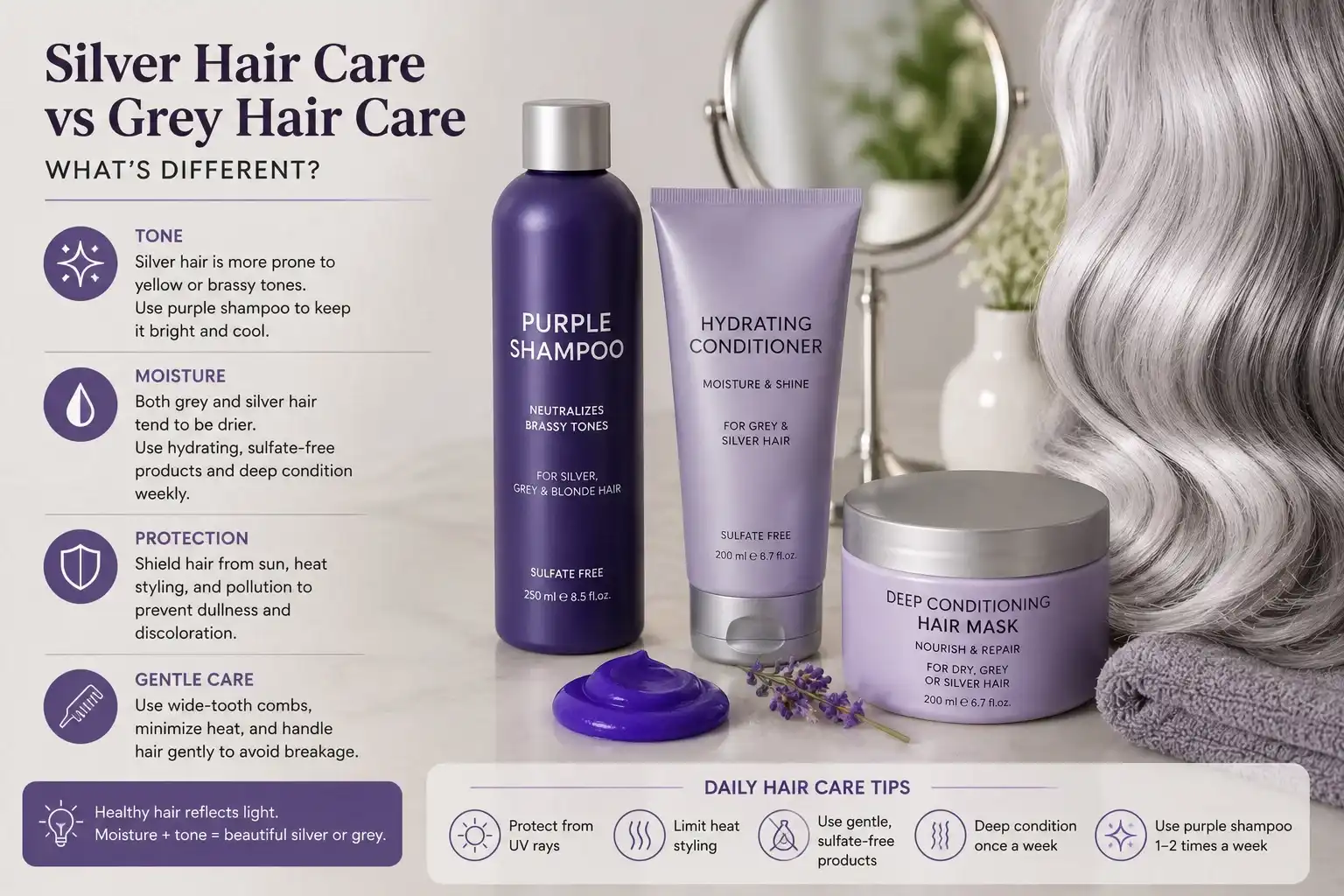
Silver Hair Care vs Grey Hair Care: What’s Different?
Both types of hair face similar challenges, but silver hair care tends to need a bit more attention to stay looking bright.
Because silver hair is more see-through, it tends to pick up yellow or brassy tones from the sun, heat styling, and everyday pollution. A purple shampoo for silver hair can help cancel out that yellow tint and keep the color looking cool and clean.
Grey hair care, especially for the mixed strands, usually needs less toning but still benefits from extra moisture. As your scalp produces less natural oil with age, both grey and silver strands tend to run drier than pigmented hair. A purple shampoo for grey hair can help too, though a sulfate-free, hydrating shampoo and a deep conditioning mask once a week will make the bigger difference in shine and softness.
If you’re coloring your hair to get a silver look on purpose, talk to your colorist about the lightening process. Hair that’s already lost its natural pigment can be more delicate, and over-processing it can lead to breakage.
Can Grey Hair Turn Into Silver Hair Over Time?
Yes, in a way. As more of your follicles stop producing melanin, your hair moves from that mixed grey stage toward being fully white. Once it’s fully unpigmented and the cuticle is smooth and healthy, that white hair often takes on the bright, reflective look people call silver.
So silver hair isn’t really a different destination than grey hair. It’s often just the next stage, combined with good hair health and light reflection working in your favor.
Final Thoughts
At the end of the day, the silver vs grey hair debate comes down to biology, not two separate hair types. Both come from the same process: your hair losing melanin as you age. According to the Cleveland Clinic, this happens naturally to almost everyone over time, though stress, diet, and genetics can speed it up. The difference is mostly about how much pigment remains and how well your hair reflects light. Whether you call your hair grey or silver often comes down to personal choice just as much as biology.
If you’re in the middle of this transition, focus less on the label and more on keeping your hair healthy, moisturized, and protected from the sun. That’s what actually makes both grey and silver hair look their best.
Frequently Asked Questions
Is silver hair the same as grey hair?
Not exactly. Grey hair is a mix of pigmented and white strands, while silver hair usually refers to fully unpigmented hair that reflects light in a bright, shiny way.
Why does my grey hair look shiny in some light?
That shine comes from your hair cuticle lying flat and reflecting light cleanly. This is what gives some grey or white hair that silvery, metallic look.
Does silver hair need purple shampoo?
It often helps. Silver hair tends to pick up yellow tones from sun and heat exposure, and a violet-toning shampoo can neutralize that brassiness and keep the color looking crisp.

