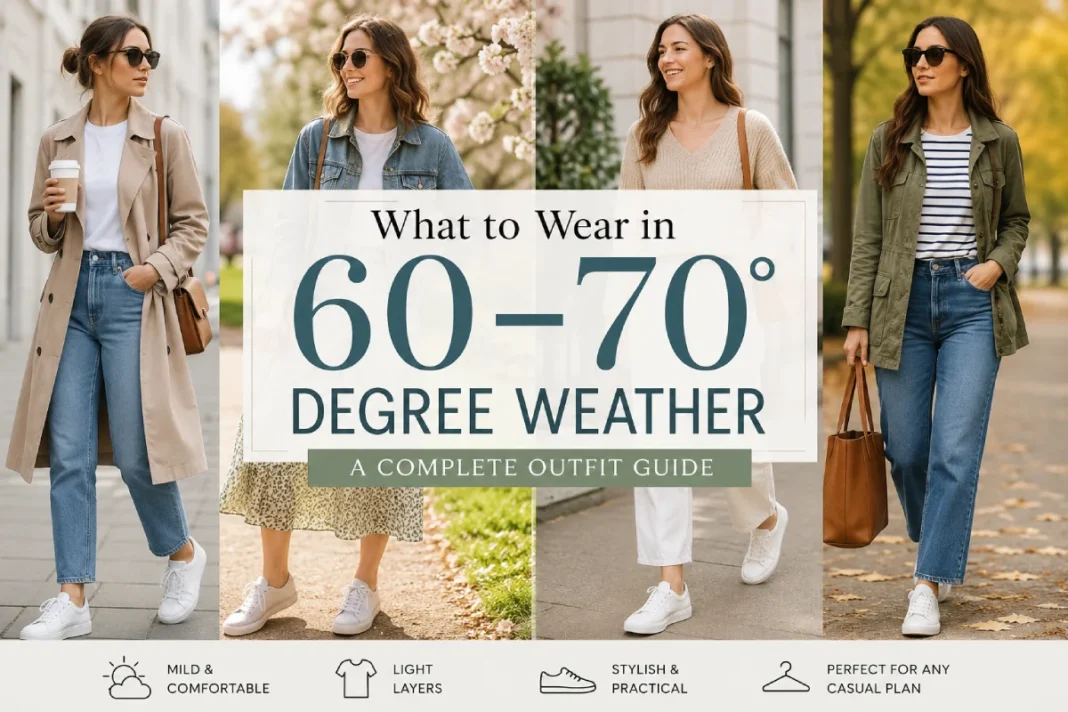
60°F sounds simple until you’re standing in front of your closet at 7 a.m., unsure whether you need a jacket or just a long-sleeve shirt. Ask ten people what 65°F feels like, and you’ll get ten different answers. This range trips up more outfits than any other.
You’ll learn exactly what to wear at 60, 65, and 70 degrees — outfit ideas for women and men, layering tips, transitional dressing for spring and fall, and answers to the questions people search most: is 60 degrees cold, and can you wear shorts at 66?
How 60–70 Degree Weather Actually Feels
This range sits between chilly and warm. A few degrees, or a single gust of wind, can flip your comfort completely.
60–63°F: Cool. Long sleeves and probably a light jacket, especially in the morning or shade. Most people find this too cold for shorts unless they’re active.
64–67°F: Mild. A long-sleeve shirt might be enough by midday, but mornings and evenings still call for a layer. Some people happily wear shorts here.
68–70°F: Warm. Short sleeves feel good in direct sun, but you’ll still want a backup layer once the sun drops or the wind picks up.
What Changes How It Feels
Temperature alone doesn’t tell the whole story. According to the National Weather Service, wind, humidity, and sun exposure can shift how a temperature feels by several degrees in either direction.
- Direct sun can make 62°F feel closer to 68°F; cloud cover does the opposite.
- A steady breeze cuts through a thin shirt fast, even at 65°F.
- Damp air feels colder and clings to skin; dry air feels crisper.
- Brisk walking warms you up quickly; sitting still cools you down just as fast.
- Mornings run cooler; afternoons climb toward the warmer end.
- Location matters too: 65°F in dry, sunny Phoenix feels easy, the same number in damp, overcast Seattle feels colder, and a windy city like Chicago can make even 63°F bite.
Humidity Matters More Than You Think
In dry air, sweat evaporates quickly, and you feel cooler. In humid air, moisture sits on your skin, making you feel sticky at warmer temperatures and chilled at cooler ones. A damp 62°F can feel colder than a dry 62°F, especially with a breeze — which is why breathable fabrics matter so much in this range.
Is 60 Degrees Cold or Not?
60°F is cool, not cold. You’ll want sleeves and a light jacket or sweater, especially if you’re not moving much. People who run warm might feel fine in a long-sleeve tee; people who run cold will want an extra layer.
Comfort at 60°F depends on metabolism, body composition, circulation, and what you’re used to. Someone who grew up in Minnesota handles it differently than someone from Miami, and older adults tend to feel cold more readily. Activity matters too: finish a workout, and you’ll run warm for a while; sit at a desk for two hours and your body temperature drops.
Know your own comfort profile before following the formulas below. If you’re always first to reach for a sweater, add a layer to every recommendation here. If you’re usually in short sleeves while everyone else bundles up, skip one.
The Layering Formula That Works Every Time
Mornings start cool, afternoons warm up, evenings cool down again. You need an outfit that adjusts through all three.
- Base layer: Touches your skin. A cotton t-shirt, tank, or thin long-sleeve does the job. Use breathable, moisture-wicking fabrics — cotton, lightweight merino, or performance blends.
- Mid layer: Adds warmth. Thin sweaters, cardigans, button-ups, or a lightweight hoodie — the piece you take off first as the day warms. Fitted works better than oversized if you’re adding an outer layer on top.
- Outer layer: Blocks wind and light rain. Denim jackets, trench coats, bombers, windbreakers, and shackets all work and pack down easily once you shed them.
Layering Without Looking Bulky
Three things matter: thin fabrics, intentional fit, and texture contrast.
Choose thin, structured fabrics over thick, chunky ones. A cotton tee under a thin cardigan under an unlined jacket keeps you warm without weight. Stick to a simple color palette so the layers look put together, not piled on.
Balance your proportions. If your outer layer is loose, keep the layers underneath closer to the body. If you’re in wide-leg pants, pair them with a fitted top and a structured jacket. Loose on one part of the body, fitted on another — that contrast is what separates a styled outfit from clothes that look thrown together.
Mix textures on purpose. A smooth cotton tee under a knit cardigan with a structured denim jacket creates contrast; identical textures, like a knit sweater under a knit coat, look flat. Pair one smooth layer with one textured layer and let the difference do the work.
What to Wear at 60–63°F
The coolest part of the range — plan on full sleeves and a real jacket, especially in the morning.
Business Casual and Smart Casual
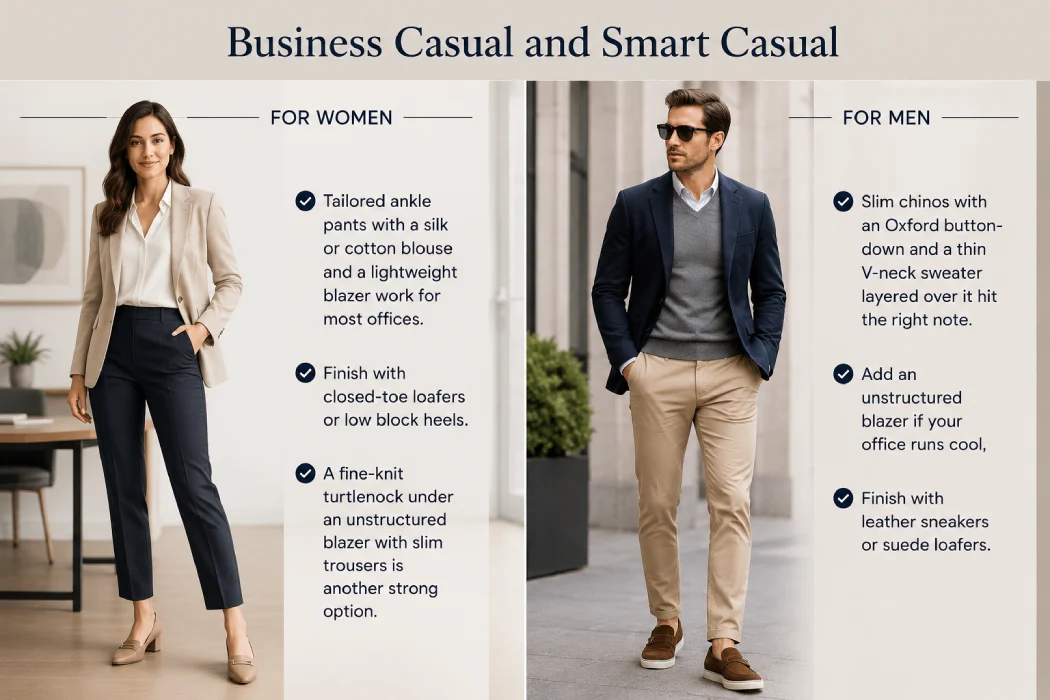
For women: Tailored ankle pants with a silk or cotton blouse and a lightweight blazer work for most offices. Finish with closed-toe loafers or low block heels. A fine-knit turtleneck under an unstructured blazer with slim trousers is another strong option.
For men: Slim chinos with an Oxford button-down and a thin V-neck sweater layered over it hit the right note. Add an unstructured blazer if your office runs cool, and finish with leather sneakers or suede loafers.
Casual and Everyday
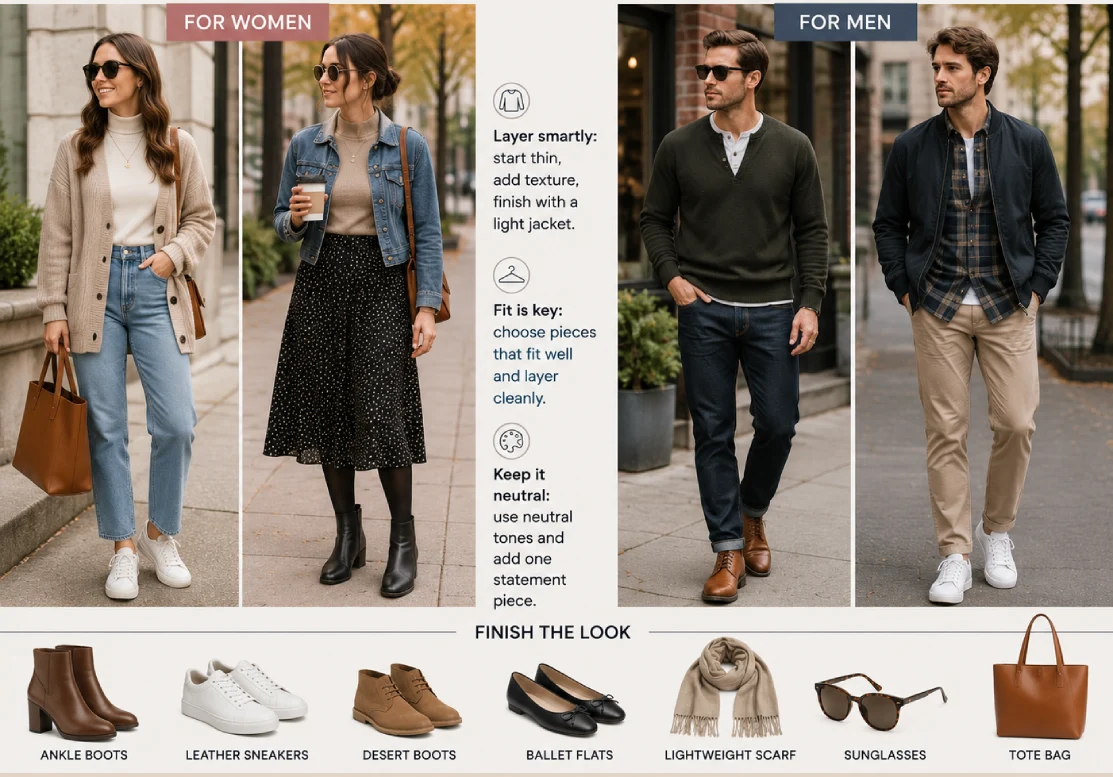
For women: Straight-leg jeans or wide-leg trousers, a thin turtleneck or long-sleeve tee, then a chunky cardigan or crewneck sweater. Finish with a denim jacket or lightweight trench. A midi skirt with opaque tights, ankle boots, and a fitted sweater under a cropped jacket also works. Stick to neutral tones and one statement piece, like a structured coat, to anchor the look.
For men: Dark jeans or chinos as a base, a Henley or long-sleeve tee, then a crewneck sweater or flannel shirt, finished with a light bomber or denim jacket. Fit matters most here — pieces that sit close to the body without clinging let layers stack cleanly.
What to Wear at 64–67°F
The sweet spot — comfortable in short sleeves by noon, but still wanting that morning jacket.
Casual and Smart Casual
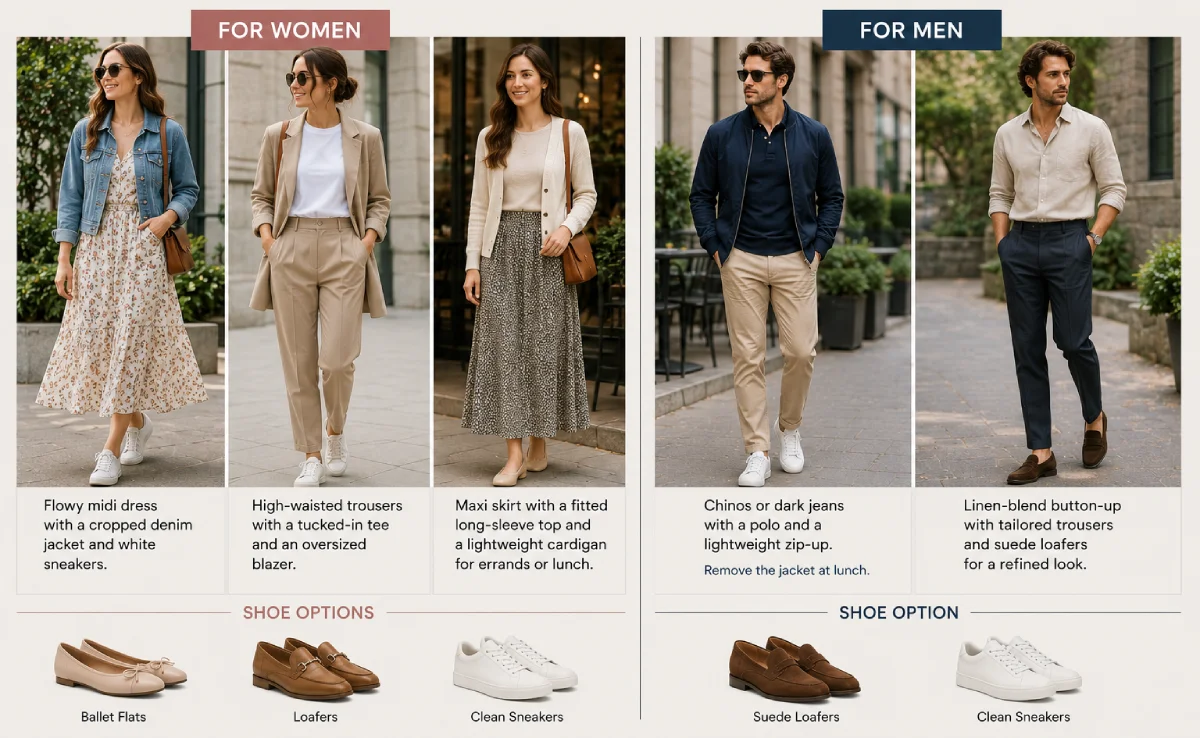
For women: A flowy midi dress with a cropped denim jacket and white sneakers handles 65°F easily. High-waisted trousers with a tucked-in tee and an oversized blazer feel polished but comfortable — roll the sleeves up once it warms. A maxi skirt with a fitted long-sleeve top and a lightweight cardigan works for errands or lunch. Ballet flats, loafers, or clean sneakers all fit here.
For men: Chinos or dark jeans with a polo and a lightweight zip-up work well; remove the jacket at lunch. For something more refined, a linen-blend button-up with tailored trousers and suede loafers bridges casual and put-together.
Athleisure and Active Wear
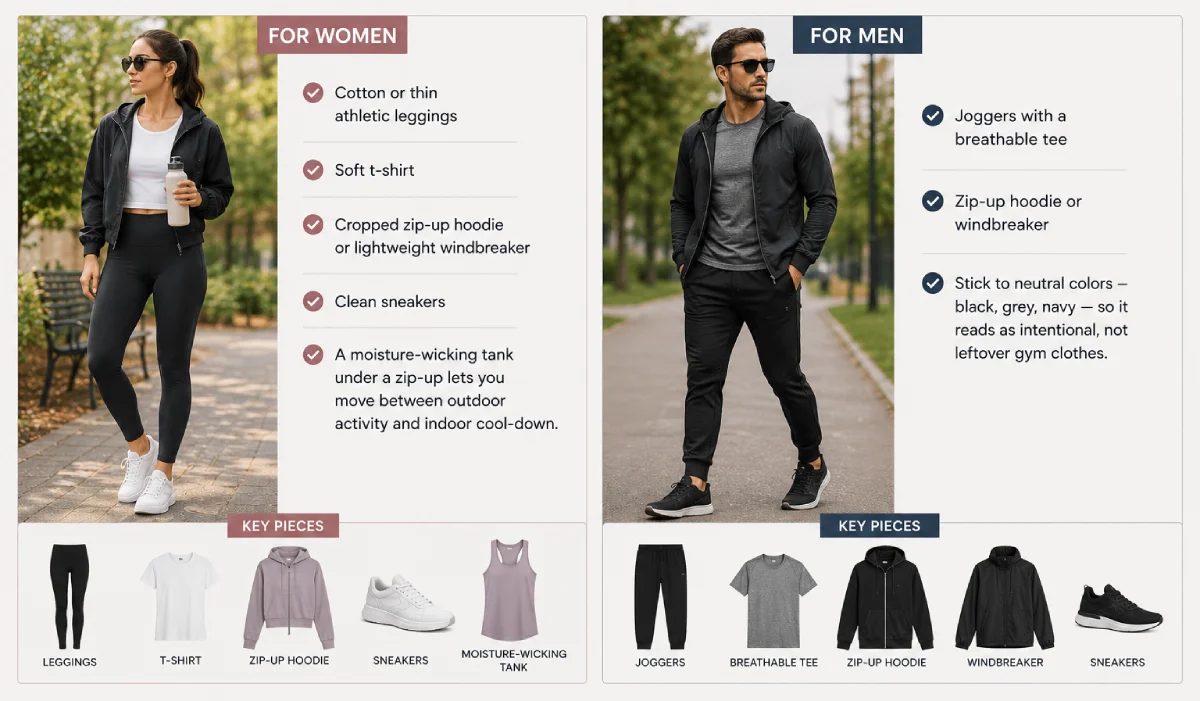
Athletic pieces work fine at 65°F if you style them with intention.
For women: Cotton or thin athletic leggings, a soft t-shirt, a cropped zip-up hoodie or lightweight windbreaker, and clean sneakers. A moisture-wicking tank under a zip-up lets you move between outdoor activity and indoor cool-down.
For men: Joggers with a breathable tee and a zip-up hoodie or windbreaker. Stick to neutral colors — black, grey, navy — so it reads as intentional, not leftover gym clothes.
Shorts at 65°F
Many people comfortably wear shorts at 66°F. If your legs are bare, wear a long-sleeve top, swap sandals for sneakers, and bring a jacket in case the wind shifts.
Special Occasions
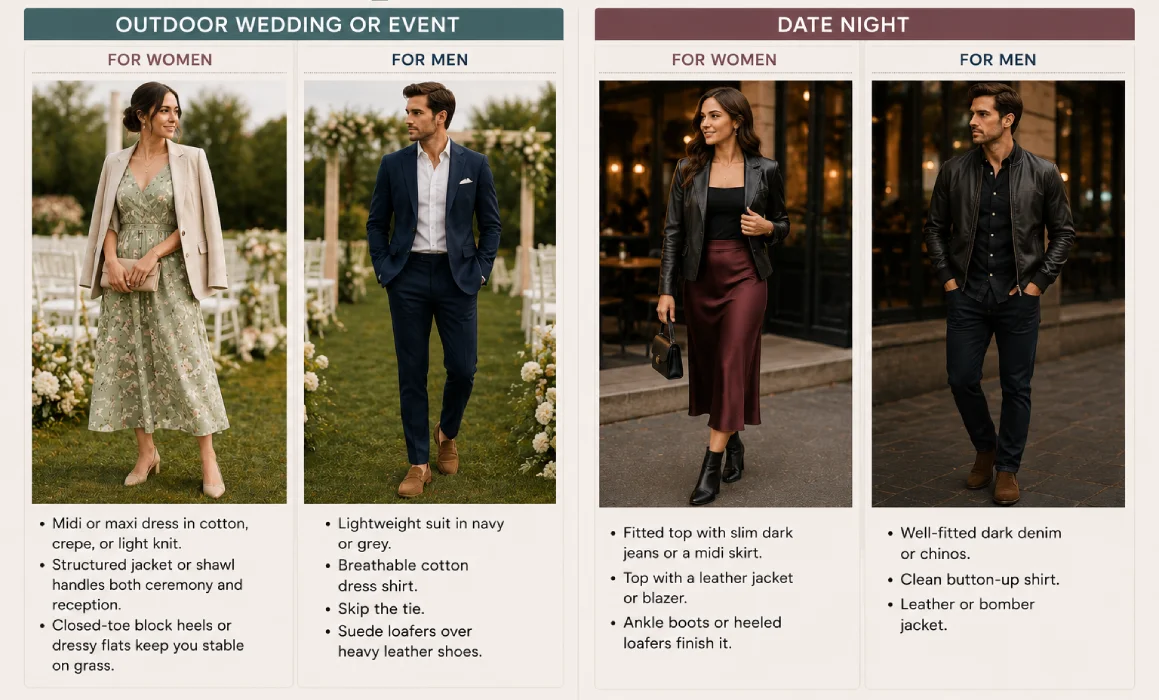
Outdoor wedding or event: For women, a midi or maxi dress in cotton, crepe, or light knit with a structured jacket or shawl handles both ceremony and reception; closed-toe block heels or dressy flats keep you stable on grass. For men, a lightweight suit in navy or grey with a breathable cotton dress shirt works well — skip the tie, and choose suede loafers over heavy leather shoes.
Date night: Women can pair a fitted top with slim dark jeans or a midi skirt, topped with a leather jacket or blazer; ankle boots or heeled loafers finish it. For men, well-fitted dark denim or chinos with a clean button-up and a leather or bomber jacket.
What to Wear at 68–70°F
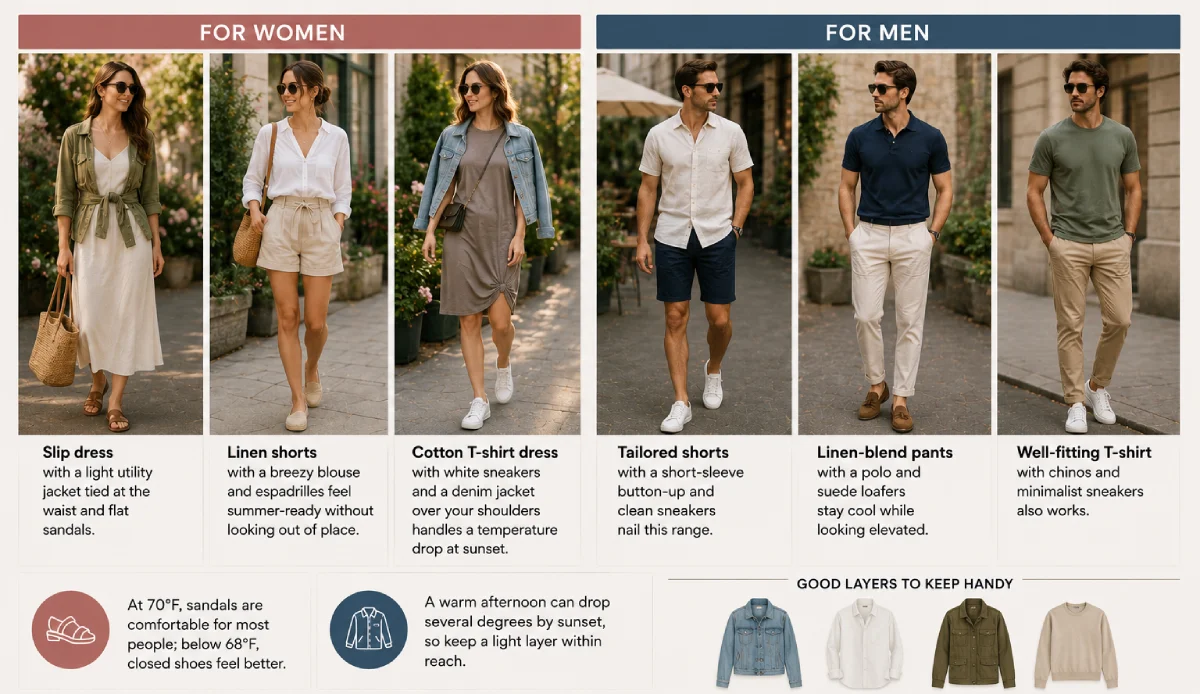
The warmest end of the range, where summer clothes start making sense — though you’ll still want a backup layer for the evening.
For women: A slip dress with a light utility jacket tied at the waist and flat sandals handles 69–70°F well. Linen shorts with a breezy blouse and espadrilles feel summer-ready without looking out of place. A cotton T-shirt dress with white sneakers and a denim jacket over your shoulders handles a temperature drop at sunset.
For men: Tailored shorts with a short-sleeve button-up and clean sneakers nail this range. Linen-blend pants with a polo and suede loafers stay cool while looking elevated. A well-fitting T-shirt with chinos and minimalist sneakers also works.
6 Outfit Formulas You Can Copy
Each formula below is built on the layering system above and works across the range with minor adjustments.
| Formula | Base | Mid Layer | Outer Layer | Bottom | Shoes |
|---|---|---|---|---|---|
| Casual Everyday | Cotton tee or long-sleeve | Cardigan or crewneck sweater | Denim jacket | Straight jeans | Sneakers |
| Smart Professional | Button-down or blouse | Thin V-neck sweater | Unstructured blazer | Chinos or tailored trousers | Loafers |
| Weekend Brunch | Relaxed-fit top | Lightweight cardigan | — | Wide-leg pants or midi skirt | Flats or sandals |
| Evening Out | Fitted top or dress | — | Leather jacket or tailored blazer | Dark jeans or sleek skirt | Ankle boots |
| Active / Outdoor | Moisture-wicking tee | Zip-up hoodie | Windbreaker | Joggers or leggings | Running sneakers |
| Travel Day | Soft t-shirt | Thin sweater | Packable jacket | Stretch jeans or joggers | Comfortable sneakers |
Pick the formula that fits your day, then adjust for temperature. At 60°F, keep all three layers. At 68°F, you might only need the base and mid layer, with the outer layer in your bag.
Adjusting Outfits for Your Body Type
Small fit adjustments make these formulas work better for you.
- Petite: Cropped jackets and high-waisted bottoms elongate your silhouette. Tuck or half-tuck your base layer to define your waist.
- Plus-size and curvy: Structured blazers and V-necklines create clean lines. Pair one relaxed piece with the rest fitted, rather than piling on loose layers.
- Athletic: Soft, unstructured layers — a draped cardigan, a relaxed linen shirt — add dimension. Skip boxy jackets that square off your shoulders.
- Pear-shaped: Structured shoulders and statement scarves draw the eye upward. Pair wider-leg pants with a fitted top and a cropped jacket.
Best Color Palettes for This Temperature
Color sets the seasonal tone and affects how cohesive your layers look.
Neutral base
Cream, grey, navy, white, and black form the foundation — they layer effortlessly because they don’t compete. Build from neutrals and add one accent color.
Earth tones
Olive, rust, camel, terracotta, and burgundy feel right in both spring and fall. They pair naturally with denim and look warm without being heavy.
Soft accents
Muted blue, sage green, dusty rose, and mustard add personality without overwhelming layered outfits. Use them in your mid layer or accessories — a sage cardigan over a white tee and jeans, or a mustard scarf with a grey jacket.
Cap it at three colors per outfit; more than that starts to look busy.
Dressing for Spring vs. Fall in This Range
The thermometer might read the same, but spring and fall at 65°F call for different styling.
Spring palettes trend lighter — pastels, whites, soft neutrals. Fabrics lean toward cotton and linen even at the cooler end, since the season is heading toward warmth. A trench or light waterproof jacket earns a permanent spot in your rotation.
Fall palettes shift toward warm neutrals like rust, olive, and camel. Knits and flannel feel right even at 68°F, and boots replace sandals earlier than they would in spring.
Seasonal Wardrobe Swap
Keep wearing: Cotton tees, lightweight sweaters, midi skirts, straight-leg jeans, ankle boots, sneakers, and denim jackets — pieces that carry across both transitional seasons.
Retire for now: Heavy parkas, thick scarves, fleece-lined anything, and heavy wool sweaters, until temperatures drop below 55°F. On the other end, linen tank tops, open-toe sandals (below 68°F), and sundresses without a layer usually need a jacket or sweater here.
Invest in: A good trench coat, a versatile cardigan, and a pair of ankle boots — the three pieces that earn their place in almost every outfit between 60 and 70°F.
Dressing for Rain and Travel
Rainy Days Around 63–64°F
Damp air feels colder than dry air, so plan for it. Wear a waterproof outer layer like a trench or waxed cotton jacket, along with closed waterproof shoes such as leather boots or lug-sole loafers. Swap your usual thin cardigan for something slightly thicker, and choose dark jeans or trousers that won’t show water spots.
Packing for a 60–70°F Trip
A 7-day capsule wardrobe works well for this range.
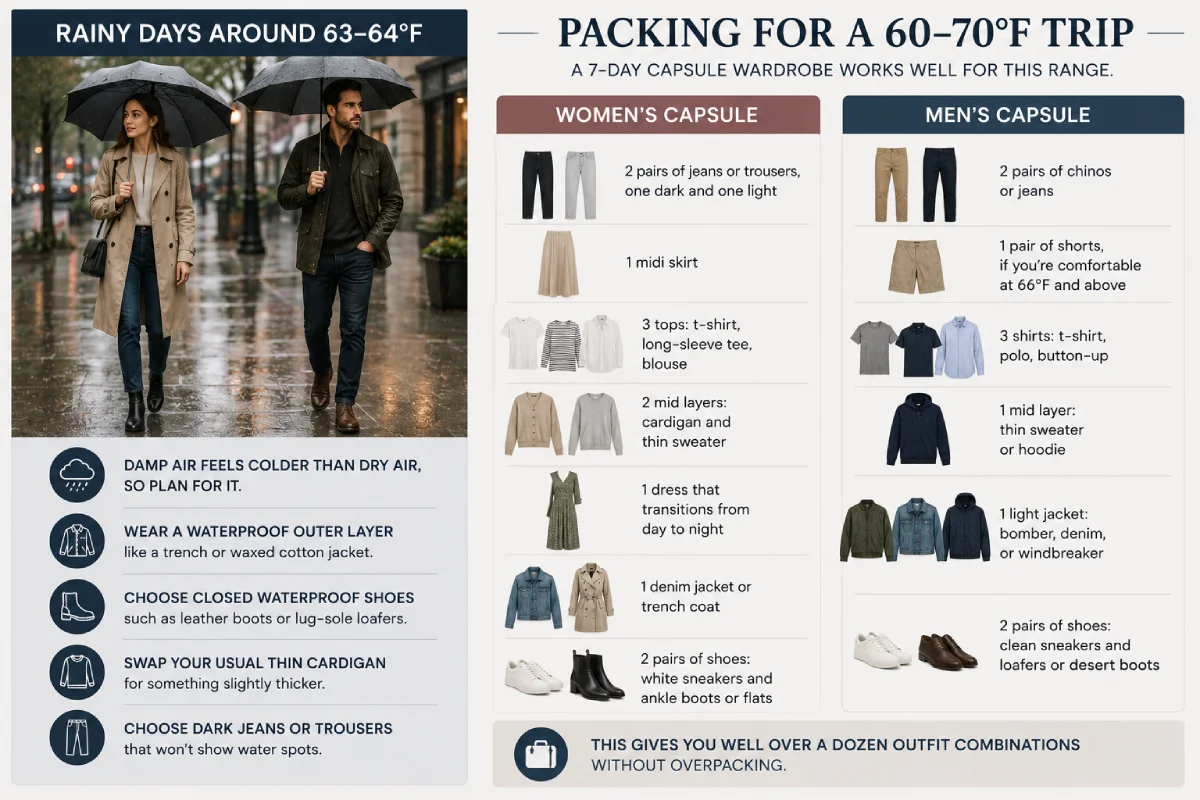
Women’s capsule:
- 2 pairs of jeans or trousers, one dark and one light
- 1 midi skirt
- 3 tops: t-shirt, long-sleeve tee, blouse
- 2 mid layers: cardigan and thin sweater
- 1 dress that transitions from day to night
- 1 denim jacket or trench coat
- 2 pairs of shoes: white sneakers and ankle boots or flats
Men’s capsule:
- 2 pairs of chinos or jeans
- 1 pair of shorts, if you’re comfortable at 66°F and above
- 3 shirts: t-shirt, polo, button-up
- 1 mid layer: thin sweater or hoodie
- 1 light jacket: bomber, denim, or windbreaker
- 2 pairs of shoes: clean sneakers and loafers or desert boots
This gives you well over a dozen outfit combinations without overpacking.
Fabrics That Work Best in This Range
The wrong material leaves you sweating or shivering by midday.
Cotton
Breathable and easy to layer — good for t-shirts, button-ups, and lightweight sweaters. It absorbs moisture, which keeps you comfortable in dry heat but can feel damp in high humidity.
Merino Wool
Lightweight merino regulates temperature well, keeping you warm at 60°F without overheating at 68°F. It’s naturally moisture-wicking, which makes it one of the best base layer fabrics here, especially if you’re active or commuting on foot.
Linen and Linen Blends
Linen shines at the warmer end of the range — it breathes well and looks relaxed but intentional. It wrinkles easily, so save it for casual settings rather than the office.
Cashmere and Cotton-Cashmere Blends
Thin but warm, making them a good mid layer that doesn’t add bulk. They’re softer against the skin than most wools, which matters when you’re layering multiple pieces.
Fabrics to Avoid
Heavy wool runs too warm at 65°F unless you’re standing still in wind. Unlined nylon or polyester traps heat without breathing, so you’ll feel clammy fast. Thick fleece is usually too warm here, especially in direct sun, and fleece-lined leggings overheat above 60°F.
Outfit Cheat Sheet
| Temperature | Feel | Women’s Formula | Men’s Formula |
|---|---|---|---|
| 60–63°F | Cool | Jeans, thin sweater, denim jacket, ankle boots | Chinos, henley, bomber jacket, leather sneakers |
| 64–67°F | Mild | Midi dress, cropped cardigan, white sneakers | Dark jeans, polo, light zip-up, loafers |
| 68–70°F | Warm | Linen shorts, blouse, utility jacket, sandals | Tailored shorts, short-sleeve button-up, sneakers |
Use this as a starting point, then adjust for your own cold tolerance and the day’s conditions.
Frequently Asked Questions
Is 60 degrees Fahrenheit cold or hot?
60°F is cool for most people — not freezing, but uncomfortable in short sleeves without a jacket. Long sleeves and a light outer layer work best.
Is 65 degrees warm enough for a dress?
Yes, with tights or a light jacket. Choose midi or maxi lengths in cotton or light knits, and finish with a denim jacket or cardigan.
Can I wear shorts in 66-degree weather?
Yes. Pair them with a long-sleeve top or light sweater, and keep a jacket nearby in case the wind picks up.
Can I wear sandals at 70 degrees?
Yes, especially in direct sun. Below 68°F, closed-toe shoes feel more comfortable.
What jacket works best for 60-degree weather?
A denim jacket, light trench coat, windbreaker, or unlined bomber — something that blocks the breeze without heavy insulation.
How should I dress for 60-degree mornings and 75-degree afternoons?
Start with a base layer like a T-shirt or thin blouse, add a cardigan or button-up as your mid layer, then top it with a light jacket you can remove by lunch.
What shoes work best across the whole 60–70°F range?
Sneakers, ankle boots, loafers, ballet flats, and low block heels. Save sandals for 68°F and above, and switch to closed-toe shoes once the wind picks up.
Are leggings too warm for 67 degrees?
Not usually. Cotton or thin athletic leggings feel fine with a lightweight top. Fleece-lined leggings run too warm for this range.
What should I wear to an outdoor wedding at 60–65°F?
For women, a midi dress in cotton or crepe with a structured jacket or shawl and closed-toe block heels. For men, a lightweight suit with a breathable cotton dress shirt and suede loafers.
How do I layer without looking bulky?
Thin fabrics in three layers: a fitted base, a relaxed mid layer, a structured outer layer. Mix textures, and cap the outfit at three colors.
Conclusion
Dressing for 60–70°F comes down to layering, fabric choice, and knowing your own comfort profile. At 60°F, most people want sleeves and a real jacket. At 65°F, a light layer with a backup option works well. And for 70°F, summer clothes make sense, but keep that jacket within reach since evenings still cool off fast.
Save this guide for the next time the forecast lands between 60 and 70. You’ll know exactly what to wear.

