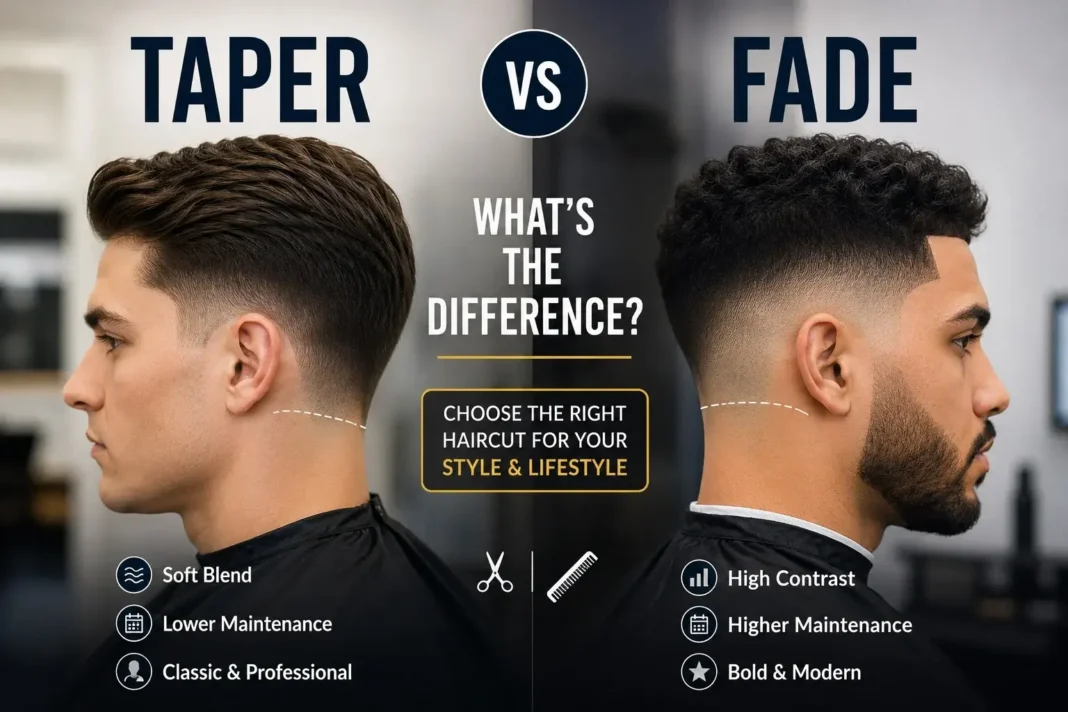
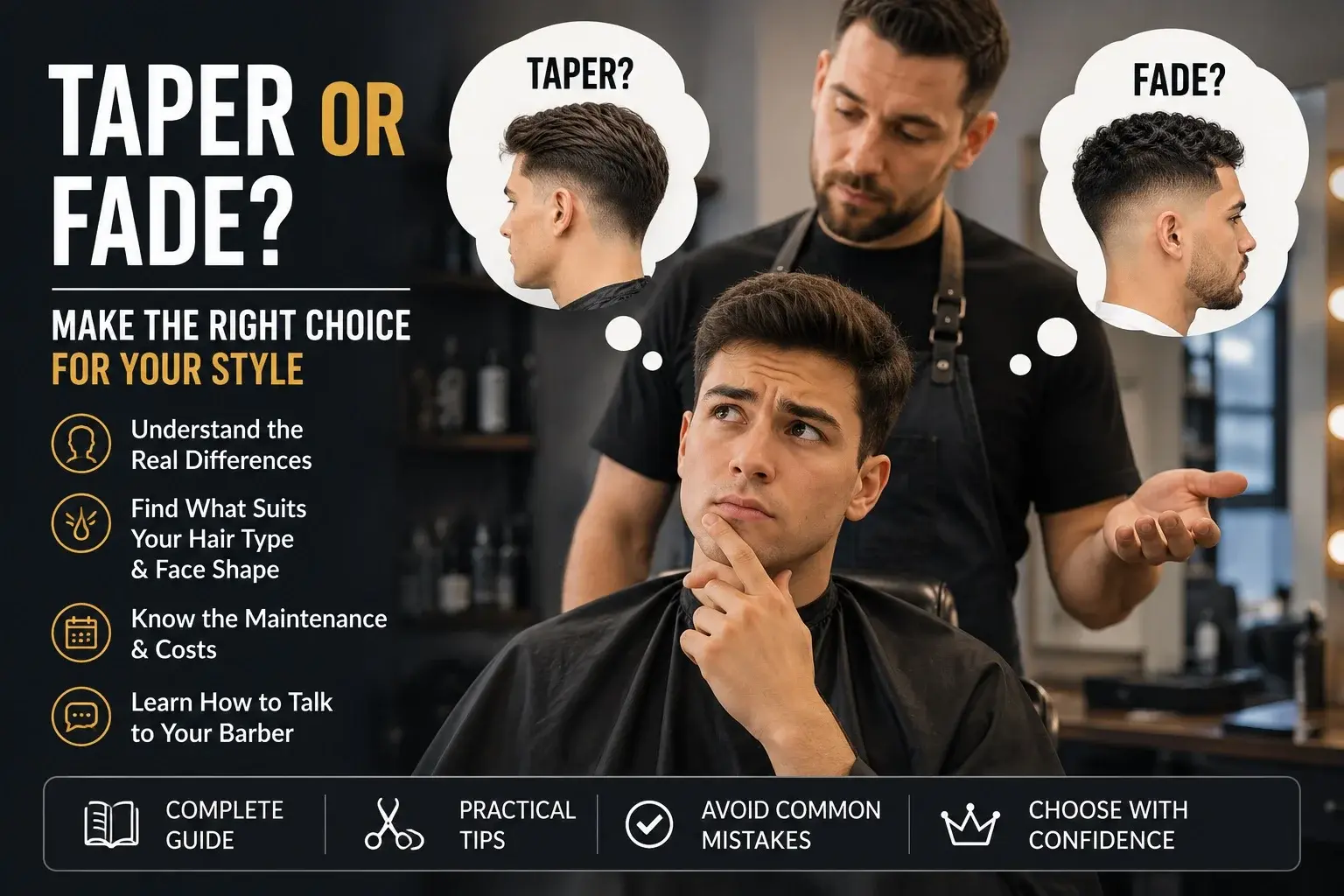
Standing in the barber’s chair and freezing when they ask “taper or fade?” is a common problem. It’s one of the most common haircut for men decisions today. In a taper vs fade comparison, both cuts look similar in photos, but they behave very differently once you leave the shop. Picking the wrong one can mean extra barber visits, a style that fights your hair type, or a look that doesn’t suit your face.
This guide breaks down the real, practical differences between a taper and a fade, so you never have to guess again in the chair. You’ll learn how each one works, which suits your hair type and face shape, and how much they cost. We’ll also cover realistic maintenance schedules, common mistakes to avoid, and how to talk to your barber. By the end, you’ll pick your next haircut with total confidence.
Taper vs Fade: What’s the Difference?
Taper Haircut Explained
A taper gradually shortens hair at the sides and back. It blends softly into the skin near the neckline and ears. The top stays longer while the sides taper down slowly, with no hard lines. This gentle transition gives the cut a natural, classic look, similar to the low-key style Ryan Gosling and George Clooney often wear.
Because the blend is subtle, a traditional taper pairs well with almost any top style, from a side part to a textured crop. It’s forgiving as it grows out. That’s why it remains a favorite for men who prefer fewer barber visits.
Fade Haircut Explained
A modern fade also shortens hair from top to bottom, but it goes further. It blends the sides and back down to bare skin or near-zero length. That extra contrast is the main visual difference in a taper vs fade comparison. Fades range from low and mid to high and skin (bald), with each height creating a bolder look than the last.
Actors like Michael B. Jordan and Chris Evans have popularized sharp fades paired with textured tops. Zayn Malik and Brad Pitt have both worn fade variations too. Many consider a well-blended skin fade the best fade haircut for maximum contrast. Because fades need precise clipper work, they require more frequent upkeep than tapers. For a deeper look at clipper techniques, the American Barber Association offers useful grooming resources.
Taper vs Fade: Key Differences at a Glance
| Factor | Taper | Fade |
|---|---|---|
| Shortest point | Skin-close, not bare | Bare skin or near-zero |
| Contrast | Subtle, soft blend | Sharp, high contrast |
| Maintenance | Every 4–6 weeks | Every 2–3 weeks |
| Best for | Classic, professional looks | Bold, modern looks |
| Grow-out | Clean and forgiving | Noticeable within days |
A taper is the lower-commitment choice. A fade delivers a sharper finish but demands more upkeep. In a low taper vs low fade comparison, the two look closest together, since both start high on the head. The fade simply finishes at bare skin, while the taper stops just short of it. Neither style wins outright; it depends on your lifestyle, hair type, and how often you want to sit in the chair.
Taper vs Fade Variations: Popular Types
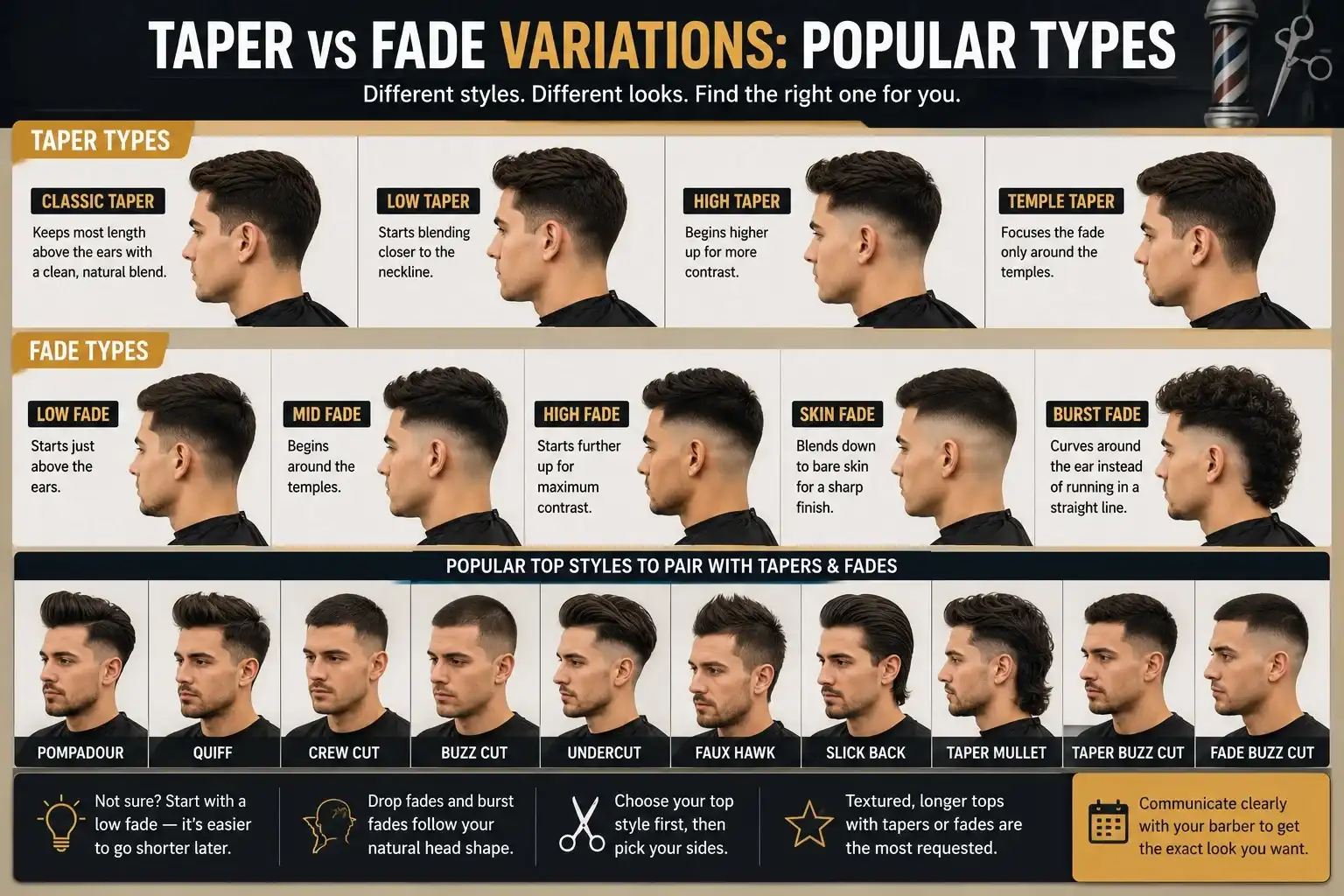
Both styles have several variations worth knowing before your next appointment. Knowing them helps you describe exactly what you want.
Taper types: a classic taper keeps most length above the ears; a low taper starts blending closer to the neckline; a high taper begins higher up for more contrast; and a temple taper focuses the fade only around the temples.
Fade types: a low fade starts just above the ears; a mid fade begins around the temples; a high fade starts further up for maximum contrast; a skin fade blends to bare skin; and a burst fade curves around the ear instead of running in a straight line. Most barbers recommend starting with a low fade if you’re not sure how bold you want to go. It’s easier to go shorter next time than to grow out a skin fade you’re not happy with.
Many of these pair naturally with popular top styles like a pompadour, quiff, crew cut, buzz cut, undercut, faux hawk, or slick back. It’s worth deciding on your top style before choosing the taper or fade height underneath it.
Drop fades, which curve downward behind the ear following the natural head shape, have grown in popularity alongside burst fades. A burst taper offers a softer version of that same curved shape for men who want less contrast. Combos like the taper mullet, taper buzz cut, and fade buzz cut are also gaining traction. Each pairs a different top length with tapered or faded sides. Textured, slightly longer tops paired with either style remain the most requested combination in most barbershops. Once you’ve settled on the sides, browsing a broader men’s hairstyles guide can help you pick the right top to pair with it.
Taper vs Fade by Hair Type and Face Shape
Your hair type changes how well each style holds up between visits. Straight hair shows both cuts cleanly but reveals fade regrowth fastest. Wavy and curly hair usually pair better with a taper, since the added volume on top balances the closer sides. A fade for curly hair can still look sharp, but it needs more frequent trims to keep the contrast from softening. Thick hair often suits a fade well, while thinner hair benefits from a taper’s softer transition.
Face shape matters too, though personal taste should always come first. Round faces often look sharper with a higher taper or fade, since the extra height elongates the face. Long faces benefit from a low taper or fade to avoid adding height. Square faces suit both styles well, and a taper’s softer frame can balance a strong jawline nicely. Oval faces are the most flexible. A dedicated face shape guide can help you match specific angles to the right cut.
Growth speed is another practical factor. If your hair grows quickly, a fade will need trims closer to the two-week mark to stay sharp. A taper can often stretch a week or two longer between visits. Men with slower-growing hair sometimes find a fade holds its clean look nearly as long as a taper would.
Taper vs Fade Maintenance, Cost, and Styling
A taper holds its shape for four to six weeks because the gradual blend doesn’t reach bare skin. A fade needs a trim every two to three weeks, since the skin-close areas grow out fastest. Ask your barber for the exact clipper guard number they used, commonly a #1 or #2 for skin fades and #3 or #4 for tapers, so your next barber can match it precisely.
Fades typically cost slightly more per visit due to the extra precision involved. In any taper vs fade cost comparison, the bigger factor is frequency, not the price of a single visit. The shorter maintenance cycle adds up over a year, even if each cut is priced the same. Someone getting a fade every two and a half weeks will sit in the chair roughly twice as often as someone getting a taper every five weeks.
A taper needs only a light pomade or cream on top for a natural finish. A fade often looks best with a matte clay or paste that adds texture and keeps the contrast visible. Either way, a good hair product routine makes a bigger difference than the cut itself.
Talking to Your Barber and Avoiding Mistakes
Communication Tips
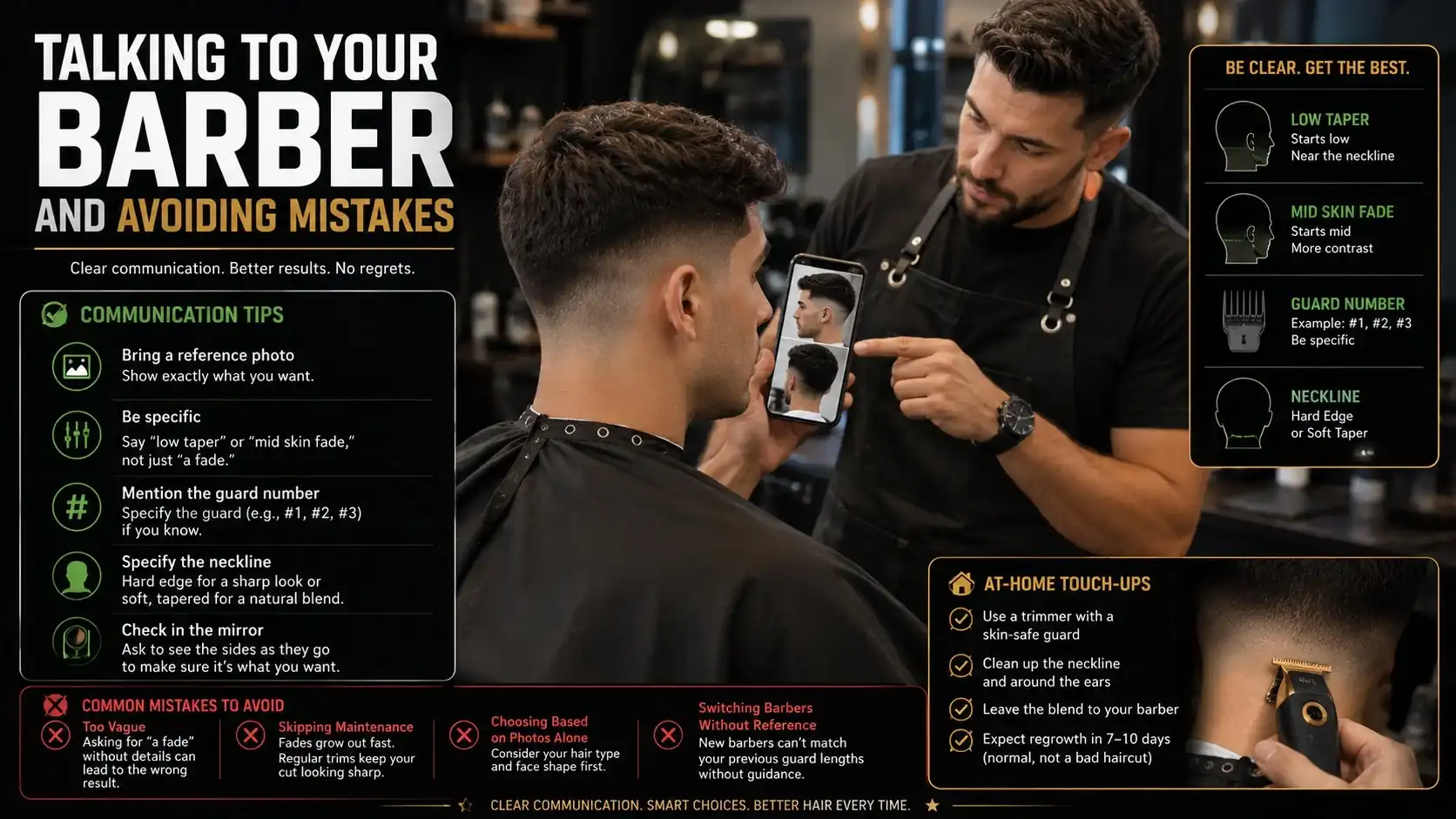
Bring a reference photo whenever possible, since terms like “low” or “high” mean different things to different barbers. Specify the exact type you want, such as “low taper” or “mid skin fade,” along with the guard number if you know it. Mention whether you want a hard edge or a soft, tapered neckline at the back. Ask to see the sides in a mirror before your barber finishes.
Common Mistakes
The most common issue is being too vague, such as asking for “a fade” without specifying the height. Skipping regular maintenance is another frequent mistake. A sharp fade left too long grows out into a patchy, uneven line rather than a longer, softer style. Choosing a style based on photos alone, without considering your own hair type, is also a common regret.
Another mistake is switching barbers without any reference for what was done last time. A new barber has no way to match the previous guard lengths without guidance. Noting your usual guard numbers, or booking with the same barber for fades, tends to produce more consistent results.
At-Home Touch-Ups
A trimmer with a skin-safe guard can extend time between visits. Use it to clean up the neckline and stray hairs around the ears. Leave the main blend to a professional barber, since redoing several guard lengths smoothly takes practice. Realistically, expect the crisp line of a fresh skin fade to soften within seven to ten days; that’s normal regrowth, not a bad haircut.
Taper vs Fade: Pros and Cons
| Taper | Fade | |
|---|---|---|
| Pros | Low maintenance, forgiving grow-out, easy for beginners | Bold, modern, pairs well with beards and designs |
| Cons | Less dramatic contrast on its own | Frequent trims, shows regrowth quickly |
Neither list makes one style objectively better. A taper trades boldness for convenience. A fade trades convenience for a sharper, more noticeable finish. Weigh these against your own schedule and styling patience.
Choosing Between Taper vs Fade for Your Lifestyle
If low maintenance matters most, a traditional taper is the practical choice. If a bold, modern look matters more than convenience, a fade fits better instead. Most barbers steer first-time or unsure clients toward a taper, since it’s far easier to adjust or grow out.
For conservative workplaces, a low taper or low fade usually reads as more polished. A taper for office wear is often the safest pick, since the soft blend never looks too dramatic on camera. Students and younger men often lean toward mid or high fades paired with textured tops. Kids and older men tend to do best with a taper, since it’s more forgiving on fast-growing or thinning hair.
Fades pair especially well with a connected beard, since many barbers blend the beard fade into the haircut for one continuous line. If you’d rather keep the top short too, a crew cut or buzz cut guide can help you decide how much length to leave up top.
Your daily grooming habits matter as much as the cut itself. If your routine already includes regular styling product, a fade tends to fit naturally into that upkeep. If you prefer a low-effort, wash-and-go approach, a taper is the easier fit.
Quick Taper vs Fade Decision Checklist
| If you… | Consider a… |
|---|---|
| Want fewer barber visits | Taper |
| Want the boldest possible contrast | Skin fade |
| Work in a conservative office | Low taper or low fade |
| Want to pair with a connected beard | Fade |
| Not sure where to start | Ask for a mid taper first |
FAQs
How much does a taper or fade haircut usually cost?
Pricing varies by barber and location, but fades often cost slightly more per visit due to the extra precision.
What clipper guard is used for a skin fade?
Barbers typically go bare or use a #0.5 to #1 guard at the skin, blending up through #2, #3, and #4 toward the top.
What is the main difference between a taper and a fade?
A taper blends gradually without reaching bare skin. A fade blends all the way down to skin or near-zero length for sharper contrast.
Which is better for curly hair?
A taper is usually easier to maintain with curly hair, since it works with natural volume on top.
Does a fade grow out faster than a taper?
Yes. Because a fade reaches bare skin, regrowth becomes visible within one to two weeks. A taper stays clean for four to six weeks.
Can I combine a taper and a fade?
Yes. Many barbers blend a tapered top into a faded lower section for a soft top with sharp contrast near the neckline.
Is a fade appropriate for work?
A low or mid fade can look polished, especially with a neat top. High skin fades tend to read as more casual.
How do I keep a fade sharp between visits?
Trim the neckline at home with a skin-safe guard, but leave the main blend to your barber. Book your next appointment as soon as the line starts to soften.
Final Verdict
A taper and a fade both start from the same idea: gradually shortening hair from top to bottom. But they part ways at the sides. A taper stays soft and forgiving, ideal if you want a classic look with fewer barber visits. A fade goes all the way to the skin for sharp, modern contrast.
If you’re still unsure in the taper vs fade debate, start with a mid taper as a safe middle ground. Go bolder next time once you know how the style suits you. When in doubt, choose the cut that fits how often you’re realistically willing to see a barber, not just the one that looks best in a photo.

