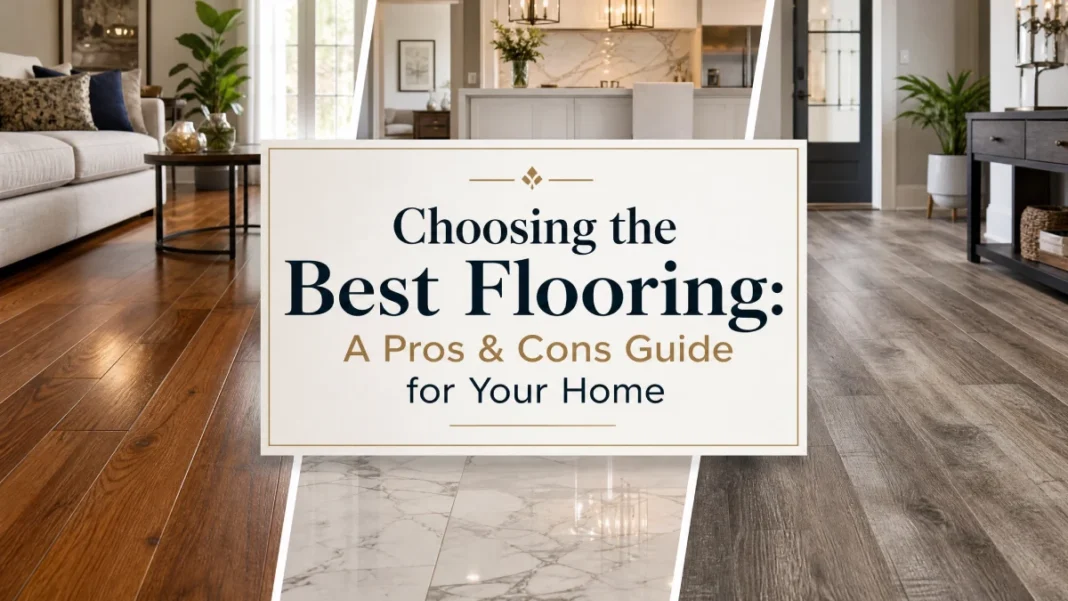
You’re standing in your empty living room, coffee in hand, staring at a concrete slab or maybe some sad, dated linoleum. The choices are swirling. Hardwood? Tile? That luxury vinyl your neighbor won’t stop talking about? It’s paralyzing because flooring isn’t just a purchase. It’s the stage for your entire life at home. A wrong choice means living with a daily irritation—or worse, an expensive do-over.
I’ve guided hundreds of homeowners through this exact moment. The secret isn’t finding the “perfect” floor that exists in a magazine. It’s finding the perfect floor for your reality. The one that laughs off your dog’s zoomies, stands up to your kid’s juice-box sabotage, and still makes you smile when you walk in the door.
This isn’t a shallow list of features. We’re going deep. For each of the 7 major flooring materials, I’ll give you a straight-talking breakdown of durability, true cost, maintenance, comfort, and where it actually belongs (and doesn’t). You’ll get a scorable, comparable framework and a massive comparison table so you can see the data side-by-side.
Let’s find your foundation.
Hardwood: The Undisputed Classic
Hardwood is the floor you dream about. It’s warm, timeless, and tells a story. But it’s not a saint. It has demands, and it has a temper when crossed. Understanding its character is the key to living happily ever after with it.
What It Actually Is: Solid wood planks, typically 3/4-inch thick, milled from a single piece of timber. Common species include oak, maple, and hickory. Engineered hardwood, a close cousin, layers a real wood veneer over a plywood base for better stability.
- Durability Rating: 3/5 (Species-Dependent)
- Cost Per Sq Ft: $8 – $15+ (Material Only)
- Maintenance Level: High. Requires vigilant, careful living.
- Comfort & Sound: Warm and forgiving underfoot. It has a solid, satisfying sound but transmits noise well to the floor below.
- Best Rooms: Living rooms, dining rooms, bedrooms, and hallways.
- Climate Suitability: Temperate, stable-humidity climates.
- Installation Difficulty: Pro-only for nail-down. Floating engineered can be DIY. Either way, planks need to acclimate in the room for three to seven days before installation.
- Lifespan: 100+ years with refinishing. Engineered: 20-30 years.
The Alluring Upsides
The beauty of real hardwood is irreplaceable. No two boards are identical, creating a depth that photographs can’t capture. Its single greatest superpower is renewability. When it’s dull and scratched a decade from now, you don’t replace it. You sand it down and refinish it. A new stain color, and suddenly, you have a brand-new floor. This is a 100-year investment. For resale value, nothing beats it. Buyers will pay a premium.
The Unvarnished Truth
Hardwood’s beauty comes with a cost beyond your initial investment. It is profoundly vulnerable to moisture and humidity. A small, unnoticed leak from a dishwasher? That can cup and warp entire planks. It expands in summer and contracts in winter; you must maintain 30-50% indoor humidity year-round or risk unsightly gaps. If you have large dogs, their nails will act like tiny chisels, leaving a map of their daily patrol routes. You’ll flinch at every dropped fork. Living with hardwood means living carefully.
Margot’s Practical Tip: If your heart is set on the look in a moisture-prone area like a kitchen, choose engineered hardwood with a thick wear layer. It’s dimensionally more stable than solid wood, making it less likely to cup if there’s a minor spill you didn’t catch instantly.
Laminate: The Shapeshifter
Think of laminate as a detailed, high-tech photograph of real wood or stone, fused onto a dense fiberboard core. It’s not trying to be a fake Rolex. It’s a smart, practical choice that has come a long way from the obvious, repeating patterns of the past.
- Durability Rating: 4/5 (Highly Scratch-Resistant)
- Cost Per Sq Ft: $3 – $7 (Material Only)
- Maintenance Level: Low. A quick sweep and a damp mop is all it needs.
- Comfort & Sound: Feels hard and can sound hollow and “clicky” without proper underlayment.
- Best Rooms: Bedrooms, living rooms, home offices, and hallways.
- Climate Suitability: Most climates, as long as it’s not exposed to standing water.
- Installation Difficulty: DIY-friendly click-lock planks.
- Lifespan: 15-25 years.
The Smart-Spending Perks
Laminate’s wear layer is its armor—a clear, tough resin coating that’s exceptionally good at resisting scratches, dents, and fading from sunlight. If you’ve got a busy rental or rambunctious kids and a tight budget, this is your champion. Modern high-definition printing creates convincing visuals of wood, tile, or even stone. The click-lock installation is one of the simplest DIY projects you can tackle, saving you thousands of dollars in labor.
The Deal-Breakers
Let’s be crystal clear: laminate and water are mortal enemies. The high-density fiberboard (HDF) core will soak up moisture like a sponge, swelling at the seams and causing irreversible damage. Never install it in a full bathroom, laundry room, or any basement with even a hint of moisture history. It can’t be refinished. When it’s worn, it’s done. It goes to the landfill. And it simply doesn’t feel or sound like real wood underfoot—a good underlayment helps, but it’s not magic.
Margot’s Practical Tip: Invest in the best underlayment you can afford. A high-quality, dense pad will reduce that hollow, echoing sound and provide a noticeably softer, more forgiving feel underfoot, making the entire floor feel more expensive. Also, look for the Abrasion Class (AC) rating on the spec sheet—AC3 handles most rooms fine, but step up to AC4 or AC5 for hallways and heavy-traffic areas.
Tile (Ceramic & Porcelain): The Unshakeable Fortress
If hardwood is the sensitive artist, tile is the stoic warrior. It’s hard, cold, and virtually indestructible in the face of life’s messiest challenges. This is the go-to material for rooms where water, mud, and chaos reign.
- Durability Rating: 5/5 (Nearly Indestructible)
- Cost Per Sq Ft: $2 – $15+ (Material Only, varies wildly)
- Maintenance Level: Extremely Low. The grout, however, needs sealing.
- Comfort & Sound: Hard, cold, and unforgiving. It reflects sound, creating an echoey room.
- Best Rooms: Bathrooms, kitchens, mudrooms, entryways, and basements.
- Climate Suitability: All climates, especially warm ones. Perfect for radiant heating.
- Installation Difficulty: Pro-recommended. It’s a slow, precise, and physically demanding job.
- Lifespan: 50+ years. The tile itself may last forever; it’s the grout or a subfloor issue that usually ends its reign.
The Glorious Strengths
The win here is peace of mind. A flooded bathroom? A muddy dog stampede? You’ll clean it up without a second thought about the floor. Porcelain, in particular, is colored all the way through, meaning a deep chip is far less visible than on ceramic. For allergy sufferers, it’s a dream—it harbors zero dust mites, pet dander, or pollen. And it’s the undisputed king for radiant in-floor heating. Tile conducts heat beautifully, turning a cold surface into a luxurious, toasty comfort.
The Brutal Reality
That same density that makes it durable also makes it a leg-fatigue machine. Standing for long periods in a kitchen with a tile floor can be genuinely uncomfortable. Dropping a wine glass is not a 50/50 proposition; it’s a 100% guarantee of destruction. The installation is not just difficult; it’s invasive. It requires a perfectly flat subfloor, often involves cement board, and creates dust you’ll find for months. And the humble grout line is the Achilles’ heel, eagerly staining and crumbling if not properly sealed and maintained.
Margot’s Practical Tip: For a luxe, modern look, use large-format tiles (think 12×24 inches or larger) with a rectified edge. This allows for extremely thin 1/8-inch grout lines, minimizing the grout’s visual presence and maintenance needs. Check the PEI (Porcelain Enamel Institute) rating—PEI 3 handles residential foot traffic, while PEI 4 or 5 suits entryways and kitchens. And for wet areas, swap standard cement grout for epoxy—it resists stains and moisture without ever needing to be sealed.
Luxury Vinyl Plank (LVP) & Tile (LVT): The Pragmatist’s Hero
This is the category that’s exploded for all the right reasons. We’re not talking about the peel-and-stick squares of your grandmother’s kitchen. Modern Luxury Vinyl Plank (LVP) is a multi-layered, engineered product that convincingly mimics wood or stone while being laughably practical.
- Durability Rating: 4.5/5 (Scratch, Dent, and Water-Proof)
- Cost Per Sq Ft: $4 – $9 (Material Only)
- Maintenance Level: As low as it gets. Sweep and mop.
- Comfort & Sound: Slightly softer and warmer than tile, with decent sound absorption for a hard surface.
- Best Rooms: Kitchens, bathrooms, basements, mudrooms, and playrooms.
- Climate Suitability: All climates. The top choice for basements.
- Installation Difficulty: DIY-friendly click-lock or loose-lay planks.
- Lifespan: 10-25 years, depending on wear layer thickness.
The Everyday Superpowers
Let’s say the quiet part out loud: This is 100% waterproof from top to bottom. Not water-resistant, waterproof. A pipe can burst, and a quality WPC (Wood Plastic Composite) or SPC (Stone Plastic Composite) core LVP will survive unscathed. It’s tough. Dog claws, dropped toys, rolling office chairs—they’re no match for the thick, clear wear layer. Attached underlayment often provides a softer, quieter, and slightly warmer step than laminate or tile. It’s the ultimate “live your life and don’t worry about it” floor.
The Hidden Compromises
While the photographic layer is extremely good, it’s still a repeated pattern. You’ll need to sort through boxes during installation to avoid two identical planks ending up next to each other. It’s not a “forever” floor. You cannot refinish it. Once the wear layer is damaged or faded, the floor is disposable. And while the SPC core is rock-solid, it can be less forgiving underfoot than WPC. It can also fade over time in rooms with intense, direct sunlight. Cheaper products may off-gas VOCs—look for FloorScore or GreenGuard Gold certification on the spec sheet.
Margot’s Practical Tip: The wear layer is the only number that matters here. Ignore the price tag and look at the spec sheet. A 20-mil wear layer is the minimum for a busy home with pets and kids. A 12-mil layer will wear out significantly faster. This is not a place to save $0.50 per square foot.
Carpet: The Sensory Sanctuary
Carpet is the soft-close door of flooring. It absorbs sound, adds literal warmth, and creates a sense of intimate comfort that no hard surface can replicate. It’s been unfairly maligned, but in the right rooms, it’s pure magic.
- Durability Rating: 2/5 (Stains, Crushes, Wears)
- Cost Per Sq Ft: $2 – $7 (Material Only)
- Maintenance Level: High. It’s a filter that you must constantly clean.
- Comfort & Sound: Unbeatable. Warm, soft, and acoustically deadening.
- Best Rooms: Bedrooms, family rooms, and basements.
- Climate Suitability: Excellent for cold climates.
- Installation Difficulty: Pro-recommended for a clean stretch, especially on stairs.
- Lifespan: 5-15 years.
The Cocooning Comforts
Walking barefoot on a plush carpet in a cold morning bedroom is one of life’s small, perfect luxuries. It’s the safest choice for toddlers learning to walk and seniors who are at risk of falls. Carpet is a massive acoustic panel for your entire room, killing the echo and creating a serene, quiet environment. On a basement slab, it’s the most cost-effective way to conquer the cold.
The Grimy Reality
Let’s be honest: a carpet is a filter. It traps dust, allergens, skin cells, and everything you and your pets track in. The only way to get them out is a good vacuum with a HEPA filter and annual professional-grade hot water extraction cleaning. A spilled glass of red wine or a pet accident that reaches the pad is a catastrophic event. It will stain. It will mat down in high-traffic “runways.” You are not buying a carpet; you are entering a maintenance contract.
Margot’s Practical Tip: Choose a solution-dyed nylon or triexta fiber. With solution-dyed nylon, the color is added as the fiber is being created, not applied topically later—it’s inherently stain-resistant and bleach-cleanable, outlasting polyester in both texture and color retention by years. Triexta offers similar built-in stain resistance with a softer hand feel. Whatever the fiber, check the face weight (ounces per square yard) and aim for 40 ounces or more for a dense, long-wearing carpet.
Concrete (Polished & Stained): The Modern Minimalist
Concrete has stepped off the sidewalk and into the chicest, most modern homes. It’s an aesthetic powerhouse that’s as tough as it gets. This isn’t a cold, gray slab; it’s a sophisticated, seamless surface with a depth you have to see to believe.
- Durability Rating: 5/5 (It’s a rock.)
- Cost Per Sq Ft: $4 – $12+ (Grinding, Staining, Polishing)
- Maintenance Level: Low. Dust mopping and a pH-neutral cleaner. Resealing needed every few years.
- Comfort & Sound: Extremely hard and cold. Echoey without rugs and soft furnishings.
- Best Rooms: Main-floor living areas, kitchens, finished basements, and patios in modern-style homes.
- Climate Suitability: All climates. A perfect passive solar heat sink.
- Installation Difficulty: Requires skilled professionals with heavy-duty grinding equipment.
- Lifespan: 100+ years.
The Architectural Appeal
The finish is unique. An experienced contractor can stain it to look like a cloud, a piece of marble, or richly burnished leather. The high-gloss, polished finish can make a space feel light, airy, and impossibly vast. In a sunny room, a stained concrete floor absorbs heat during the day and slowly releases it at night, a beautiful and passive way to regulate temperature. It’s arguably the most pet-proof surface in existence.
The Hard Truth
It’s literally standing on a rock. You’ll feel it in your knees and lower back if you stand for hours cooking. It’s not a neutral design choice; it makes a powerful, architectural statement that can feel cold and echoey if not balanced with plush rugs, fabric art, and soft curtains. And critically, every slab cracks. It’s not a flaw; it’s a feature of the material. A good contractor will control these inevitable cracks with relief cuts, but you will see them.
Margot’s Practical Tip: The floor you walk on is your subfloor. You cannot just stain the cracked slab from 1952. It needs to be a structurally sound, well-poured slab. If it’s ground-level or below grade, ask about a moisture vapor barrier—water migrating up from the ground can ruin coatings and adhesives. Request a test patch where the contractor grinds a small corner and applies a bit of stain. The final color is a reaction with your concrete’s unique mineral makeup, and it’s always a surprise.
Bamboo: The Eco-Chameleon
Bamboo looks like exotic wood but is actually a fast-growing grass. It seduces you with its sustainability story and unique grain patterns, but it demands you choose wisely. Not all bamboo is created equal.
- Durability Rating: 2.5/5 to 4/5 (Massively Brand-Dependent)
- Cost Per Sq Ft: $4 – $9 (Material Only)
- Maintenance Level: Moderate. Similar to hardwood, but no refinishing.
- Comfort & Sound: Very similar to hardwood.
- Best Rooms: Bedrooms, living rooms, and home offices.
- Climate Suitability: Stable-humidity climates are a must. Terrible for bathrooms.
- Installation Difficulty: DIY-friendly click-lock or nail-down planks.
- Lifespan: 10-30 years, but a cheap one can fail in 5.
The Conscious Choice
The visual texture is unique, with fine, linear “knuckles” that can add a subtle, organic rhythm to a room that traditional oak lacks. Bamboo comes in three construction styles—horizontal, vertical, and strand-woven—each with a distinct look and hardness. Strand-woven, made by compressing shredded fibers under extreme pressure, is exceptionally hard, often surpassing red oak on the Janka scale, making it a surprising performer for scratch resistance. For an eco-conscious homeowner, the idea of a rapidly renewable resource underfoot is deeply satisfying.
The Big Gamble
Hardness is its strength, but brittleness is its curse. A heavy object dropped from a height can shatter a strand-woven plank’s core. The huge risk is quality. A lesser-known brand might not fully cure the resin, leaving your floor off-gassing volatile organic compounds (VOCs) for years. It is extremely sensitive to humidity swings, often cupping and gapping more dramatically than hardwood. You cannot refinish it with the same confidence; the results are often blotchy and disappointing.
Margot’s Practical Tip: If you choose bamboo, do not buy from a big-box store’s off-brand pile. Source from a reputable, specialized dealer. Demand to know the Janka hardness score (aim for 1500+ for strand-woven) and look for FloorScore certification to ensure low VOC emissions.
The Ultimate Flooring Comparison Table
Here is the data, side-by-side, to help you compare at a glance.
| Flooring Material | Durability (1-5) | Cost (Sq Ft) | Maintenance (1-5) | Comfort (1-5) | Water Resistance | Best Climate | Lifespan |
|---|---|---|---|---|---|---|---|
| Hardwood | 3 | $8 – $15 | High (2) | 4 | No (Enemy #1) | Stable Humidity | 100+ years |
| Laminate | 4 | $3 – $7 | Low (5) | 3 | No (Core Damaged) | Most | 15-25 years |
| Tile (Porcelain) | 5 | $2 – $15 | Low (5) | 1 | Impervious | All | 50+ years |
| Luxury Vinyl | 4.5 | $4 – $9 | Low (5) | 3.5 | Yes (Fully) | All (Best for Basements) | 10-25 years |
| Carpet | 2 | $2 – $7 | Very High (1) | 5 | No (Absorbs It) | Cold | 5-15 years |
| Concrete | 5 | $4 – $12 | Low (5) | 1 | Impervious | All | 100+ years |
| Bamboo | 3.5 | $4 – $9 | Moderate (3) | 4 | No (Ruins It) | Stable Humidity | 10-30 years |
Lifespan and cost are estimates. Maintenance is rated from 1 (Very High) to 5 (Extremely Low).
The ObviousLuxe Flooring Selector Cheat Sheet
If Your Primary Need Is…
- Maximum Resale Value: Hardwood.
- True Waterproof Peace of Mind: Luxury Vinyl Plank or Porcelain Tile.
- Scratch-Proof Performance with Pets: Porcelain Tile or Concrete.
- Comfort & Coziness for Bedrooms: Carpet.
- A Budget-Friendly DIY Win: Laminate or LVP.
- A Unique, Modern Architectural Statement: Polished Concrete.
Conclusion
The best floor isn’t on a showroom pedestal. It’s the one that’s already fading into the background while you’re busy living your life. It’s the floor that handles your messiest Tuesday without an anxiety spike. You don’t need a perfect floor. You need the perfect floor for you.
Stop searching for the one material with zero cons. It doesn’t exist. Instead, look at the compromise you can happily live with for the next decade. Choose the floor that matches your reality, not a staged photo. Start by ordering a few samples of your top two materials. Live with them for a week. Spill coffee on them. Drop your keys. That small test will tell you more than any guide ever could.

