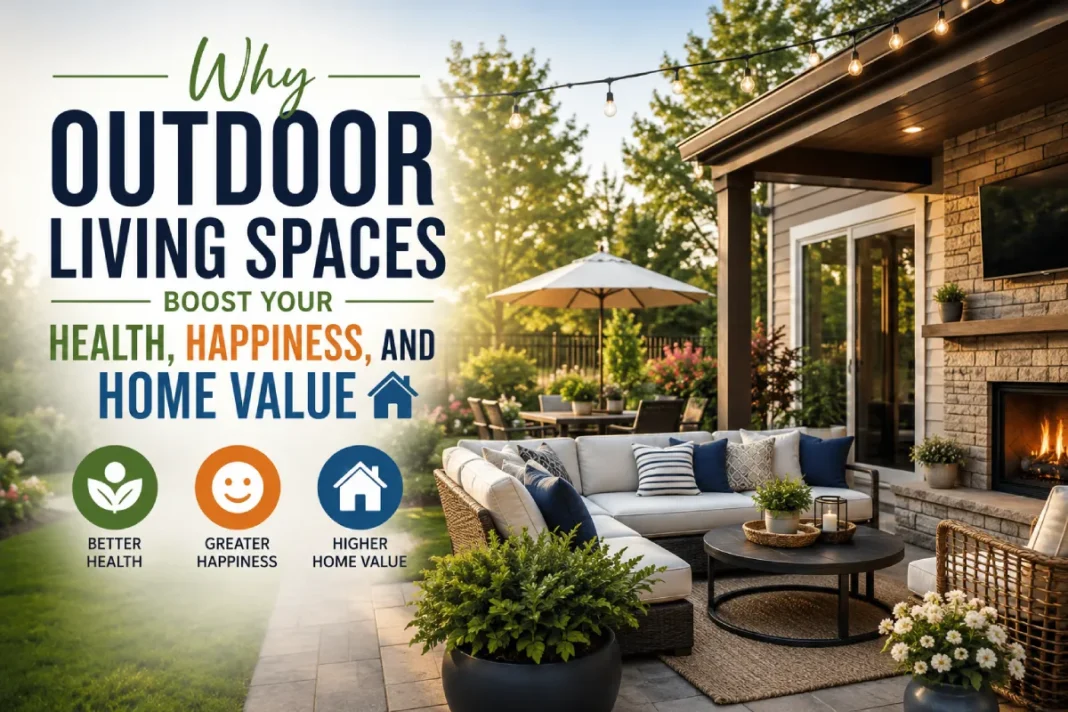
You stare out at your patio or balcony, seeing nothing but wasted potential. It often feels like just a concrete slab or a patch of grass, gathering rain and neglect. But what if that neglected area could actually improve your well-being and your bank account?
Here’s how to transform your outdoors into an outdoor living space that delivers real health benefits, boosts your daily happiness, and increases your property value.
Many homeowners ignore their patios because they feel overwhelmed by the design process. You might worry about buying furniture that fades in the sun or spending money on a project that doesn’t pay off.
However, creating a functional exterior room is simpler and more rewarding than you think.
How Outdoor Living Spaces Improve Health
Spending time outside does much more than give you a tan. It actively changes your body chemistry for the better. When you step into your backyard, your brain immediately starts to decompress.
Research from the University of Michigan shows that just 20 minutes in a natural outdoor setting significantly lowers cortisol levels. This is your body’s primary stress hormone. Lower cortisol means better sleep, reduced anxiety, and a stronger immune system.
Soaking up natural light also helps your body produce vitamin D. This essential nutrient supports bone health and fights off depression. By creating a comfortable patio, you naturally encourage yourself to spend more time reaping these biological rewards.
Choosing the Right Furniture and Materials
You can’t enjoy your new sanctuary if your furniture falls apart after one season. Choosing the right materials ensures your investment survives the elements. Here’s what you need to know about the big three outdoor materials.
1. Teak
Teak is the gold standard for outdoor wood. It contains natural oils that repel water and resist rot. While it carries a higher upfront cost, a well-cared-for teak bench can easily last for decades.
2. IPE (Brazilian walnut)
IPE, or Brazilian walnut, offers similar longevity and density, though it is harder to source and work with.
3. Synthetic Wicker (Resin Wicker)
If you prefer a woven look, look for synthetic wicker (also called resin wicker). Unlike natural rattan, which cracks and molds, synthetic wicker is woven over an aluminum frame. This combination gives you a classic aesthetic without the maintenance headache.
Finally, never underestimate the power of good fabric. Sunbrella is a premium acrylic fabric engineered specifically for the outdoors. It resists fading, repels water, and cleans up easily with a little bleach and water. Always choose Sunbrella or similar performance fabrics for your cushions. If you’re weighing material trade-offs across your entire home, our complete furniture buyers guide walks through how to evaluate durability, cost, and longevity for every room.
| Material | Durability | Maintenance | Best Climate |
|---|---|---|---|
| Teak | Extremely high | Low (oil occasionally) | All climates |
| Synthetic Wicker | High | Very low (wipe down) | Hot/Humid, Coastal |
| Aluminum | High | Low (check for rust) | Cold/Snowy |
| Sunbrella Fabric | High (fade-resistant) | Easy (bleach clean) | All climates |
Designing for Your Climate Zone (Weather Considerations)
Your local weather dictates what your outdoor room can handle. For instance, a breezy balcony in Miami requires a completely different approach than a covered deck in Minneapolis.
Matching your design to your climate zone prevents costly replacements.
1. Hot and humid climates
Hot and humid climates demand breathable materials. Opt for light-colored synthetic wicker and quick-dry foam for your cushions, and invest in a sturdy pergola or shade sail to block the intense afternoon sun.
2. Cold and snowy regions
Cold and snowy regions require heavy-duty durability. Aluminum frames with powder-coated finishes resist freezing temperatures and ice melt. Teak performs beautifully here, as its natural oils prevent cracking in the dry winter air.
3. Coastal areas
Coastal areas present a unique challenge because of salt air. Salt quickly corrodes standard metals and degrades cheap fabrics. Stick to marine-grade polymer, stainless steel, and teak. You should also rinse your furniture with fresh water after a heavy ocean breeze. If you’re renovating an entire coastal property, our beachfront home renovation guide covers how salt air affects every material choice from the roof down.
Before you buy anything, you must prepare your existing space for the elements. Follow this simple checklist to ensure your foundation is solid:
- Clean the surface: Power wash your patio or deck to remove mildew and dirt.
- Inspect for damage: Check for loose boards, cracked tiles, or rusted hardware.
- Apply sealant: Coat wood surfaces with a weather-resistant sealant to prevent water damage.
- Plan your layout: Measure your space and map out where your furniture will go. For a deeper look at furniture arrangement principles, see our guide to creating efficient and beautiful room layouts.
The ROI for Outdoor Improvements
Creating a beautiful exterior space is not just about personal enjoyment. It’s also a smart financial move. According to the National Association of Realtors and Remodeling Magazine’s annual Cost vs. Value Report, outdoor improvements offer some of the best returns in home remodeling.
For example, installing a new wood or composite deck recovers about 65% to 70% of its resale cost. Composite options from brands like Trex and TimberTech cost more upfront but require far less maintenance over time. Adding a patio or upgrading your landscaping can yield similar returns. More importantly, these features make your home sell faster.
Buyers actively look for move-in-ready outdoor areas. A well-designed space acts as an extra room, effectively increasing your home’s usable square footage. Even if you don’t plan to sell soon, you are building equity while creating a personal retreat.
Design Ideas for Every Budget
You don’t need a massive budget to create a luxurious outdoor living space. The key is prioritizing comfort and functionality over expensive extras. Here’s how to approach your project at three different price points.
Low Budget (Under $500)
First, focus on deep cleaning and decluttering your existing space. Next, add a fresh coat of paint to old metal chairs and buy high-quality outdoor rugs to define the area. String lights and a few potted plants instantly improve the look without breaking the bank.
Medium Budget ($500 to $2,000)
This is the sweet spot for upgrading your core furniture. To begin, invest in a durable sectional with Sunbrella cushions and a sturdy fire pit. This addition extends your usable season into the crisp autumn months, giving you more value for your money.
High Budget ($2,000+)
At this level, you can build a true outdoor kitchen or install permanent hardscaping. For instance, consider adding a pergola with motorized louvers to control the sunlight. Pair these structural upgrades with high-end teak dining sets for a fully customized resort experience.
The most compelling outdoor rooms follow the same principle as the best interiors: mixing high-end and budget pieces creates a space with far more character than going all-out on one tier.
Conclusion
Converting your patio or balcony into a functional outdoor living space is one of the smartest upgrades you can make. You get a daily retreat for your mental health, a beautiful area for entertaining, and a significant bump in your property value. The secret lies in choosing the right materials for your specific climate and sticking to a realistic budget.
Start by evaluating your current space today and pick one small improvement to make this weekend. Share your outdoor design goals in the comments below, and let us know which budget tier you are tackling first!

