
You’ve just bought a tired 1970s bungalow, three hundred feet from the tideline, and the salt air has already found every weak seam in the roof. This is where most beachfront home renovation stories begin — not with a mood board, but with a leak.
You want the barefoot-on-the-deck lifestyle without the mid-renovation phone call about mould in the subfloor. That gap between the dream and the reality is exactly what trips up coastal buyers. Fair enough — coastal building has its own rules, its own materials, and its own price tags.
Here, you’ll learn what a beachfront renovation actually costs room by room, which materials hold up against salt and wind, and how one real family’s rebuild turned a leaky liability into a rental earner.
What Makes Beachfront Renovation Different from a Standard Remodel?
A beachfront home renovation is the process of updating a coastal property’s structure, systems, and finishes to withstand salt exposure, humidity, and storm risk while improving how the home looks and functions. Unlike an inland remodel, it hinges on material science as much as style — the wrong choice of hinge or paint can fail within a single season.
That single distinction — durability first, aesthetics second — shapes every decision in this guide. Get the bones right, and the pretty parts last. Skip that step, and you’ll be repainting the same railing every eighteen months.
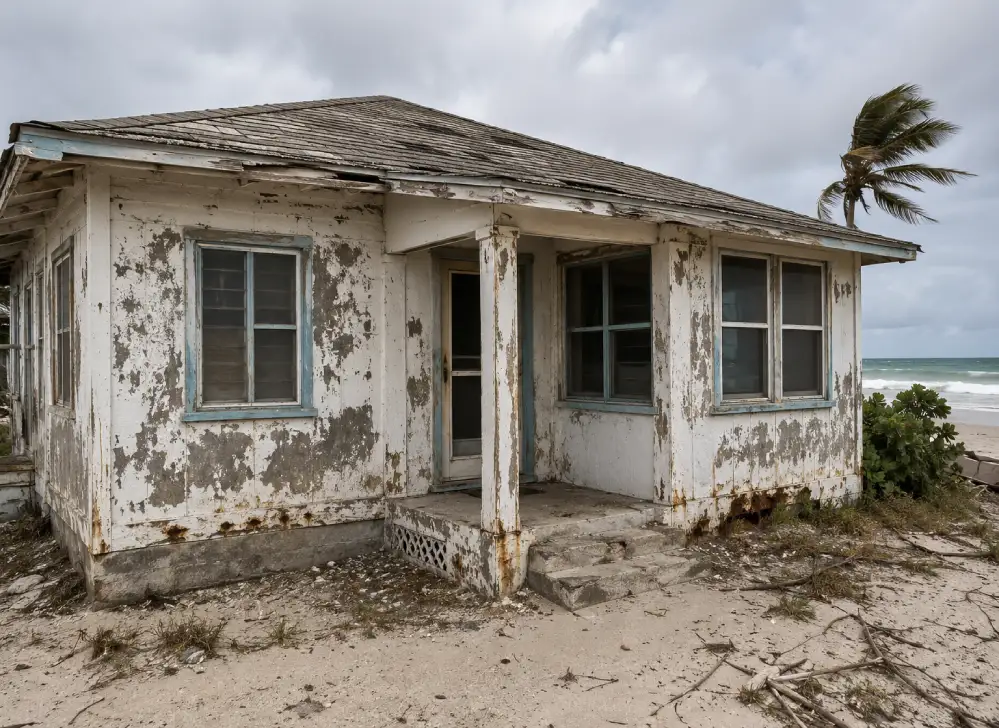
Case Study: The Halloway Bungalow, from Storm-Damaged to Standout
The Halloways bought a 300-square-metre bungalow on the Carolina coast for its view and its price — both reflected the same problem. The previous owner hadn’t budged on maintenance in over a decade, and the home’s original single-pane windows and untreated timber siding were failing fast.
Their contractor’s first move wasn’t cosmetic. He replaced the sacrificial anodes on the exposed plumbing, swapped standard fasteners for marine-grade stainless steel, and re-graded the crawl space to stop water pooling under the floor joists. Only then did the kitchen and living areas get their glow-up.
The couple originally budgeted for a straightforward cosmetic refresh: new paint, new flooring, and a kitchen update. An inspection during month two changed that plan entirely. The crawl space showed signs of chronic moisture intrusion, and two of the support piers had begun to shift slightly out of alignment.
Rather than patch the symptoms, their contractor recommended a full structural review before touching anything visible. That decision added six weeks and roughly $45,000 to the original scope, but it also meant the finished home wouldn’t need another intervention within a few years of moving in.
Result
An 11-month renovation, roughly $310,000 total, and a home that now earns rental income during six months of the year. Their biggest lesson? Budget for what’s invisible first.
Key takeaways from the Halloway project:
- Structural and material upgrades ate nearly 40% of the total budget — and that’s normal for coastal work.
- Marine-grade hardware cost more upfront but cut projected maintenance calls by roughly half.
- A phased renovation (structure, then systems, then finishes) kept the family living on-site for most of the build.
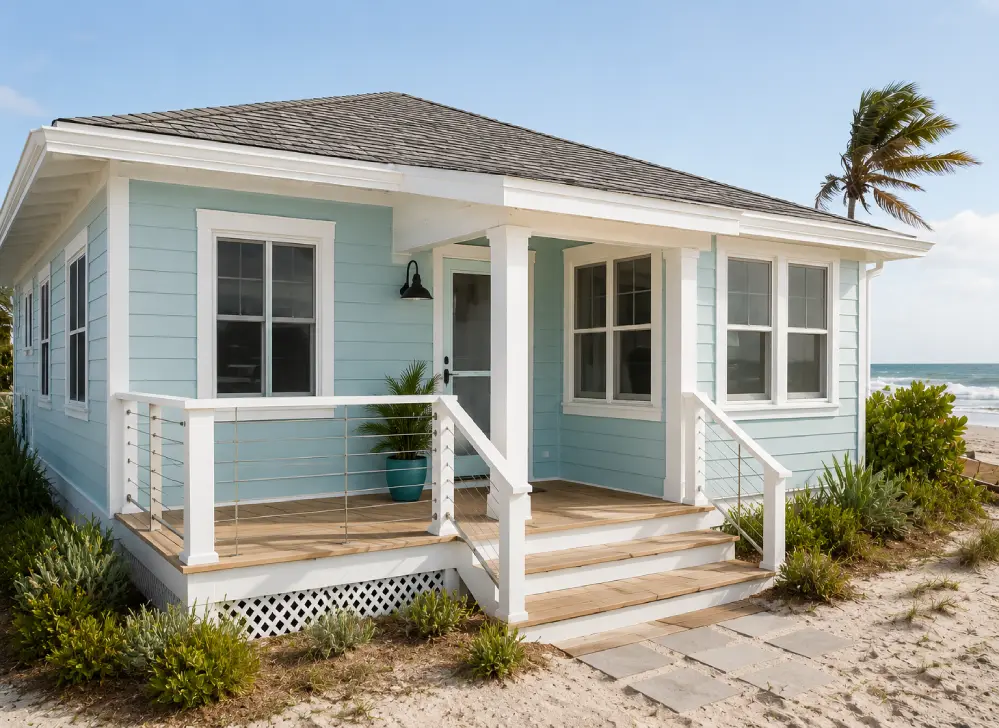
Choosing Weather-Resistant Materials for Coastal Homes
Salt air is corrosive, humidity invites mould, and wind-driven rain finds gaps that inland weather never would. Every material choice on a beachfront project should answer one question first: how will this hold up against all three?
- Siding and cladding: fibre cement board from brands like James Hardie resists rot and salt corrosion far better than standard timber, and it holds paint for longer between refreshes. Vinyl works on a budget, but it can warp in intense heat.
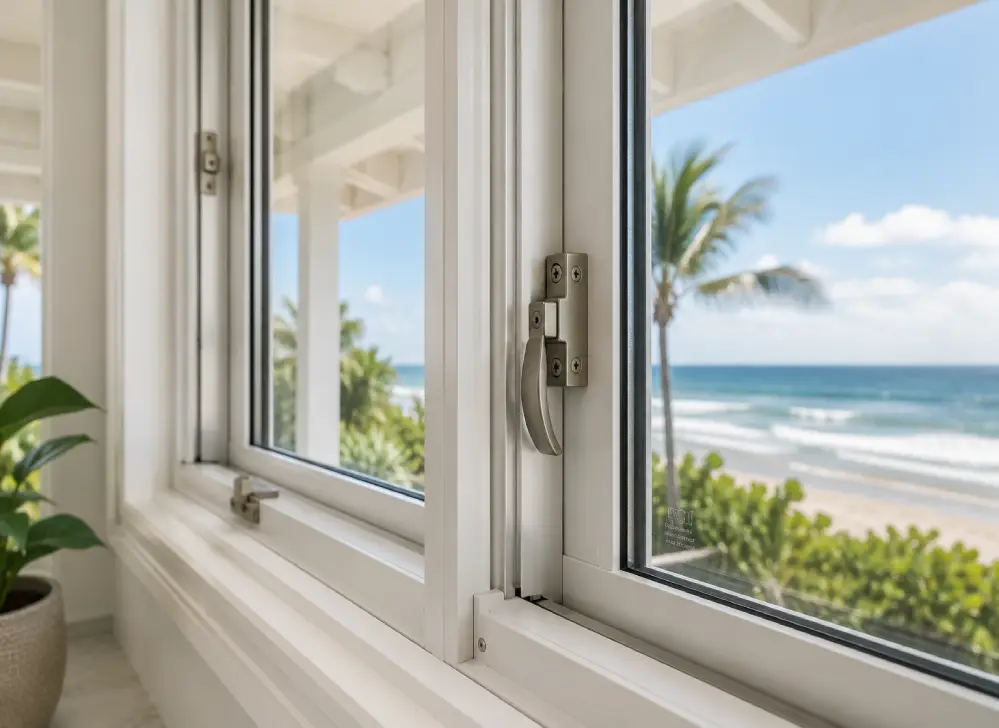
- Windows and doors: look for impact-rated glazing with Miami-Dade or ASTM E1886/E1996 approval, tested to withstand wind-borne debris — essential in hurricane zones and genuinely useful anywhere with strong coastal gusts. Aluminium-clad frames outperform standard timber here.
- Roofing: standing-seam metal roofing shrugs off wind uplift better than asphalt shingles and typically lasts two to three times longer in salt-heavy air.
- Hardware and fasteners: always specify stainless steel or hot-dip galvanised fixings — Simpson Strong-Tie’s stainless connector line is a common go-to. Ordinary zinc-coated screws can rust through within a single wet season.
| Material | Salt Resistance | Typical Lifespan | Relative Cost |
|---|---|---|---|
| Fibre cement siding | Excellent | 30–50 years | Medium |
| Vinyl siding | Fair | 20–30 years | Low |
| Standing-seam metal roof | Excellent | 40–70 years | Medium-high |
| Asphalt shingle roof | Poor–Fair | 12–20 years | Low |
| Impact-rated windows | Excellent | 20–30 years | High |
| Standard timber siding | Poor | 10–15 years | Low |
That’s your baseline. If your budget only stretches to upgrading one category this year, the windows and the fasteners give you the most protection per dollar spent.
Room-by-Room Cost Breakdown for a Beachfront Renovation
Costs shift depending on region, home size, and how far you push the finishes. That said, here’s a realistic range based on mid-to-upper coastal renovation projects.
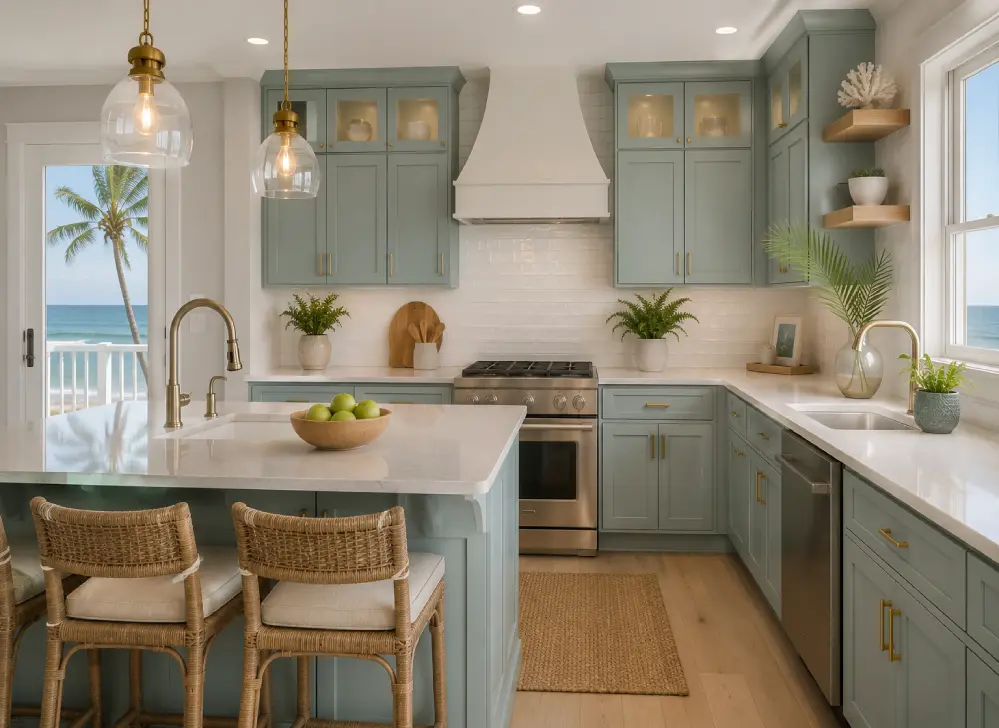
- Kitchen: $35,000–$75,000 — marine-grade cabinetry, moisture-resistant flooring, and ventilation upgrades to manage humidity.
- Bathrooms: $15,000–$30,000 per room — waterproof membranes and corrosion-resistant fittings matter more here than anywhere else in the house.
- Exterior siding and roofing: $40,000–$90,000 — the single biggest line item on most coastal jobs.
- Windows and doors: $25,000–$60,000 for a full impact-rated upgrade across an average-sized home.
- Decking and outdoor living: $20,000–$45,000 for composite decking from brands like Trex, glass balustrades, and outdoor kitchens built to handle salt spray.
- Structural and foundation work: $30,000–$100,000+, particularly for homes needing elevation, pilings, flood vents, or crawl-space repairs.
- Systems (HVAC, plumbing, electrical): $15,000–$35,000, factoring in corrosion-resistant components and a dedicated dehumidification system throughout.
Add these up and a comprehensive beachfront renovation typically lands between $180,000 and $435,000, depending on scope. Structural work is where budgets balloon fastest, so get a coastal-experienced structural engineer involved before you finalise numbers.
Renovation Challenges Unique to Beachfront Properties
Coastal building throws up problems an inland renovation simply doesn’t face. Knowing them early saves you from expensive surprises mid-project.
1 ~ Regulatory complexity
Many coastal zones require permits tied to setback lines, flood elevation certificates, or septic capacity. Some municipalities, including parts of the Outer Banks, tie occupancy permits directly to septic limits — worth checking before you finalise floor plans.
2 ~ Insurance realities
Coastal homeowners insurance runs roughly 39% above the national average in high-risk states, according to a 2026 AvantStay market analysis. Wind and flood coverage are typically separate policies — the latter often through the National Flood Insurance Program (NFIP) — and premiums should be quoted during due diligence, not after closing.
3 ~ Contractor availability
Standard handymen often lack experience with marine-grade materials and moisture sealing. Seek out contractors with specific coastal or waterfront project references.
4 ~ Compressed timelines
Storm seasons create real deadlines. Scheduling exterior work outside hurricane or monsoon windows avoids costly delays and material exposure mid-build.
5 ~ Access and logistics
Sandy or narrow coastal access roads can add delivery costs and slow down heavy equipment work — factor this into your contractor’s timeline estimate, not just the price.
6 ~ Corrosion in unexpected places
Salt air doesn’t stop at the exterior wall. HVAC condenser units, exposed electrical panels, and even door hinges inside covered porches corrode faster near the coast than most homeowners expect. Ask your contractor to specify marine-rated components for anything within roughly a hundred metres of the shoreline, not just the parts facing the water directly.
7 ~ Utility resilience
Power outages during storms hit coastal communities harder and more often than inland ones. A whole-home or partial backup generator adds cost upfront — typically $8,000 to $15,000 installed — but it protects refrigeration, sump pumps, and security systems when you need them most.
Lifestyle and Financial Benefits: Wellbeing and Rental Income
A renovated beachfront home pays you back in two currencies: how you feel, and what you earn.
On the wellbeing side, research spanning more than 15,000 people across 18 countries found that living somewhere with a water view was linked to better mental health — even after researchers controlled for income and age. Coastal or “blue space” exposure has also been tied to lower stress and improved mood in multiple peer-reviewed studies, including work published through the EU-funded BlueHealth research initiative.
On the financial side, the numbers are just as compelling. Beachfront rentals typically generate $30,000 to $90,000 annually, with coastal properties appreciating up to 9% a year, according to 2026 data from AvantStay. Premium coastal nightly rates can run 27% higher — up to 76% in some markets — than comparable homes just a few streets inland. That said, roughly 74% of travellers actively choose coastal stays when planning a trip, per the Vacation Rental Management Association (VRMA), which keeps demand steady across most of the year.
A quick, honest caveat
Higher income comes with higher running costs. Insurance, maintenance, and turnover cleaning between guests all cost more at the coast than inland. Renovate for durability first, and the rental economics tend to look after themselves.
Design Ideas to Maximise Coastal Views and Natural Light
Once the durable foundations are sorted, design decisions can lean fully into the setting. A few approaches consistently earn their keep on the coast.
- Open sightlines to the water. Where structurally possible, remove interior walls between the kitchen and living area facing the ocean. A single unbroken view does more for a home’s feel than almost any furniture choice.
- Layered, weather-appropriate texture. Combine driftwood tones, woven jute, and linen upholstery for warmth without heaviness. Avoid anything overly precious — coastal living means sand on the floor, and your materials should shrug that off.
- Glass and cable railings. These preserve views from indoor spaces and decks alike, unlike solid balustrades that chop up sightlines.
- Indoor-outdoor flow. Pocket doors or large sliding glass panels blur the line between deck and living room, extending usable space on mild days.
- Salt-friendly colour palettes. Soft whites, sandy neutrals, and muted blues hide salt residue better than high-gloss dark finishes, which show water spots and dust quickly in coastal air.
- Durable, barefoot-friendly flooring. Large-format porcelain tile or waterproof luxury vinyl plank (LVP) handle sand, sunscreen, and wet feet far better than solid hardwood, which can cup and warp in humid coastal conditions. If you love the look of timber, engineered wood with a marine-grade sealant is a reasonable middle ground.
- Coastal lighting choices. Standard interior fixtures corrode quickly in salt-heavy air, even indoors near open windows or covered porches. Choose fixtures rated for wet or coastal environments, particularly for porch lighting, exterior sconces, and anything near an outdoor shower.
FAQs
How much does a full beachfront home renovation cost?
Most comprehensive coastal renovations range from $180,000 to $435,000, depending on home size, structural needs, and finish level. Exterior siding, roofing, and structural work typically account for the largest share of the budget.
Is a beachfront renovation worth it financially?
Often, yes. Beachfront rentals can generate $30,000–$90,000 annually, and coastal land scarcity supports stronger long-term appreciation than many inland markets, though insurance and upkeep costs run higher too.
Conclusion
The strongest beachfront home renovation projects share one habit: they spend on what’s hidden before they spend on what’s photographed. Structure, materials, and moisture control come first; the view does the rest of the work for you.
If you’re at the planning stage, start with a coastal-experienced structural engineer and a realistic insurance quote — both will shape your budget more than any finish choice. Have a beachfront project of your own in progress? Share where you’re starting from in the comments; I read every one.

