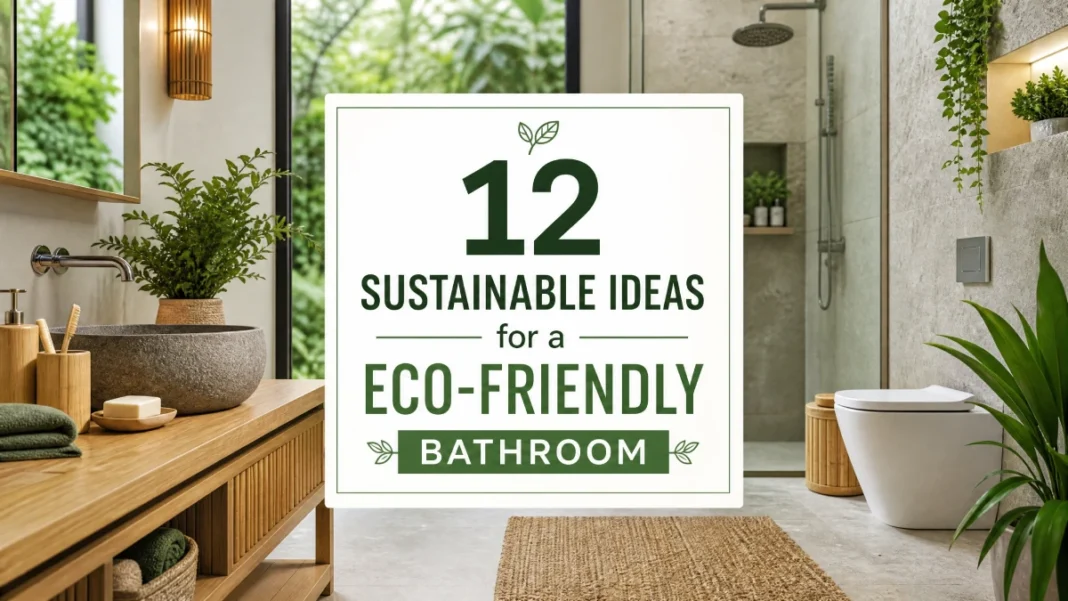
Let’s be honest. When you hear “sustainable bathroom,” what comes to mind? Probably something beige. Something that looks like a health food store from 1997. Something that whispers, “I’ve given up on beauty for the sake of the planet.”
That’s nonsense.
A sustainable bathroom can be the most luxurious room in your home. It can feel like a five-star hotel spa while using 60% less water than a conventional bathroom. It can feature materials that would make your interior designer friends jealous — all while keeping hundreds of dollars in your pocket every year.
The difference comes down to which upgrades matter and which are greenwashing. Here are 12 specific, high-impact ideas spanning low-flow fixtures, recycled materials, and living plants. Each includes real product names, honest cost comparisons, and actual water and energy savings. No vague suggestions. No fake statistics. Just practical, beautiful, eco-smart design.
Let’s build a bathroom you’ll love — and one the planet will thank you for.
1. Swap Your Showerhead for a WaterSense Model
Your current showerhead probably uses 2.5 gallons per minute (GPM) — the federal maximum allowed since 1992. If your home was built before that, you could be running at 3.5 GPM or more. That means a 10-minute shower sends 25 to 35 gallons of water down the drain. Multiply that by a family of four, and you’re looking at over 36,000 gallons per year — just from showers.
A WaterSense-certified showerhead — a label backed by the U.S. Environmental Protection Agency — caps flow at 2.0 GPM (7.6 liters per minute). That’s roughly 20% less water without sacrificing pressure. The technology uses air injection or precision nozzles to maintain that strong, spa-like spray.
Product Pick
The Kohler Forte 2.0 GPM Multi-Function Showerhead ($45–$65 at Home Depot and Amazon) offers three spray settings and feels luxurious. For a budget option, the Delta H2Okinetic 2.0 GPM Showerhead ($25–$40) uses wave pattern technology that makes water droplets feel larger and more immersive.
Environmental Impact
A family of four saves approximately 7,000–20,000 gallons of water per year, depending on your current showerhead. That’s equivalent to 100–250 bathtubs full of water. You’ll also reduce the energy needed to heat that water, cutting roughly 88 lbs (40 kg) of CO2 annually.
Cost Comparison
Most WaterSense showerheads cost $25–$100. A standard showerhead costs $10–$30. The premium is minimal, and you’ll recoup it in 4–6 months through lower water and energy bills.
- Easy DIY. You unscrew the old one and screw on the new one. No tools required beyond an adjustable wrench and plumber’s tape.
- 9/10. Modern WaterSense showerheads come in brushed nickel, matte black, and polished chrome finishes that look far more expensive than they are.
2. Install a Dual-Flush Toilet (or Retrofit Your Existing One)
If your home was built before 1994, your toilets likely use 3.5 gallons per flush (GPF) — and older models can use up to 7 GPF. Even the current federal standard of 1.6 GPF wastes water on every liquid flush that needs a fraction of that volume.
A dual-flush toilet gives you two buttons: a half-flush for liquid waste (around 0.8–1.0 GPF) and a full-flush for solid waste (around 1.6 GPF). The concept originated in Australia in the 1980s, where water scarcity made efficiency non-negotiable. Now it’s the global standard for water-conscious bathrooms.
Product Pick
The TOTO Aquia IV Dual-Flush Toilet ($350–$500 on Amazon and at plumbing supply stores) offers a sleek one-piece design with TOTO’s signature CeFiONtect glaze that repels mold and debris. For a budget-friendlier option, the American Standard H2Option Dual-Flush ($200–$350 at Home Depot and Lowe’s) delivers reliable performance with a clean, modern profile.
Environmental Impact
Switching from a 3.5 GPF toilet to a dual-flush model saves approximately 13,000 gallons of water per year for a family of four. Even upgrading from the current 1.6 GPF standard saves around 3,500 gallons annually. Either way, that’s roughly 30% of your total household water usage.
Cost Comparison:
| Option | Price Range | Annual Water Cost | Payback Period |
|---|---|---|---|
| Old 3.5 GPF toilet | $100–$250 | $250–$375 | — |
| Standard 1.6 GPF toilet | $150–$350 | $120–$200 | — |
| Dual-flush toilet | $200–$500 | $80–$130 | 1.5–3 years |
| Dual-flush retrofit kit | $20–$35 | $80–$130 | 1–4 months |
Renter-Friendly Alternative
Can’t replace the toilet? Get a dual-flush conversion kit like the Fluidmaster Dual Flush Valve ($20–$35 at Home Depot and on Amazon). It installs inside your existing tank in about 20 minutes, and you can remove it when you move out.
- Moderate for full replacement (hire a plumber). Easy for retrofit kits (DIY-friendly).
- 8/10. Modern dual-flush toilets have clean, sculptural silhouettes. The TOTO Aquia IV is beautiful — a minimalist white oval that elevates the entire bathroom.
3. Choose Recycled Glass Tile for Your Accent Wall
Standard ceramic tiles are fired at 1,800–2,300°F in kilns that run on natural gas or coal. The production process releases significant CO2. Then there’s raw material extraction — clay mining that disrupts ecosystems.
Recycled glass tiles are made from post-consumer and post-industrial glass (old bottles, windows, mirrors) crushed and re-fired at lower temperatures. They use 40–50% less energy to produce and keep glass out of landfills, where it would take over 4,000 years to decompose.
Product Pick
Fireclay Tile’s Recycled Glass Collection ($35–$55 per square foot, ships nationwide) offers 10+ colors with 59–100% recycled content. For a widely available alternative, Oceanside Glasstile ($20–$45 per square foot at tile showrooms and online) manufactures beautiful recycled glass mosaics in Carlsbad, California, with up to 97% recycled content.
Environmental Impact
Every square foot of recycled glass tile diverts roughly 2–3 lbs of glass from landfills. For an average accent wall of 40 square feet, that’s 80–120 lbs of waste glass given a second life. Manufacturing produces 50% fewer CO2 emissions compared to virgin ceramic tile. Both materials can contribute toward LEED certification credits for sustainable building.
Cost Comparison
Recycled glass tiles run $20–$60 per square foot installed. Standard ceramic tiles run $7–$15 per square foot installed. Yes, there’s a premium — but this is an accent wall, not an entire bathroom. You’re looking at a $500–$1,800 difference on a 40-square-foot wall for something stunning.
- Moderate. Installation is similar to ceramic tile but requires a tile setter experienced with glass (it can chip if cut incorrectly). Hire a professional unless you’re an experienced DIYer.
- 10/10. This is where sustainability shines. Recycled glass tiles have an incredible depth and luminosity that ceramic can’t match. They catch light in ways that make your bathroom feel larger and more luxurious. The color range is extraordinary — from oceanic teals to earthy ambers.
4. Paint With VOC-Free Paint
Conventional bathroom paint contains volatile organic compounds (VOCs) — chemicals that evaporate as the paint dries and continue off-gassing for years. In a small, poorly ventilated bathroom, these concentrations can be 2–5 times higher than outdoors. VOCs cause headaches, respiratory irritation, and have been linked to long-term health issues.
VOC-free paints use water-based formulas with natural pigments and binders. To qualify as zero-VOC, a paint must contain fewer than 5 grams per liter. They don’t off-gas, don’t smell like a chemical factory, and are safe to apply while living in the home.
Product Pick
ECOS Paints (available at ecospaints.com with free shipping) offers zero-VOC paint formulated for bathrooms — meaning it resists mold and moisture. For a more widely available option, Benjamin Moore Natura ($55–$70 per gallon at Benjamin Moore retailers) is zero-VOC and GREENGUARD Gold-certified. Sherwin-Williams Harmony ($60–$75 per gallon) is another excellent zero-VOC option with built-in odor-eliminating technology.
Environmental Impact
A single gallon of conventional paint releases 8–10 lbs of VOCs into the atmosphere during its lifetime. VOC-free paints reduce that to nearly zero. They’re also biodegradable and produced without petrochemical solvents, reducing the carbon footprint of manufacturing by approximately 30–40%.
Cost Comparison
VOC-free bathroom paints run $55–$80 per gallon. Conventional premium bathroom paints run $25–$45 per gallon. For an average bathroom needing 2–3 gallons, the difference is roughly $60–$150. That’s a small price for air you can feel good about breathing.
- Easy DIY. VOC-free paints apply like conventional paint. No special equipment or techniques needed.
- 9/10. Modern VOC-free paints come in every color you can imagine. The finish quality is indistinguishable from premium conventional paints. I’m partial to ECOS’s “Limewash” finish for bathrooms — it creates a soft, European plaster look that’s incredibly chic.
5. Choose Bamboo Bath Accessories Over Plastic
Plastic bathroom accessories — soap dispensers, toothbrush holders, waste bins — are typically made from virgin petroleum-based plastics. They’re rarely accepted by recycling programs, and they’ll outlive your grandchildren in a landfill.
Bamboo is technically a grass, not a wood. It grows up to 3 feet per day, reaches harvest maturity in 3–5 years (vs. 20–50 years for hardwoods), and regenerates without replanting. It’s naturally antimicrobial, water-resistant, and biodegradable at the end of its life.
Product Pick
Bambüsi’s Bathroom Collection ($20–$45 per piece on Amazon) offers sleek, minimalist designs in carbonized bamboo that look like warm honey-toned wood. Royal Craft Wood ($15–$35 per piece on Amazon) is another excellent option with a wide range of organizers and accessories.
Environmental Impact
Every bamboo accessory you buy instead of plastic prevents roughly 1–2 lbs of petroleum-based plastic from being produced. Bamboo also sequesters carbon during growth — a bamboo grove absorbs 35% more CO2 than an equivalent stand of hardwood trees.
Cost Comparison
Bamboo accessories run $15–$60 per piece. Plastic equivalents run $8–$20. The premium is modest, and bamboo lasts longer — no cracking, no discoloration.
- Zero difficulty. You’re just swapping products.
- 8/10. Bamboo brings warmth and texture to bathrooms that are often cold and clinical. It pairs well with white tiles, concrete, and greenery. The organic grain patterns add visual interest without being busy.
6. Install a Faucet Aerator on Every Tap
Your bathroom faucet likely flows at 2.2 GPM — the federal maximum. Most of that water isn’t needed for hand-washing or teeth-brushing — it’s excess volume that goes straight down the drain.
A faucet aerator is a small screen attachment that screws onto the tip of your faucet. It mixes air into the water stream, maintaining pressure while reducing flow to 1.0–1.5 GPM. You get the same rinsing power with 30–50% less water.
Product Pick
The NEOPERL PCA 1.5 GPM Aerator ($5–$12 on Amazon) is the industry benchmark — they supply aerators to major faucet brands like Moen and Delta. For an even lower flow, the Niagara Conservation Earth Massage 1.0 GPM Aerator ($3–$8 on Amazon) is ideal for hand-washing. Both install in 30 seconds.
Environmental Impact
A single aerator saves 3,000–4,000 gallons of water per year per faucet. For a bathroom with two sinks, that’s up to 8,000 gallons annually. You’ll also save the energy used to pump and treat that water, reducing your household’s indirect carbon footprint by roughly 330 lbs (150 kg) of CO2 per year.
Cost Comparison
$3–$12 one-time cost. That’s it. The savings on your water bill ($30–$80 per year in most US cities) mean the aerator pays for itself in 1–3 months and then saves you money every year after.
- Effortlessly easy. Screw off the old aerator tip, screw on the new one. No tools needed. Works on 95% of faucets.
- 6/10. Aerators are essentially invisible. They sit inside the faucet tip and don’t change the appearance at all. This one’s purely about function.
7. Switch to Natural, Plant-Based Bathroom Cleaners
Conventional bathroom cleaners contain bleach, ammonia, phosphates, and synthetic fragrances. These chemicals kill bacteria but also irritate your lungs, skin, and eyes. When rinsed down the drain, they enter waterways and disrupt aquatic ecosystems. Phosphates, in particular, cause algal blooms that suffocate fish.
Plant-based cleaners use ingredients like citric acid, lactic acid, essential oils, and plant-derived surfactants. They clean effectively, disinfect naturally, and biodegrade within days.
Product Pick
Method’s Antibacterial Bathroom Cleaner ($4–$6 per bottle at Target, Whole Foods, and Amazon) uses citric acid for cleaning power and comes in scents like eucalyptus mint. Seventh Generation Bathroom Cleaner ($4–$7 per bottle at most grocery and big-box stores) is EPA Safer Choice-certified. For a premium option, Mrs. Meyer’s Clean Day Bathroom Cleaner ($4–$6 at Target and Amazon) offers scents like lavender and basil that smell genuinely lovely.
Environmental Impact
Switching to plant-based cleaners prevents 4–6 lbs of harsh chemicals from entering waterways per household per year. Brands like Seventh Generation use 100% post-consumer recycled plastic bottles, and many offer concentrated refill pouches that cut plastic waste by 80%.
Cost Comparison
Plant-based cleaners run $4–$7 per bottle. Conventional cleaners run $3–$5. The premium is minimal, and you can offset it further by using concentrated formulas or refill systems.
- Zero. Buy different products, clean the same way.
- 8/10. One unexpected bonus: plant-based cleaners come in packaging you’ll actually want to leave out on the counter. Method’s sleek bottles and Mrs. Meyer’s vintage-inspired labels look like intentional decor.
8. Install a Tankless Water Heater
Traditional water heaters store 40–80 gallons of water and keep it hot 24/7. That’s called standby heat loss — energy wasted maintaining temperature on water you’re not using. These tanks also corrode over time, leak, and eventually end up in landfills (and they’re heavy — 100–150 lbs of steel and insulation).
A tankless water heater (also called on-demand or instant) heats water only when you turn on the tap. Cold water passes through a heat exchanger and emerges hot in seconds. No tank, no standby loss, no rust.
Product Pick
The Rheem Performance Tankless Electric Water Heater ($200–$500 at Home Depot) is a solid point-of-use option for a single bathroom. For whole-house gas tankless, the Rinnai RU Series ($800–$1,500 at plumbing supply stores) is the industry gold standard — ENERGY STAR certified with a 96% efficiency rating. The Stiebel Eltron Tempra Plus ($400–$800 on Amazon) is a top-rated electric whole-house option. Look for ENERGY STAR certification when comparing models — rated units deliver verified savings on every unit of energy consumed.
Environmental Impact
Tankless heaters use 24–34% less energy than storage tank heaters for homes using less than 40 gallons of hot water daily. For a typical US household, that’s approximately 300–500 kWh saved per year, which translates to roughly 260–430 lbs (120–195 kg) less CO2 annually.
Cost Comparison
| Type | Unit + Installation | Annual Energy Cost | Lifespan |
|---|---|---|---|
| Storage tank heater | $800–$2,500 | $300–$500 | 8–12 years |
| Tankless heater | $1,500–$4,500 | $200–$350 | 20+ years |
The higher upfront cost is offset by lower energy bills and double the lifespan. Payback period: 3–7 years.
- High. Gas tankless units often require new venting and gas line upgrades. Electric tankless units may need a panel upgrade (they draw significant amperage). Hire a licensed plumber and electrician — this isn’t DIY territory.
- 9/10. Tankless heaters are small, wall-mounted units about the size of a briefcase. They free up floor space compared to bulky storage tanks. Models like the Rinnai RU have sleek digital displays that look modern.
9. Choose Organic Cotton or Linen Shower Curtains
Most shower curtains are made from PVC (polyvinyl chloride) or PEVA (polyethylene vinyl acetate). PVC releases phthalates and volatile organic compounds, especially in the warm, humid environment of a bathroom. These curtains off-gas for months and cannot be recycled. When discarded, they persist in landfills for centuries.
Organic cotton and linen curtains are grown without synthetic pesticides, processed without toxic chemicals, and are fully biodegradable. Cotton grown conventionally uses 16% of the world’s insecticides — organic eliminates that.
Product Pick
Coyuchi’s Organic Cotton Waffle Shower Curtain ($98 at coyuchi.com) is beautifully textured and gets softer with every wash. Parachute Home’s Organic Cotton Shower Curtain ($70–$100 at parachutehome.com) offers a clean, spa-like drape. For a wider retail option, West Elm’s Organic Cotton Shower Curtain ($50–$80) comes in several modern patterns and is available at West Elm stores nationwide.
Environmental Impact
An organic cotton shower curtain has approximately 45% lower carbon footprint than a PVC equivalent over its lifecycle. It also avoids introducing phthalates and VOCs into your bathroom air and, eventually, into waterways.
Cost Comparison
Organic cotton/linen curtains run $50–$120. PVC curtains run $10–$25. The difference is significant — but an organic curtain lasts 5–8 years with proper care, while PVC curtains typically need replacement every 1–2 years due to mildew and yellowing. Long-term cost difference: negligible.
- Easy. Same installation as any shower curtain. You will need a liner (look for PEVA liners as a lower-toxicity PVC alternative, or invest in a washable organic cotton liner).
- 10/10. This is arguably the most beautiful swap on this list. An organic linen shower curtain in natural oatmeal or soft sage transforms a bathroom from generic to curated. The texture alone adds warmth and depth that plastic could never achieve.
10. Install a Greywater Recycling System
Greywater is the gently used water from your bathroom sink and shower — not toilet water (that’s blackwater). In a conventional bathroom, this relatively clean water goes straight into the sewer. Meanwhile, you use fresh, potable water to flush your toilet. That’s an absurd inefficiency.
A greywater recycling system captures sink and shower drainage, filters it lightly, and redirects it to flush your toilet. You use your water twice before sending it away.
Product Pick
The Hydraloop Home ($4,000–$6,000 installed, available through hydraloop.us) is the leading residential greywater system in the US — it’s sleek, self-cleaning, and NSF-certified. For a simpler sink-to-toilet option, the AQUS Greywater System by WaterRenu ($300–$500) captures bathroom sink water and uses it for toilet flushing with minimal installation. Note: greywater regulations vary by state — California, Arizona, Texas, and Georgia are among the most permissive. Check your local building codes before installing.
Environmental Impact
Greywater recycling reduces total household water consumption by 25–35%. For context, Israel — the global leader in water reuse — recycles nearly 90% of its wastewater. For a family of four, that’s roughly 15,000–20,000 gallons of water saved per year — enough to fill a small swimming pool.
Cost Comparison
A greywater system costs $300–$6,000 installed, depending on complexity. The water and sewer bill savings are $150–$400 per year. Payback period: 2–15 years depending on system cost and local water rates. In drought-prone states like California where water rates are high, payback is faster and the environmental case is even stronger.
- High for full systems. Requires plumbing modifications and professional installation. Best suited for homeowners doing a full bathroom renovation. The AQUS system is more DIY-friendly for a quick retrofit.
- 7/10. The system itself is hidden (under-sink, in-wall, or in a utility closet). The visible fixtures remain unchanged. You get all the eco-cred with zero aesthetic compromise.
11. Opt for Recycled Metal or Reclaimed Wood Shelving
New metal shelving requires mining, smelting, and manufacturing — all energy-intensive processes. New wood shelving, even when “sustainably harvested,” often involves clear-cutting and long-distance shipping.
Recycled aluminum uses 95% less energy to produce than virgin aluminum. Reclaimed wood is timber salvaged from old buildings, barns, and factories — wood that’s already 50–150 years old, with character that cannot be replicated.
Product Pick
West Elm’s Recycled Aluminum Shelves ($79–$149 at westelm.com) are sleek and modern. For reclaimed wood, Rejuvenation’s Salvaged Wood Shelving ($100–$300 at rejuvenation.com) sources timber from demolished American structures. For a wider selection and custom sizing, Etsy has hundreds of US-based woodworkers selling handmade reclaimed wood floating shelves ($60–$200) — search for “reclaimed wood floating shelf” and filter by US sellers.
Environmental Impact
Using recycled aluminum shelving instead of virgin aluminum prevents approximately 17 lbs (8 kg) of CO2 per kg of metal. A reclaimed wood shelf prevents a new tree from being harvested and gives a second life to timber that might otherwise be burned or landfilled. Reclaimed wood also sequesters carbon captured decades ago.
Cost Comparison
| Material | Price Range |
|---|---|
| Virgin aluminum shelves | $40–$100 |
| Recycled aluminum shelves | $79–$149 |
| New wood shelves | $30–$100 |
| Reclaimed wood shelves | $60–$300 |
The premium for recycled/reclaimed is modest — roughly 30–50% more than virgin materials. For one or two shelves in a bathroom, the absolute difference is small.
- Easy to moderate. Floating shelves require basic drilling and wall anchors. Reclaimed wood shelves are often heavier and may need sturdier mounting.
- 10/10. This is where sustainable materials genuinely outperform conventional ones aesthetically. Reclaimed wood has a depth of color and grain that new wood doesn’t have. The patina tells a story. Your bathroom shelves become a conversation piece.
12. Add Living Plants That Clean the Air
Bathrooms are often the most chemically polluted rooms in a home — cleaners, synthetic fragrances, off-gassing from vinyl shower curtains and conventional paints, and high humidity that concentrates these pollutants.
Certain plants are natural air filters
NASA’s Clean Air Study, conducted in 1989 by researcher Bill Wolverton for space stations, identified species that remove formaldehyde, benzene, and trichloroethylene from indoor air. In a bathroom, these plants also absorb excess moisture, reducing mold and mildew.
Product Picks
- Snake Plant (Sansevieria): Thrives in low light and high humidity. Removes formaldehyde and benzene. Virtually unkillable. ($15–$35 at Home Depot, Lowe’s, or your local nursery)
- Spider Plant (Chlorophytum): Excellent for removing carbon monoxide and xylene. Produces “pups” you can propagate into new plants. ($10–$20 at any garden center)
- Peace Lily (Spathiphyllum): Removes mold spores from the air — ideal for bathrooms. Produces elegant white blooms. ($15–$30 at Lowe’s, Walmart, or Amazon)
- Boston Fern (Nephrolepis): A natural humidifier that absorbs excess moisture while removing formaldehyde. ($15–$30 at garden centers)
Environmental Impact
A single mature plant can clean approximately 10 square feet of air space. Three plants in an average bathroom effectively filter VOCs and reduce mold spore count by 30–60%. Plants also sequester small amounts of CO2 and produce oxygen.
Cost Comparison
Plants cost $10–$35 each. Three plants for a bathroom: $30–$100 total. An electric air purifier for the same space: $150–$500 plus $30–$60/year in electricity and replacement filters. Plants win by a landslide.
- Zero. Buy plants, place them on shelves or windowsills, water occasionally. Snake plants need water once every 2–3 weeks.
- 10/10. Plants transform a bathroom from sterile to spa-like. There’s a reason every luxury hotel bathroom features living greenery — it signals life, freshness, and care. A trailing spider plant on a reclaimed wood shelf, a tall snake plant in a ceramic pot beside the tub — these are the details that make a bathroom feel intentionally designed.
Conclusion
Not all of these swaps are equal. If you’re looking for the single highest-impact change you can make this weekend, it’s the showerhead swap and faucet aerators — minimal cost, zero aesthetic compromise, and immediate water savings that show up on your very next utility bill.
If you’re planning a renovation and want a showstopper, the recycled glass tile accent wall and reclaimed wood shelving deliver the visual drama of a luxury bathroom while keeping your environmental footprint small.
And if you’re a renter who can’t change fixtures? VOC-free paint, bamboo accessories, plant-based cleaners, and living plants will transform your bathroom’s health and sustainability profile without touching a single pipe.
Sustainable design isn’t about sacrifice. It’s about making intentional choices that honor both your aesthetic vision and the resources that make that vision possible. Every beautiful bathroom can be a responsible one.
What’s the first swap you’re going to make? I’d love to know — and if you try any of these recommendations, come back and tell me how they worked in your space.

