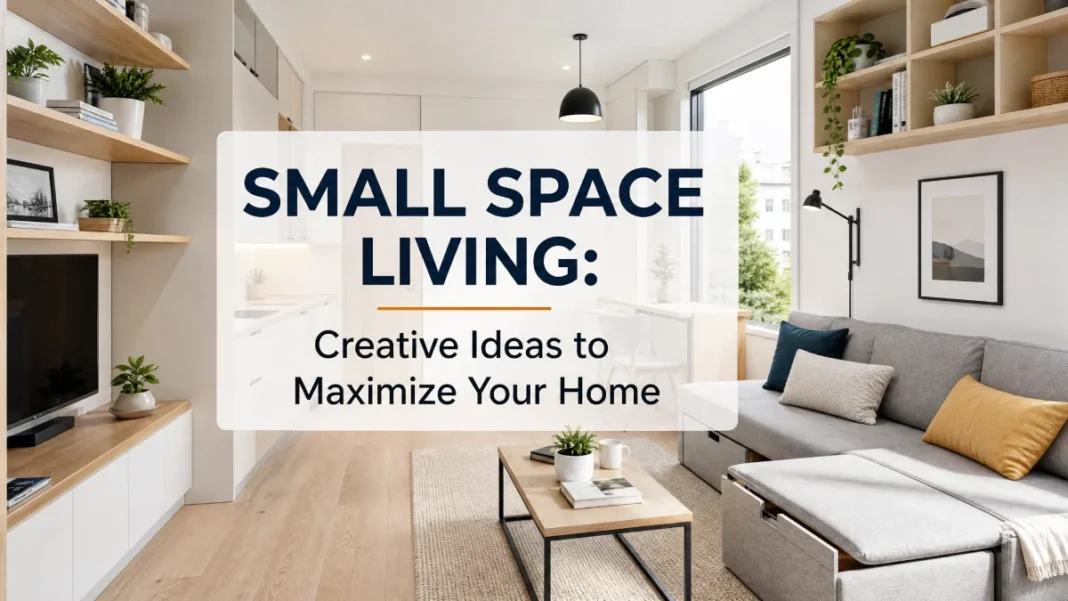
You love your city apartment. The location is perfect, the light is great, and the rent is reasonable. But there’s one problem: the square footage is, well, tiny.
You want a home that feels open and functional, not cramped and cluttered—space for your things, space to entertain, and space to breathe, all without spending a fortune.
Small space living is less about the size of your home and more about how you use it. With the right strategies—vertical storage, multi-functional furniture, and clever visual tricks—you can make every square foot work for you.
We’ll walk through every room, solve specific problems, and give you solutions you can implement this weekend.
Living Room: Solving the “Too Much Stuff, Not Enough Floor” Problem
The living room is the heart of your home. It’s where you relax, entertain, and sometimes even work. But in a small apartment, it can quickly become a catch-all for everything—blankets, books, remote controls, and mail.
Problem: Cluttered Surfaces and No Storage
Your coffee table is buried under magazines. Your floor is covered in dog toys and stray shoes. Every surface attracts clutter like a magnet. You’re tired of tidying up only to have the mess return within hours.
Solution: Multi-Functional Furniture + Vertical Storage
Storage Ottoman ($25–$100) — Swap your regular coffee table for a storage ottoman. It provides a place to put your feet up, a surface for drinks (add a tray on top), and hidden storage for blankets, remotes, and board games. The IKEA KJUGE Ottoman starts at just $13, while larger options from SONGMICS run around $40–$56.
Floor-to-Ceiling Shelving ($80–$300) — Install a tall shelving unit that goes all the way to the ceiling. This draws the eye upward (making the room feel taller) and provides ample storage in a small footprint. IKEA’s BILLY bookcase (about $90) is a classic choice.
Lift-Top Coffee Table ($150–$400) — This piece lets you raise the tabletop to create a work surface or dining area while hiding storage underneath.
Budget Breakdown:
- $ (Under $50): Storage ottoman (IKEA KJUGE, $13)
- $$ (50–$200): Floating shelves + storage baskets
- $$$$$ ($200+): Floor-to-ceiling shelving system or lift-top coffee table
Kitchen: Solving the “No Counter Space” Problem
Your kitchen might be the smallest room in your apartment, but it’s also the one that gets the most use. When counter space is limited and cabinets are overflowing, cooking becomes a stressful balancing act.
Problem: Cluttered Counters and Overflowing Cabinets
You have to move the toaster to use the cutting board. Your spice rack takes up prime counter real estate. And opening a cabinet means risking an avalanche of mismatched containers.
Solution: Vertical Storage + Smart Organization
Magnetic Knife Strip ($15–$25) — Mount a magnetic strip on your backsplash or wall to store knives and metal utensils. This frees up drawer and counter space.
Pegboard Organization ($20–$40) — Install a pegboard on an empty wall to hang pots, pans, utensils, and even small shelves for spices or magnetic spice jars. It’s functional and adds character to your kitchen.
Tension Rod Cabinet Organizers ($10–$20) — Install tension rods inside your cabinets to store pot lids and baking sheets upright. You’ll be able to grab what you need without digging through a pile.
Under-Sink Storage ($15–$40) — Use stackable shelves or tension rods under the sink to double your storage capacity. Add a small curtain to hide the clutter.
Budget Breakdown:
- $ (Under $30): Magnetic knife strip, tension rod organizers
- $$ (30–$100): Pegboard system, under-sink organizers
- $$$$$ ($100+): Rolling kitchen cart with storage
Bedroom: Solving the “No Closet Space” Problem
Your bedroom should be a sanctuary. But when your closet is overflowing, and your floor is covered in laundry piles, it’s anything but relaxing.
Problem: Clothes Everywhere, No Place to Put Them
Your closet is stuffed to capacity. Seasonal clothes are taking up prime hanging space. Shoes are scattered across the floor. And that chair? It’s become a permanent clothing rack.
Solution: Under-Bed Storage + Vertical Organization
Under-Bed Storage Containers with Wheels ($30–$60) — This is the goldmine of small-space storage. Rolling bins slide easily under your bed and can store seasonal clothes, extra bedding, or shoes. A 2-pack of wheeled containers costs about $37–$53. Pair them with vacuum storage bags (around $10–$20 for a set) to compress bulky winter coats and comforters down to a fraction of their size.
Over-the-Door Organizers ($15–$30) — Hang a shoe organizer on the back of your bedroom door to store accessories, scarves, hats, or even small items like jewelry.
Floating Shelves Above the Bed ($20–$50) — Install a long, narrow shelf above your headboard. It adds storage without taking up any floor space.
Loft Your Bed ($200–$800) — If you have high ceilings, lofting your bed creates a whole new area underneath for a desk, seating area, or additional wardrobe.
Budget Breakdown:
- $ (Under $40): Under-bed storage bins, vacuum bags, over-the-door organizer
- $$ (40–$150): Floating shelves + storage baskets
- $$$$$ ($150+): Bed frame with built-in drawers or loft bed
Bathroom: Solving the “No Storage” Problem
The bathroom is often the smallest room in the house, yet it holds the most variety of items—towels, toiletries, cleaning supplies, and more.
Problem: Toiletries Everywhere, No Place to Store Them
Your counter is covered in bottles. Towels are draped over every available surface. There’s no room for your skincare routine, let alone guest toiletries.
Solution: Vertical Storage + Hidden Storage
Over-the-Toilet Shelving ($25–$60) — The space above your toilet is prime real estate. Install floating shelves or a freestanding unit to store towels, toiletries, and decorative items.
Mirror Cabinet ($40–$150) — Replace your basic mirror with a medicine cabinet that opens to reveal storage. It does two jobs at once—mirror and storage—without taking up any extra space.
Shower Caddy with Tension Rod ($15–$30) — Use a tension rod system to hang storage in your shower corner. No drilling required.
Narrow Rolling Cart ($25–$50) — A slim cart can slide into the gap between your toilet and wall or sink and wall. Use it for towels, toilet paper, or extra toiletries.
Budget Breakdown:
- $ (Under $30): Shower caddy, over-the-door hooks
- $$ (30–$80): Over-the-toilet shelving, rolling cart
- $$$$$ ($80+): Mirror cabinet with storage
Hidden Storage: The Spaces You’re Forgetting
Beyond the obvious places, your home is full of hidden storage opportunities. These are the spots most people overlook.
Problem: You Think You’ve Used All Your Space, But You Haven’t
You’ve organized every closet and drawer, yet you still need more room. You’re convinced there’s no space left.
Solution: Find and Use Hidden Storage
Behind-the-Door Storage ($10–$25) — Every door in your home is a potential storage wall. Install over-the-door organizers in every room—for shoes in the bedroom, cleaning supplies in the bathroom, spices in the kitchen.
Under-Stair Storage ($200–$800) — If you have stairs, the space underneath is a goldmine. Add built-in drawers, a small desk, or open shelving.
Inside Cabinet Doors ($5–$20) — Mount small hooks or racks on the inside of cabinet doors to store measuring spoons, pot lids, or cleaning spray bottles. Command strips from 3M work well for renters who can’t drill.
Behind Wall Art ($20–$50) — Mount a piece of artwork on hinges to create a hidden cabinet. Use it for storing small valuables or keys.
Budget Breakdown:
- $ (Under $30): Over-the-door organizers, cabinet door hooks
- $$ (30–$150): Storage benches, under-bed drawers
- $$$$$ ($150+): Custom under-stair storage, built-in banquette seating
Visual Tricks: Making Your Space Feel Bigger
Sometimes the best way to maximize a small space is to make it feel larger than it actually is. These visual tricks cost almost nothing but make a noticeable difference.
Problem: Your Space Feels Cramped, Even When It’s Clean
You’ve decluttered and organized, but the room still feels small and closed in.
Solution: Strategic Visual Techniques
Mirrors ($20–$100) — Place a large mirror opposite a window to bounce light around the room and create the illusion of depth.
Light Colors — Paint your walls a light, neutral color like Benjamin Moore’s White Dove OC-17 or Farrow & Ball’s All White. Light walls reflect more light and make a room feel airy and open. Stick to a consistent color palette throughout your apartment—visual continuity between rooms tricks the eye into reading the space as one larger area rather than a series of small boxes.
Transparent Furniture ($30–$200) — Acrylic or glass furniture (like a clear coffee table or ghost chair) takes up visual space without blocking light.
Raise Furniture Off the Floor — Choose pieces with exposed legs rather than bulky bases. The visible floor space underneath creates a feeling of openness.
Budget Breakdown:
- $ (Under $40): Large mirror (check thrift stores)
- $$ (40–$100): Paint + supplies for a fresh coat
- $$$$$ ($100+): Transparent furniture piece
The Decluttering Rule: Before You Organize, Let Go
The most important piece of advice: You cannot organize clutter. You can only relocate it.
One Simple Rule
Before you buy a single storage bin or install a single shelf, go through your belongings and ask yourself three questions:
- Have I used this in the last year?
- Do I love this?
- Does this serve a purpose in my life right now?
If the answer to all three is no, let it go. Donate it, sell it, or recycle it. This mirrors the core principle behind Marie Kondo’s KonMari method—surround yourself only with items that serve a clear function or bring genuine satisfaction. Another habit worth adopting: the one-in, one-out rule. For every new item you bring home, one existing item has to leave.
The 80/20 Rule
In small spaces, aim for 80% of your storage to be closed (behind doors or in drawers) and 20% to be open (shelves for display). Closed storage hides visual clutter, while open storage lets you showcase your favorite items.
Conclusion
Small space living isn’t about deprivation—it’s about intention. Every item you bring into your home should earn its place. Every piece of furniture should do more than one job.
The single most important takeaway? Start with your walls. Vertical storage—floor-to-ceiling shelving, wall-mounted solutions, and over-the-door organizers—gives you the biggest return on investment in any small space. It frees up your floor, makes your room feel taller, and adds storage you never knew you had.
This weekend, pick one room. Identify one problem. Try one solution. You’ll be surprised what a single change can do.

