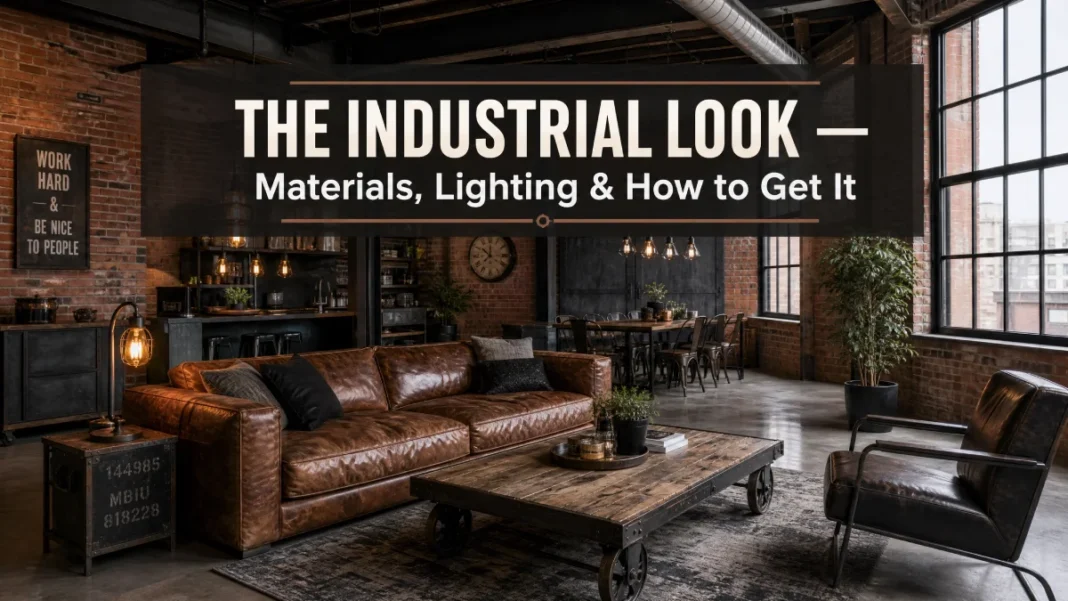
You’ve seen the photographs. Soaring ceilings crisscrossed with ductwork. Walls of weathered brick that seem to hold a century of stories. A massive steel-framed window floods the space with raw, uncompromising daylight. That’s industrial interior design at its most iconic—a style born from necessity and transformed into an aesthetic that feels both timeless and rebelliously modern.
But you don’t live in a converted warehouse in Brooklyn. You’re wondering how to capture that gritty, urban energy in a standard apartment or suburban home without it feeling cold or cliché. You want the soul, not the set design.
This guide covers exactly that. You’ll learn where industrial design came from, the non-negotiable materials, the lighting that makes or breaks the look, and practical ways to adapt the style for real-life spaces.
More importantly, you’ll learn how to soften the edges and make it yours.
The Origins of Industrial Interior Design
The story starts in the 1960s and 1970s, when artists and creatives began moving into the abandoned manufacturing lofts of New York City neighborhoods like SoHo and Tribeca. These weren’t glamorous addresses at the time. They were vast, drafty floors once used for textile production, printing presses, and light industry. What the buildings lacked in comfort, they made up for in scale, light, and dirt-cheap rents.
There was no budget—or desire—to hide the building’s bones. So tenants left the exposed brick walls, the cast-iron columns, the wide-plank wood floors, and the unfinished ceilings fully on display. This was the birth of adaptive reuse as a design movement, not just a real estate footnote. The raw structure became the primary decoration. Pipes stayed visible. Ductwork remained uncovered. Electrical conduit ran exposed along walls and ceilings. Concrete floors were polished rather than carpeted over. Function dictated form in the most honest way possible.
The aesthetic quickly migrated beyond artist lofts. Designers and homeowners recognized that celebrating the skeleton of a space—rather than disguising it—offered an authenticity that felt liberating. It was the opposite of the perfectly coordinated, overly dressed interiors that had dominated the previous decades. Today, industrial interior design thrives globally, not because everyone lives in a factory, but because the principles of revealing, reusing, and respecting raw materials resonate on a primal level. You don’t need a century-old warehouse to capture that spirit. You need an understanding of the essential ingredients and a willingness to let your space breathe.
The Core Material Palette of Industrial Interior Design
Industrial design doesn’t layer on decoration. It strips back to what’s already there and then deliberately adds materials that feel solid, unpretentious, and texturally rich. Four materials form the backbone of this look. The color palette follows suit—grays, blacks, warm browns, and rust with white as relief. Master these, and you control the entire mood.
Exposed Brick
Nothing signals industrial heritage quite like exposed brick. In original lofts, brick walls were simply left unfinished. The variation in color—from deep terracotta to dusty rose—adds warmth and visual weight to an otherwise hard-edged space. If you have real brick beneath your drywall, exposing it transforms the room. Just be prepared to clean, tuckpoint, and seal it; old brick sheds dust relentlessly unless treated.
If you don’t have brick, you still have options. Thin brick veneer tiles give you the texture and color of full-size brick in a ½-inch to ¾-inch depth that won’t steal floor space. For a softer take, try a limewash finish over existing brick or even textured plaster. Romabio’s Bianco White limewash, for example, turns a dark red brick wall into an airy, European-industrial feature without burying the texture.
Steel Beams and Iron Columns
Structural steel and cast iron bring the muscle to industrial interiors. In loft conversions, these elements hold up the building—and the entire aesthetic along with it. A row of aged iron columns marching through an open floor plan does the heavy lifting of defining zones without walls. Even a single exposed steel I-beam running across a ceiling becomes an instant architectural anchor.
You can fake this intelligently. If you have a structural column you can’t remove, wrap it in hollow steel cladding or paint it in a metallic charcoal like Behr’s Dark Secret to mimic raw steel. For ceilings, lightweight polyurethane foam beams finished with metallic paint deliver the look of heavy structural steel without requiring an engineer’s blessing. The trick is to keep the proportions generous; undersized faux beams read as decorative rather than structural. Keep finishes matte or brushed—polished steel reads corporate, not industrial.
Concrete
Concrete is the foundation of industrial design, literally and figuratively. Polished concrete floors with their subtle aggregate speckle have been a staple since the first loft dwellers pulled up linoleum to reveal the slab underneath. Beyond floors, concrete shows up as poured countertops, monolithic kitchen islands, and even full accent walls.
If tearing out your flooring isn’t realistic, microcement or self-leveling overlays give you a near-identical finish at a fraction of the upheaval. For walls, Ardex feather finish—a polymer-modified cement—can be troweled over existing drywall to create a honed concrete surface that feels cool to the touch. One warning: concrete is acoustically live and thermally cold. You’ll balance this later with rugs, textiles, and soft furnishings.
Reclaimed Wood
Reclaimed wood brings the warmth and the story. Where steel and concrete feel permanent and unyielding, salvaged timber injects organic texture, grain, and a palpable sense of history. Think long farmhouse tables with steel legs, floating shelves made from old barn beams, or a headboard built from weathered shipping pallets. The imperfections—nail holes, saw marks, patina—aren’t flaws. They’re the whole point.
Source your wood from architectural salvage yards where you can often find beams for as little as $5 to $12 per linear foot. When you pair this rough, old wood with crisp steel framing, you create a material conversation between soft and hard, old and new. That tension is the engine of successful industrial interiors.
Signature Lighting: Where Function Meets Sculpture
In industrial interior design, lighting doesn’t just illuminate. It defines zones, creates drama, and reinforces the raw-material narrative. Think of every fixture as a sculptural object that just happens to cast light.
Edison Bulbs
The Edison bulb is industrial lighting turned aesthetic. With its elongated, visible filament glowing at a color temperature around 2200K to 2700K, it produces a warm amber light that instantly softens hard surfaces. These bulbs work best without shades or inside minimal clear-glass enclosures. Use them in a clustered pendant over a dining table or in a row of simple sockets down a hallway. For maximum atmosphere, put that fixture on a dimmer switch. At full brightness, you get a lively, functional glow; dimmed to a smolder, the same bulbs turn any room into a moody speakeasy.
Metal Pendants and Cage Lights
Metal pendants in galvanized steel, aged brass, brushed copper, or matte black provide the workhorse lighting for kitchens and living areas. A single oversized factory dome pendant hung low over a kitchen island commands the space like a striking piece of art. Cage lights—fixtures where a metal wire cage protects the bulb—evoke machine shops and vintage rail stations. Use them in pairs over a bathroom vanity or as a sconce in a reading nook.
Aim for slightly oversized scale. A 16-inch diameter pendant over a 4-foot island feels confident; a dainty 10-inch shade reads as timid. Let the fixture throw some shadow, too. Industrial lighting thrives on contrast.
Factory-Style Fixtures
Beyond pendants, look for articulating wall sconces with knuckle joints and ridged shades—the kind you’d find on a machinist’s workbench. These pivoting lights mount to the wall and swing out to illuminate a specific task, bringing a functional, interactive element to your space. Use one next to a bed in place of a traditional table lamp, or flank a bathroom mirror with a pair. The exposed hardware and adjustable arms celebrate mechanics rather than hiding them, which is exactly the point.
Furniture That Bridges Grit and Comfort
Industrial furniture walks a tightrope between heavy-duty construction and everyday livability. The best pieces feel like they’ve done a hard day’s work but still invite you to sink in and stay a while.
Metal and Wood Combos
The classic industrial table pairs a rugged reclaimed wood top with a base of raw or powder-coated steel. The contrast is immediate and intuitive: organic grain against hard geometry. You’ll see this partnership everywhere, from coffee tables with hairpin legs to dining tables with trestle-style steel frames. When you choose a piece like this, pay attention to the finish. A wood top with too much polyurethane loses its soul; look for hand-rubbed oil finishes that keep the surface tactile.
A vintage machinist’s workbench can often be found at flea markets for under $300 and instantly becomes a character anchor. Pair it with modern chairs to avoid the theme-park effect.
Leather Seating
Industrial seating leans heavily on leather—specifically, full-grain or distressed leather that develops a patina over time. A Chesterfield sofa with deep tufting and rolled arms softens a roomful of brick and steel while still holding its own. For dining or bar areas, Tolix stools (originally designed by Xavier Pauchard in galvanized steel) stack, clean easily, and add authentic French factory heritage to an island counter. Their perforated seat pan lightens the visual weight, making them surprisingly airy despite their metal construction.
If a full leather sofa is out of reach, start with a leather armchair. One well-worn seat in a cognac or tobacco tone warms up a corner as effectively as a fireplace.
Vintage Industrial Finds
A few well-chosen relics prevent the space from feeling like a showroom. Look for old factory carts that can double as coffee tables. A row of metal lockers in a hallway handles coat storage with serious attitude. Industrial shelving units—galvanized pipe and solid wood planks—replace bland bookcases and introduce vertical storage that feels structural. You’re not collecting antiques for their own sake. You’re selecting pieces with real utility that happen to carry decades of visual history.
Modern Adaptations: Bringing the Industrial Edge into Any Home
You can live in a 1990s condo or a newly built suburban house and still pull off industrial design convincingly. The secret is restraint: inject a few high-impact elements rather than gutting the entire structure.
Start with Crittall-style interior doors—black steel-framed glass partitions that divide spaces without closing them off. These have roots in 1930s factories and work brilliantly in kitchens, home offices, or as shower enclosures. Sliding barn doors on exposed iron track hardware work well for bedrooms and pantries. If a full door swap isn’t in the cards, replace standard hollow-core doors with flush solid-core slabs painted in a deep charcoal and fit them with oversized black iron hinges.
In the kitchen, open shelving made from thick reclaimed wood and supported by heavy-duty iron brackets instantly replaces generic upper cabinets. It forces you to edit your dishes and display only what you love—a fringe benefit of industrial minimalism. Swap cabinet hardware for black iron pulls or T-bar handles. Changing every knob in a kitchen costs under $50 and shifts the room’s entire personality from builder-grade to custom.
You can also blend the style. Industrial farmhouse combines raw steel and barn wood with apron-front sinks. Japandi industrial merges Japanese simplicity with exposed concrete, pale woods, and matte black metal. The beauty of industrial design is that it plays well with others as long as you keep the materials honest.
Small-Space Industrial Tricks: Make Compact Spaces Feel Loft-Like
Industrial design loves volume, but you can create the illusion of it in under 800 square feet. The principles remain the same: expose, elevate, and edit.
5 small-space industrial tricks you can steal:
- Go vertical with open storage. Floor-to-ceiling metal shelving units draw the eye upward and use every inch. Style them with a mix of books, leather storage boxes, and a few trailing plants.
- Remove upper cabinet doors. In a tiny kitchen, open shelving with neatly stacked dishes feels far more spacious than a wall of boxy cabinets. Line the back of the shelves with reclaimed wood for texture.
- Use mirrors as architectural panels. A large, floor-leaning mirror with a thin steel frame doubles the perceived width of a narrow room and bounces light deep into the space.
- Choose multifunctional industrial pieces. A vintage metal trunk acts as both a coffee table and blanket storage. A wall-mounted drop-leaf table in raw steel folds away when you’re not eating.
- Paint walls in a pale warm greige. Colors like Benjamin Moore’s Balboa Mist or Farrow & Ball’s Ammonite keep the room airy while providing a soft backdrop for darker industrial accents. Combine with white ceilings to lift the space visually.
A small footprint doesn’t mean sacrificing the industrial spirit. It just means every element has to earn its square footage.
The Art of Softening: Balancing Raw with Warmth
Here’s the single most important rule: raw materials demand soft counterpoints. A room full of brick, concrete, and steel without any relief feels punishing, not inviting. You want the atmosphere of a well-loved workshop, not a vacant warehouse.
Textiles
Start with a substantial area rug. Even over concrete or wood, a rug grounds the seating area and absorbs sound. Choose materials with pronounced texture—a hand-knotted wool rug with a faded geometric pattern, a chunky jute flatweave, or a Moroccan Beni Ourain. Drape a thick sheepskin throw over the back of a leather chair. Hang linen curtains from a black iron rod; let them puddle slightly at the floor for casual softness. These layers don’t dilute the industrial vibe; they make it habitable.
Plants
Greenery is the fastest antidote to hardness. A fiddle-leaf fig with its broad, architectural leaves stands up to a tall brick wall without disappearing. Trailing plants like pothos or string of pearls soften the sharp lines of open shelving. Group several plants at varying heights in galvanized metal planters to create a living installation that breathes against all that inert material.
Warm Wood Tones and Warm Light
Not all wood reads warm. Pairing concrete with pale, cool-toned ash can amplify the chill. Instead, lean into mid-tone woods like oak, walnut, or teak that have honey and amber undertones. A walnut credenza placed beneath a steel-framed mirror cuts the cold instantly.
And never underestimate color temperature. If all your bulbs are a sterile 4000K, your space will look like a hospital corridor. Stick to 2700K for ambient lighting, reserving cooler light only for task areas like a workshop or pantry. The goal is a golden glow that flatters skin, wood, and brick alike.
The Collected Layer
Finally, bring in objects that tell your personal story. A stack of art books on the coffee table. Abstract charcoal drawings in simple black frames. A vintage laboratory beaker repurposed as a bud vase. Industrial interiors succeed when they feel lived-in and curated over time, not bought in a single afternoon. The juxtaposition of rough structure and personal warmth is what turns an industrial shell into your home.
How to Curate an Industrial Look Without Going Overboard
Too many gear-shaped wall decorations, mass-produced “factory” signs, and rows of identical Edison bulbs push a space from curated to costume. The line is thin but critical. Real industrial spaces evolved from necessity; they didn’t try to telegraph a theme.
To stay on the right side of the line, follow this rule: one statement industrial piece per zone, then layer in softer, unrelated elements. If your dining room has a massive raw-steel pendant, let the chairs be upholstered in a dusty velvet. If your living room features a full brick wall, pair it with a deep, slouchy sofa in a heathered linen. Mix eras freely—a mid-century armchair in cognac leather looks more interesting next to a galvanized steel coffee table than another obviously “industrial” object ever could.
Treat your home like a collected space, not a finished product. The best industrial interiors feel like they’ve been assembled over a lifetime. They hold pieces you found at a flea market, art your friend made, and furniture that was chosen because you loved it—not because it matched a catalog aesthetic. That authentic, piece-by-piece approach is exactly what the original loft dwellers practiced, and it remains the most powerful tool you have.
Conclusion
Industrial interior design works because it honors the raw, the unpolished, and the genuine. It asks you to celebrate structure instead of hiding it, and it rewards you with rooms that feel grounded, expansive, and deeply personal. The key isn’t copying a photograph; it’s understanding the principles—revealing materials, balancing hard with soft, and curating with intention—and then applying them to the space you inhabit.
Take a walk through your home. Where could a little brick, a wash of concrete, or a steel-framed mirror change the entire narrative? Start with one move that makes your heart beat a little faster. Then build from there, one honest material at a time. I’d love to see what you create—share your industrial transformation in the comments and let’s keep the conversation going.

