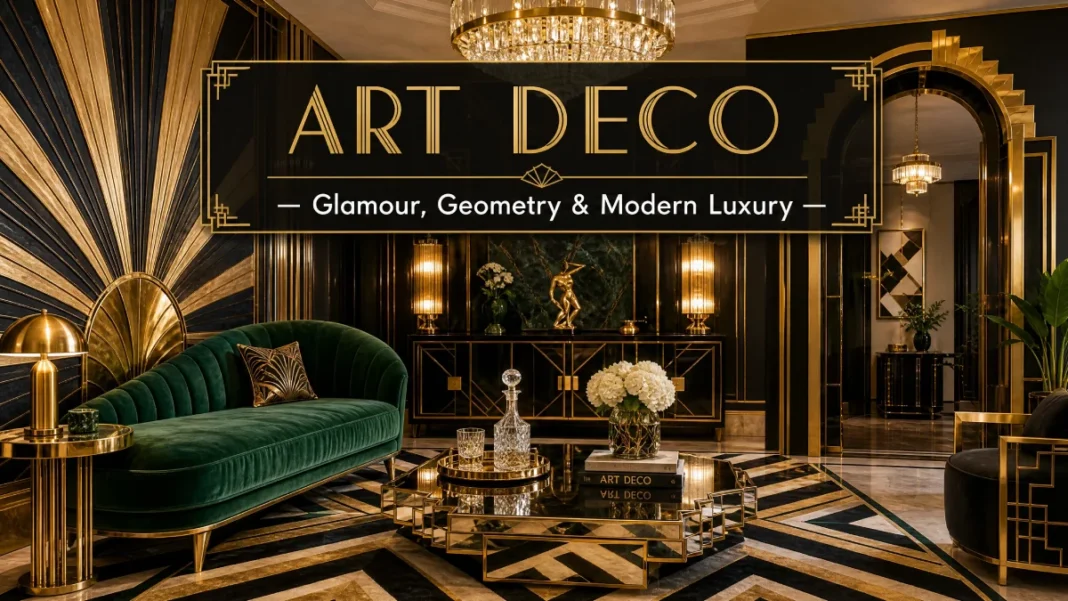
You walk into a room and feel it immediately—a quiet, electric hum of opulence. Strong lines pull your eye to a gleaming brass sunburst mirror above a lacquered console. A velvet emerald sofa invites you to sink in. The space feels both decidedly modern and nostalgic.
That’s the promise of Art Deco interior design. It’s not a dusty period piece you relegate to history books. It’s a living, breathing aesthetic that can turn a flat, uninspired home into a stage for everyday drama. But you may worry it’s too expensive, too theatrical, or too difficult to pull off without a degree in architectural history. It doesn’t have to be.
You’ll learn how the style emerged from the machine age, what defines it, and how to adapt its glamour for a modern space without blowing your budget.
You’ll find ideas for every room, a clear materials playbook, and a strategy to layer in that elegance one piece at a time.
The Origins of Art Deco: From 1920s Paris to Global Phenomenon
To use a style well, you need to understand its soul. Art Deco didn’t appear out of nowhere. It exploded onto the global stage at the 1925 Exposition Internationale des Arts Décoratifs et Industriels Modernes in Paris, a fair that rejected the flowing, organic lines of Art Nouveau and instead celebrated the machine age. Designers like Émile-Jacques Ruhlmann showcased sharp geometric forms, rich materials, and bold symmetry as symbols of progress and luxury.
The movement captured a world hungry for optimism after the First World War. Skyscrapers like the Chrysler Building rose in New York and Chicago, jazz pulsed through speakeasies, and the modern woman demanded interiors that matched her newfound independence. Art Deco answered with unapologetic glamour. It embraced influences from Cubism, the bold colors of the Ballets Russes, and the excavated treasures of King Tutankhamun’s tomb—a collision that made Egyptian motifs, stepped ziggurat forms, and exotic materials suddenly desirable.
By the 1930s, the style had traveled from luxury ocean liners into cinemas, hotels, and private homes across America, evolving into the streamlined version we now call Streamline Moderne. Understanding this journey reveals a core truth: Art Deco has always been about marrying technological progress with sensory pleasure. That same principle makes it suited to contemporary interiors.
Defining Characteristics of Art Deco Interior Design
Before you add a single lacquered box to your cart, you need to recognize the visual language. Art Deco speaks through a few unmistakable hallmarks.
Geometric Patterns and Symmetry
At its heart, Art Deco rejects clutter. It organizes space with deliberate symmetry and repeating motifs. Think sunbursts, chevrons, trapezoids, and stepped or fan-shaped patterns. You’ll spot them on everything from wallpaper to area rugs to the framing of a mirror. This geometry creates a visual rhythm that feels orderly yet energetic, never chaotic.
A classic entry point: a credenza with a sunburst veneer pattern in contrasting woods like walnut and ebony. If you’re on a budget, you can replicate the effect with a stenciled wall treatment using metallic paint over a deep charcoal base. The repetition of sharp angles tricks the eye into reading the surface as custom millwork.
Luxe Materials: Lacquer, Brass, and Mirrored Surfaces
Art Deco celebrates high-contrast finishes. Lacquered furniture—think deep black or ivory pieces buffed to a mirror-like shine—reflects light and adds a sense of jewelry-box luxury to any room. Designers of the era used multiple coats of resin to achieve that glassy depth, a technique that remains a mark of quality today.
Brass acts as the style’s gilded punctuation. You’ll find it in lighting, hardware, table legs, and decorative accessories. It warms up cooler tones and reads as inherently precious. Mirrored surfaces amplify light and make small rooms feel grand. A mirrored side table or a full mirror-paneled fireplace surround delivers that coveted Hollywood Regency crossover appeal without overwhelming the space.
Rich Textiles: Velvet, Silk, and Leather
Texture balances geometry’s hard edges. Velvet is the non-negotiable fabric here. Its dense pile catches light and shadow differently throughout the day, adding a tactile sense of depth. You’ll often find it on channel-tufted sofas or curved armchairs in jewel tones. Silk accent pillows offer a luminous counterpart, while leather—especially in cognac or deep navy—grounds the look with a more masculine, club-like warmth.
Don’t make the mistake of mixing these textiles haphazardly. Stick to a tight palette and let each fabric’s sheen and hand feel do the layering. A velvet sofa against a silk drape panel already creates enough interplay.
Art Deco Color Palettes: Jewel Tones, Black-Gold-White, and Beyond
Color orchestrates the whole experience. Art Deco palettes aren’t timid.
Classic Black, White, and Metallics
This high-contrast trio forms the foundation. A black-and-white checkerboard floor immediately announces Art Deco intentions. Against that monochrome canvas, polished brass or chrome elements read like jewelry. The secret to making this scheme feel modern is to introduce warm, matte textures—like a textured wool rug in ivory—so the room doesn’t read as sterile.
Jewel Tones: Emerald, Sapphire, Ruby
When you’re ready for color, go saturated. Deep emerald green, midnight sapphire, ruby red, and amethyst purple all evoke the era’s love for gemstone opulence. Use them on statement pieces—a jewel-toned velvet accent chair, lacquered nightstands, or an upholstered headboard. These hues feel luxurious because they mimic the depth of cut gems. Keep surrounding walls neutral, and let the color dictate the room’s focal point.
Pastel Art Deco (Miami Style)
The Miami Beach offshoot of Art Deco softened the palette to blush pink, mint green, and butter yellow, often paired with white and chrome. This variant works beautifully in sun-drenched rooms or coastal homes. It’s a lighter, more playful interpretation that still relies on curved architectural lines, speed lines, and porthole windows. You can channel it with a pastel lacquered bar cabinet or mint-green ceramic table lamps with brass bases.
Modern Art Deco: Adapting a Historic Style for Contemporary Homes
Art Deco can feel intimidating if you picture a full Gatsby mansion. The modern approach is about selective layering, not museum recreation.
The New Art Deco Minimalism
You don’t need gilded crown molding from floor to ceiling. Modern Art Deco strips away excess ornament but keeps the powerful silhouette. Think a sleek, low-profile velvet sofa with a single brass base rail, paired with an abstract geometric rug in charcoal and cream. The look relies on clean lines, a restrained palette, and one or two sculptural pieces—like a tripod floor lamp in polished nickel—to carry the narrative.
In this version, the wall color often stays a soft plaster-toned white, allowing a round black marble coffee table to anchor the seating area without any visual competition.
Art Deco Meets Mid-Century Modern
These two styles share a love of form and material quality. Marry them by combining a walnut mid-century sideboard with brass Art Deco drawer pulls and placing a scalloped fan mirror above it. The straight tapered legs of the sideboard speak Mid-Century, while the hardware and mirror deliver Deco glamour. The result feels collected, not themed.
Room-by-Room Guide to Art Deco Design
Theory is abstract. Here’s how to translate it into each space you actually live in.
Living Room
Start with an anchor: a channel-back velvet sofa in deep peacock blue or charcoal. Place it opposite a geometric fireplace surround in black marble or painted with a high-gloss enamel. Lighting does the heavy lifting here. Hang a multi-tiered brass and glass chandelier or install wall sconces with frosted glass fluted shades flanking a large piece of art.
Anchor the seating area with a rug that features a stepped or fan motif. Keep coffee table surfaces reflective—a brass and glass waterfall table works beautifully. The goal is a room that looks pulled together but also invites you to curl up with a book.
Dining Room
The dining room is Art Deco’s natural habitat. Choose a rectangular table with a high-gloss ebony or burl wood veneer top and sabre legs. Pair it with velvet-upholstered chairs with curved, channeled backs. Hang a deco-style pendant—perhaps an opaque glass globe etched with a geometric pattern—precisely centered above the table.
A bar cart plays a starring role here. Look for one in mirrored glass and brass and stock it with cut-crystal decanters. If you have wall space, a large sunburst mirror expands the light and visually doubles the room’s energy.
Bedroom
Your bedroom should feel like a suite at a grand hotel. Upholster the headboard in tufted gray velvet with a dramatic, soaring profile. Flank the bed with lacquered nightstands in ivory or midnight blue and top them with brass task lamps. Layer bedding in crisp white sheets, a silk accent pillow in champagne, and a throw folded at the foot.
Window treatments matter. Hang floor-to-ceiling silk or velvet drapes in a tone that matches the accent color of the room. The fabric’s weight communicates luxury even before you touch it.
Bathroom
Even a modest bathroom can channel Deco. Replace standard hardware with unlacquered brass faucets and towel bars. Add a round or arched mirror framed in thin brass above the vanity. If your budget allows a bigger transformation, choose a black and white hexagonal floor tile laid in a fan or border pattern. A fluted vanity cabinet painted in a dark, moody hue anchors the space. Finish with amber glass soap dispensers—details matter.
Home Office
An Art Deco home office feels authoritative but warm. Choose a desk with a leather-inlaid writing surface and brass campaign corners. A high-backed chair in oxblood or cognac leather provides comfort and presence. On the wall, a gallery wall in lacquered black frames arranged symmetrically enhances the organized, intentional vibe. A small marble and brass banker’s lamp completes the scene.
Key Materials That Define Art Deco
Understanding materials will sharpen your eye and prevent costly mistakes. Designers like René Lalique set the standard for the era’s material quality.
Brass and Polished Metals
Brass is the defining metal of the era, but it works best when you mix warm and cool tones intentionally. Unlacquered brass develops a living patina that feels authentic. Pair it with polished nickel or chrome in small doses—perhaps in bathroom fixtures—to add contrast. Avoid using brushed or matte black metals; they read too industrial and undercut the Deco mood.
Marble and Stone
Marble appears everywhere from flooring to fireplace surrounds. Classic choices include Calacatta Gold, Nero Marquina, and Emperador—stones with dramatic veining. You don’t need to slab an entire wall. A marble-topped drinks table or a set of turned marble bookends introduces the material’s cool weight without a renovation.
Mirrored and Glass Surfaces
Mirrored furniture reflects light and visually expands a room, but it must be used sparingly. One mirrored console in an entryway, layered with a lamp and a stack of art books, creates a moment of old Hollywood arrival. Consider antiqued mirror glass—it offers the shimmer without the stark perfection of modern mirror.
Lacquered Wood and High-Gloss Finishes
Lacquer achieves a depth no ordinary paint can replicate. A high-gloss painted ceiling in a deep teal or chocolate brown adds a surprising Deco punch while making the room feel taller. On case goods, lacquer in ivory or ebony feels both current and period-correct. If you can’t source authentic lacquered pieces, a high-gloss enamel applied to an old wood dresser can yield remarkably similar results.
How to Do Art Deco on a Budget
Luxury aesthetic doesn’t demand a luxury budget. Strategic moves make the style accessible.
Thrift and Vintage Finds
Estate sales, online auctions, and vintage shops are goldmines. Look for brass candlesticks, cranberry glass decanters, and framed prints of vintage travel posters. A single well-placed find—a 1940s waterfall nightstand with curved edges—costs far less than a new designer replica and carries genuine patina.
DIY Geometric Accents
You can paint a sunburst motif on an accent wall using a level, painter’s tape, and semi-gloss metallic paint. Apply the design behind a bed or sofa to create an instant focal point. Attach wood trim in trapezoid patterns to a plain flush door and spray-paint it high-gloss black for a custom Deco door that costs under a hundred dollars.
Paint and Wallpaper Transformations
A roll of peel-and-stick wallpaper featuring a fan or scallop pattern changes a powder room in a weekend. Choose a black and gold design for maximum impact. If wallpapering feels like too much, paint a bold color block arch on your wall—arches and curves were an Art Deco geometry staple—and mount a brass wall light within the painted shape.
Strategic Splurges
Put your budget into a few high-impact items. A statement semi-flush mount ceiling light with geometric brass arms costs more than a basic fixture but completely shifts the room’s character. Invest in heavy velvet drapes even if they’re ready-made; the weight and texture matter more than the brand. One quality sunburst mirror above a mantel or console does the work of a dozen smaller accessories.
Conclusion
Art Deco endures because it speaks to a deep human craving for order, beauty, and a little bit of theater. You don’t need an architectural landmark to capture it. You need bold shapes, a deliberate color palette, and a willingness to let reflective surfaces and rich textiles do the talking.
Start in one room. Find a vintage brass lamp with a stepped base. Paint a wall in a deep, glossy jewel tone. Hang a mirror that catches the afternoon light and scatters it across the ceiling. Every choice you make adds another note until your home hums with that unmistakable Art Deco frequency—rooted in history, yet utterly your own.

