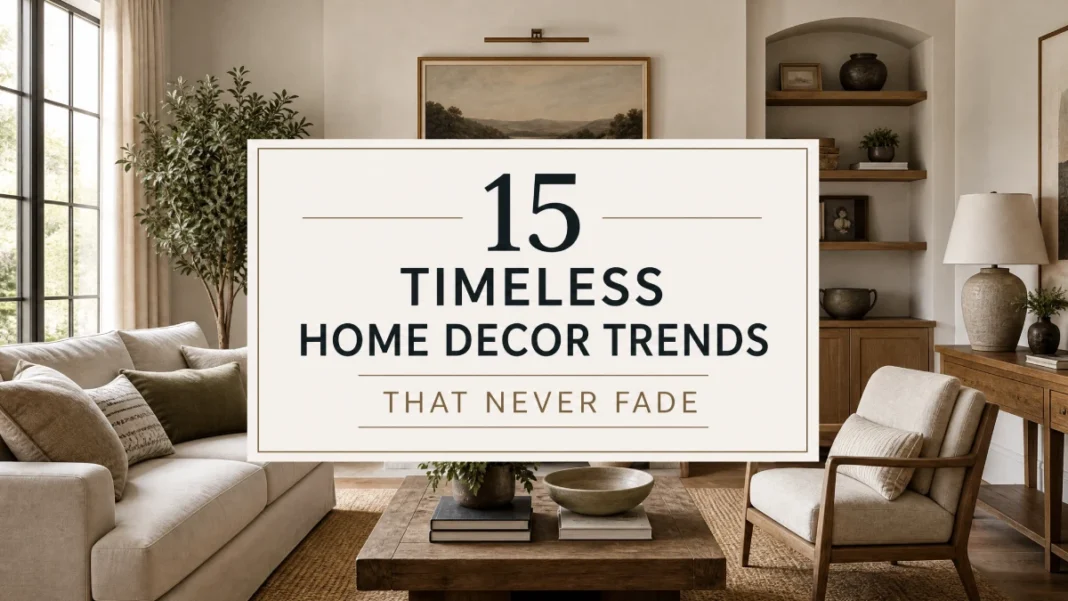
You’ve probably done it. You scroll through Pinterest, save a dozen photos, and buy the “it” accent chair. Six months later, it feels dated. The cycle is exhausting—and expensive.
What if you could create a home that feels current, luxurious, and completely you, without chasing the next big thing? The secret lies in timeless home decor trends—design moves that rely on quality, proportion, and comfort rather than fleeting fads.
This guide explores 15 enduring trends. You’ll find a clear explanation, a visual description, budget-friendly and premium incorporation methods, and a real room example from my design work.
Let’s build a space you’ll love for years.
1. Natural Materials
What It Is
Using raw, minimally processed materials like solid wood, stone, leather, linen, and wool. These elements bring organic warmth and texture that synthetic finishes cannot replicate. This approach aligns with biophilic design principles, connecting interiors to the natural world.
Visual Description
Picture a living room anchored by a reclaimed wood coffee table, a stone fireplace surround, and a sofa upholstered in oatmeal linen. The textures feel grounded and calm.
How to Incorporate
- Budget: Look for solid acacia or pine pieces at IKEA, shop thrift stores for wooden bowls and stone coasters, and use peel-and-stick stone veneer on a fireplace.
- Premium: Invest in a custom live-edge walnut dining table, marble countertops, or full-height limestone cladding.
Why It Stays Relevant
Natural materials connect us to the outdoors—a fundamental human need. Their imperfections (knots in wood, variations in stone) make a space feel authentic, not staged. This also contributes to a sense of sustainability and longevity in design.
In a Portland bungalow I styled, we paired oak floors with a honed black granite hearth. The mix of raw wood and cool stone gave the entire main floor a quiet, durable luxury.
2. Statement Lighting
What It Is
A statement light is a fixture that acts as the room’s focal point—think sculptural chandeliers, oversized pendants, or a dramatic floor lamp. It’s like jewelry for the ceiling, drawing the eye and defining the space.
Visual Description
Imagine a dining room where a large, multi-arm brass chandelier with exposed bulbs hangs low over a farmhouse table. It draws your eye immediately.
How to Incorporate
- Budget: The IKEA SINNERLIG pendant in natural cork or a West Elm sculptural capiz chandelier.
- Premium: A Visual Comfort Kelly Wearstler fixture or an Arteriors metal and alabaster design.
Why It Stays Relevant
Lighting serves a function, but when it doubles as art, it transforms a space beyond trends. A striking fixture anchors the room’s personality and provides ambient illumination.
For a Chicago client’s dining room, I hung an antique brass Sputnik chandelier. It became the conversation starter—bold but timeless.
3. Indoor Plants and Greenery
What It Is
Incorporating living plants as a key decor element. They soften hard edges, purify air, and add a vibrant, organic pop of color no paint can replicate. This practice enhances well-being and aligns with the growing emphasis on indoor air quality.
Visual Description
A corner filled with a tall fiddle leaf fig, shelves trailing with pothos vines, and a sturdy snake plant beside a console. The room feels alive.
How to Incorporate
- Budget: Pick up small succulents at the grocery store, repot into thrifted ceramic pots, and propagate pothos in glass jars.
- Premium: Order a mature 8-foot olive tree from a local nursery and place it in a custom fiberglass planter.
Why It Stays Relevant
Humans are drawn to nature—a phenomenon known as biophilia. Bringing plants indoors satisfies a primal craving for growth and calm, regardless of the decade. Studies show plants can reduce stress and improve focus.
In a tiny New York apartment, I placed a single tall sansevieria in a woven basket. It gave the room vertical height and a fresh, spa-like feel without consuming floor space.
4. Neutral Foundation with Pops of Color
What It Is
Building your core palette with whites, creams, beiges, and soft grays on walls and large furniture, then layering in vivid accents through pillows, art, and accessories. This creates a versatile backdrop for personal expression.
Visual Description
White walls, a performance-fabric sofa in warm sand, plus indigo linen pillows and a persimmon-toned area rug. Calm but never boring.
How to Incorporate
- Budget: Keep your existing neutral walls, and buy affordable cotton pillow covers in seasonal shades from H&M Home or Target.
- Premium: Upholster key pieces in high-quality neutral linen, then rotate in designer pillows from Schumacher or custom-dyed throws.
Why It Stays Relevant
A neutral base is the ultimate canvas. You can swap accessories for the price of a few cushion covers instead of replacing furniture. That flexibility makes it a lasting strategy, adapting to evolving tastes.
My own living room wears Benjamin Moore White Dove OC-17 on the walls. I change pillow shams every spring—this year, it’s a deep olive green—and the whole room feels fresh.
5. Layered Textures
What It Is
Deliberately mixing tactile surfaces—smooth, rough, nubby, glossy—so a room feels rich even if the color palette is simple. This adds sensory depth and visual interest.
Visual Description
A bedroom with a velvet headboard, a chunky wool throw, a linen duvet, a seagrass basket, and a glazed ceramic lamp. Every touch point invites you in.
How to Incorporate
- Budget: Combine a nubby cotton knit throw from Target with a shiny thrifted brass tray and a jute rug.
- Premium: Add a Mongolian sheepskin rug, silk velvet cushions, and a hand-turned wooden bowl.
Why It Stays Relevant
Texture creates depth and comfort that trends cannot erase. A room that feels good to touch always feels luxurious—a fundamental design truth, not a fad. It appeals to our haptic senses.
For a master suite in Austin, I layered a Belgian linen duvet with a faux fur throw and a flatweave wool rug. The client said it felt like a boutique hotel—every morning.
6. Vintage and Antique Accents
What It Is
Mixing pre-loved pieces—furniture, mirrors, art—that carry patina (the natural wear that comes with age). They add soul and a sense of history, telling a unique story.
Visual Description
A 1960s teak credenza against a modern white wall, topped with a pair of contemporary ceramic vases. The mix feels collected, not catalog-ordered.
How to Incorporate
- Budget: Scour Facebook Marketplace, thrift stores, and flea markets for a solid wood side table or a vintage brass lamp. A little wood polish works wonders.
- Premium: Shop 1stDibs or Chairish for authenticated mid-century pieces, or visit antique fairs for genuine 19th-century mirrors.
Why It Stays Relevant
Mass-produced trends come and go. A piece with a story is one of a kind. It grounds your home in character that does not expire, contributing to a more sustainable decor approach.
I found a beaten-up teak credenza at a garage sale for $80. A light sanding and new oil revealed honey tones. Now it anchors a client’s entryway and stores shoes beautifully.
7. Symmetry and Balance
What It Is
Arranging furniture and decor in mirrored pairs to create visual order. Symmetry calms the eye and makes a space feel intentionally designed, evoking a sense of harmony and stability.
Visual Description
A sofa centered on the wall, flanked by matching end tables and identical ceramic table lamps. Above, a single large artwork hangs dead center.
How to Incorporate
- Budget: Buy two identical table lamps from Target, place them on either side of your bed, and use matching pillow shams.
- Premium: Commission custom-matched console tables and sconces from a local cabinetmaker.
Why It Stays Relevant
Our brains are wired to find balance pleasing. Symmetry is a classical design principle used in architecture for centuries, from ancient Greek temples to Renaissance palaces. It always reads as elegant and timeless.
In a symmetrical living room I designed, tall white bookcases flanked the fireplace on both sides. The balanced arrangement made the 12-foot ceiling feel grand but never cold.
8. Black-and-White Contrast
What It Is
A crisp, high-contrast pairing of black and white. It’s graphic, clean, and works in every style from farmhouse to ultra-modern, offering a bold yet sophisticated aesthetic.
Visual Description
White shaker cabinets topped with black honed granite, a black metal-framed mirror, and a monochrome patterned tile floor. The contrast reads as intentional confidence.
How to Incorporate
- Budget: Spray-paint builder-grade doorknobs matte black, frame black-and-white photographs with white mats, or paint an interior door in Benjamin Moore Black.
- Premium: Install black steel-framed glass interior doors or a custom marble checkerboard floor.
Why It Stays Relevant
Black and white is the fashion equivalent of a little black dress—it’s immune to passing trends. The palette feels fresh every time you add a new accent, providing a foundation for other colors to pop.
A small galley kitchen I refreshed got a $200 makeover: white walls, black cabinet hardware, and a simple black-stained butcher block counter. It looked instantly more expensive.
9. Built-In Storage and Shelving
What It Is
Furniture or millwork that appears custom-fitted to the architecture—floor-to-ceiling bookcases, window seats with drawers, alcove shelving. This maximizes space and creates a seamless look.
Visual Description
A wall of white built-ins around a media console, with closed cabinets below and open shelves above, styled with books, plants, and ceramic objects.
How to Incorporate
- Budget: Use IKEA BILLY bookcases, secure them together, and add crown molding at the top for a built-in look.
- Premium: Hire a finish carpenter to create floor-to-ceiling cabinetry with integrated lighting, often seen in custom luxury homes.
Why It Stays Relevant
Storage never goes out of style, and when it’s tailored to your space, it elevates the entire room’s architecture. It’s function dressed in bespoke clothing, essential for maintaining an organized and uncluttered home.
In a home office, I designed a full wall of white open shelving mixed with lower cabinets. It held everything from files to plants—and the room felt twice as organized.
10. Oversized Wall Art
What It Is
A single large-scale piece of art or photography that dominates a wall, creating instant drama and focus. Scale is what makes it timeless, providing a powerful visual anchor.
Visual Description
A 4-by-6-foot abstract canvas in moody blues and charcoal floating above a low-profile sofa. No other art competes—it’s the hero.
How to Incorporate
- Budget: Stretch a canvas yourself, apply abstract strokes with leftover wall paint, or have a high-resolution photo printed on canvas from an online service like CanvasPop.
- Premium: Commission an original painting from a local emerging artist or invest in a limited-edition print from a gallery, such as those found at Saatchi Art.
Why It Stays Relevant
Art is personal expression, not a trend. A large piece gives a room a gallery feel that smaller decorations cannot match. It’s a decision you’ll never regret, offering a significant focal point.
In a narrow hallway, I hung a single oversized black-and-white photograph of a beach horizon. The scale made the corridor feel wider and destination-worthy.
11. Quality Hardware and Fixtures
What It Is
The small, touchable details you interact with daily—cabinet knobs, door handles, faucets, switch plates. Upgrading them is like tailoring a suit, adding a refined finish to a space.
Visual Description
Unlacquered brass knobs on deep navy cabinets, a matte black kitchen faucet with a pull-down sprayer, solid brass hinges on interior doors.
How to Incorporate
- Budget: Swap builder-grade chrome knobs for affordable matte black or brushed brass pulls from Amazon or Home Depot.
- Premium: Choose Waterworks or Rejuvenation hardware in living finishes like unlacquered brass that ages beautifully, developing a unique patina over time.
Why It Stays Relevant
Details communicate quality instantly. The weight of a solid handle or the gleam of real brass signals luxury without a full renovation. It’s a lasting upgrade that enhances daily living.
A client’s dated oak kitchen got a $300 refresh. We replaced all hinges and handles with matte black options and added a new faucet. The kitchen felt brand new.
12. Maximizing Natural Light
What It Is
Designing to capture and enhance daylight using mirrors, sheer window treatments, and strategic furniture placement. It’s about creating an airy, open feel that promotes well-being and reduces reliance on artificial lighting.
Visual Description
A bright living room with floor-to-ceiling linen sheers, a large antiqued mirror opposite the window, and light-toned upholstery that bounces sun around.
How to Incorporate
- Budget: Remove heavy drapes, hang simple white cotton curtain panels from IKEA, place a thrifted full-length mirror across from the brightest window.
- Premium: Install solar shades for UV protection and custom antiqued mirror panels cut to size, often used in high-end interior design.
Why It Stays Relevant
Light makes any space feel larger, cleaner, and more welcoming. The desire for a sunlit home transcends every design era, influencing mood and productivity.
In a north-facing condo, I swapped blackout curtains for ivory linen and positioned an oversized mirror opposite the sliding door. The room immediately felt airy and serene.
13. Classic Patterned Rugs
What It Is
Rugs with enduring motifs—Persian, Oriental, kilim, or simple tone-on-tone stripes. These patterns have decorated floors for centuries, adding warmth, color, and acoustic benefits.
Visual Description
A faded Persian rug in ruby and navy tones layered under a round dining table, its time-worn look adding instant soul to a new build.
How to Incorporate
- Budget: Find vintage-inspired washable rugs at Ruggable or look for affordable wool-blend options at Rugs USA.
- Premium: Invest in a hand-knotted, naturally dyed wool rug from a specialist dealer or during a trip abroad, ensuring unique craftsmanship.
Why It Stays Relevant
Classic patterns hide wear and spills beautifully. They’ve been woven for generations—proof that great design does not need a refresh date. These rugs often become cherished heirlooms.
I layered a long vintage Turkish runner in a client’s galley kitchen. It softened the hard tile, added rich color, and handled foot traffic well.
14. Arched Architectural Details
What It Is
Soft, curved shapes in doorways, wall niches, mirrors, and even painted accent walls. The arch borrows from classical architecture and feels both grand and gentle, adding a touch of historical elegance.
Visual Description
A shallow arched alcove in a hallway, painted a shade darker than the walls, with a slim console and a small vase. It’s an unexpected, elegant pause.
How to Incorporate
- Budget: Hang an arched mirror from a retailer like Anthropologie or target a wall and paint a freehand arch using a color-block technique (many tutorials online).
- Premium: Hire a carpenter to create arched pass-throughs between rooms or to build custom arched niches with integrated lighting, a feature often seen in bespoke homes.
Why It Stays Relevant
The arch has been used since Roman times. Its soft line balances the straight edges of most rooms, adding a timeless architectural note that provides visual relief and sophistication.
For a powder room, I found a tall arched black metal mirror. Against the white shiplap, it became the room’s focal point and made the ceiling feel higher.
15. Multifunctional Pieces
What It Is
Furniture that performs double duty—a storage ottoman, an extendable dining table, a daybed that serves as a guest bed. It’s smart design for real life, especially in smaller living spaces.
Visual Description
A storage bench in the entryway with shoe cubbies inside, topped with a comfy cushion. In the living room, a lift-top coffee table reveals blankets and board games.
How to Incorporate
- Budget: Choose a fabric ottoman with hidden storage from Target, or use a vintage trunk as a coffee table that stores pillows.
- Premium: Commission a custom window seat with drawers or a dining table with butterfly leaves crafted by a local woodworker, maximizing both utility and aesthetics.
Why It Stays Relevant
Practicality never goes out of style. As homes get smaller and lives get busier, pieces that work harder for you remain essential. This trend reflects a pragmatic approach to interior design.
I once used a large vintage steamer trunk as a coffee table in a compact living room. It stored extra throws, looked incredible, and cost $120 at a flea market.
At a Glance
| Trend | Budget Idea | Premium Idea |
|---|---|---|
| Natural Materials | IKEA solid wood table, stone coasters | Custom live-edge walnut dining table |
| Statement Lighting | IKEA SINNERLIG pendant | Visual Comfort brass chandelier |
| Indoor Plants | Grocery store succulents in thrifted pots | Mature olive tree in custom planter |
| Neutral Foundation | Swap pillow covers seasonally | Designer upholstery in neutral linen |
| Layered Textures | Cotton throw + jute rug | Mongolian sheepskin + silk cushions |
| Vintage Accents | Facebook Marketplace finds | Authentic antiques from 1stDibs |
| Symmetry | Two matching table lamps from Target | Custom-matched consoles |
| Black-and-White | Paint interior doors black | Black steel-framed glass partitions |
| Built-Ins | IKEA BILLY with crown molding hack | Custom carpenter-built shelving |
| Oversized Art | DIY abstract canvas | Commissioned original painting |
| Quality Hardware | Matte black pulls from Amazon | Unlacquered brass Rejuvenation pieces |
| Natural Light | Remove heavy drapes, add mirror | Solar shades + custom antiqued mirrors |
| Patterned Rugs | Ruggable washable vintage-style | Hand-knotted wool Persian rug |
| Arched Details | Arched mirror or painted arch | Carpenter-created arched pass-through |
| Multifunctional | Storage ottoman from Target | Custom window seat with drawers |
Conclusion
Timeless design is not about following a rigid list—it’s about understanding what makes a space feel genuinely good, decade after decade. Quality materials, personal meaning, and comfort will always be in style.
Start with just one trend that speaks to you. Swap your light fixture, introduce a vintage piece, or paint an arch—small moves create big, lasting impact.
Which of these 15 trends will you try first? Tag me with your before-and-after or leave a comment below—I’d love to see how you make your home feel luxe and timeless, your way.

