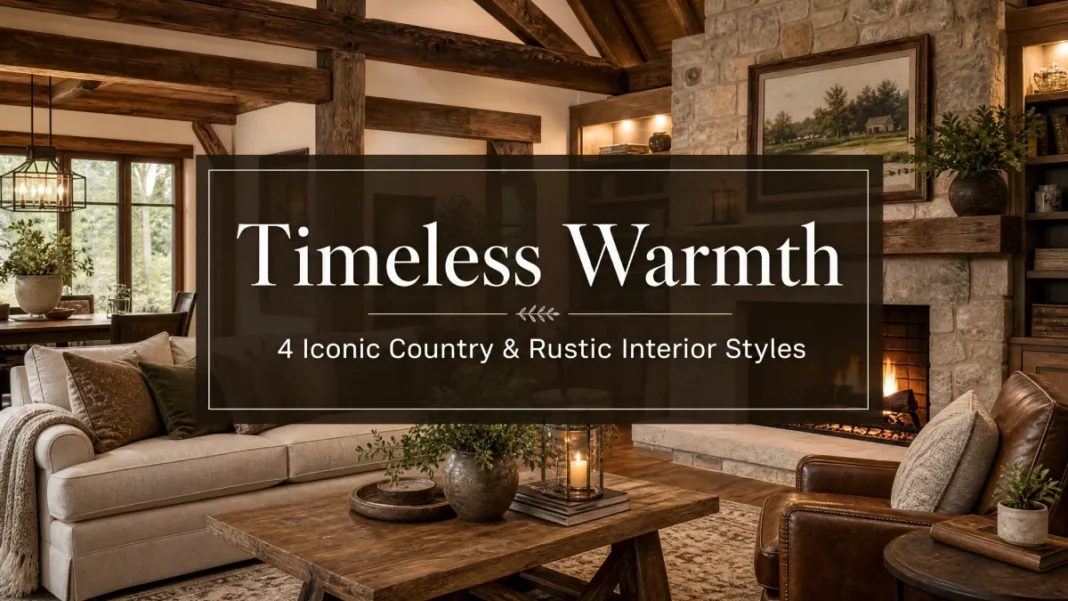
Your hand instinctively reaches for a rough-hewn wooden bowl; your eye rests on the patina of a time-worn stone floor. This is a craving for authenticity in a mass-produced world. You want your home to feel rooted, not merely decorated. The challenge is that “country and rustic interior design” has become a catch-all phrase, often leading to a cliché-themed room rather than a genuinely soulful home.
You sense the depth beneath the surface, recognizing the vast difference between the sun-bleached elegance of a Provençal farmhouse and the shadowy, collected warmth of an English cottage. Achieving the right aesthetic isn’t about following rules; it’s about understanding the raw materials and historical essence of each distinct style.
This guide decodes four foundational sub-styles:
- French Country
- American Farmhouse
- English Cottage
- Rustic Modern
You will learn about their materials, paint palettes, signature furniture, and how to blend them into a collected, personal, and warmly luxurious home, regardless of budget.
Let’s cultivate a home with soul.
The Material Dictionary: The Soul of Rustic Design
Before dissecting the styles, understanding the language of materials is essential. These non-negotiables ground each look. Without these textures, you are merely arranging furniture.
Reclaimed Wood: The Great Storyteller
This is more than just brown wood. Seek timber with history—hand-hewn beams with adze marks, flooring with old nail holes, or a dining table crafted from salvaged barn siding. Look for a dry, almost grayed patina. Avoid glossy polyurethane finishes; instead, opt for a hand-rubbed wax or a matte, penetrating oil finish that feels alive. The visual weight of a thick, 3-inch reclaimed oak mantel anchors a room in a way new lumber cannot.
Natural Stone: The Unmovable Anchor
Rustic stone should not feel slick. Opt for tumbled limestone, honed slate, or irregular fieldstone. Consider a French farmhouse sink carved from a single block of Pierre de Bourgogne or a rough-stacked stone fireplace wall in an English cottage. Mortar joints should be imperfect, perhaps even slightly feathered. Modern rustic homes use the same stone in a more linear, large-format application to bridge old and new.
Wrought Iron & Unlacquered Metals
Shiny chrome detracts from rustic warmth. Metals should feel dense and dark, hand-forged. Look for wrought iron with a living, unlacquered finish that will darken and age gracefully. Examples include strap hinges on a thick plank door, a candelabra with dripped wax, or cabinet pulls with subtle blacksmith hammer marks. Unlacquered brass and oil-rubbed bronze follow the same philosophy—they are metals that breathe.
The Softeners: Linen, Burlap & Grain Sack
A warm space cannot be built with wood and stone alone; the tension comes from soft, tactile textiles. Belgian linen is a key fabric, offering a slubby texture and a matte, powdery finish that drapes beautifully in natural, undyed tones. Heavy burlap is ideal for casual accents. Authentic grain sack fabric, with its simple ticking stripes, adds a graphic yet honest layer of history. These fabrics transform a hard chair into an invitation.
The 4 Pillars of Country & Rustic Style
With these raw ingredients, let’s explore four distinct recipes. The same materials can tell entirely different stories.
French Country: Elegantly Timeworn
This style embodies sun-drenched Provençal farmhouses and grand châteaus softened over centuries. The look is never fussy, always graceful, with luxury found in the patina. Consider a Louis XV-style armchair with its gilded finish gently worn to reveal the gesso beneath, upholstered in a muted, floral toile.
- The French Country Color Palette: The foundation is warm and plaster-like: warm whites such as Benjamin Moore’s White Dove OC-17, buttery creams, and the soft, golden-gray of natural limestone. Accents include faded lavender, celadon green, and the softest Provençal blue. Dusty earth pigments create a sun-faded effect on plaster walls.
- Signature Furniture Pieces: Seek curved lines, but not the formal ones of Versailles. A buffet à deux corps (two-part china cabinet) in solid oak with carved floral details serves as a centerpiece. A farmhouse table with a thick, scrubbed top and gracefully turned, rather than chunky, legs is essential. Fauteuil chairs with open arms invite prolonged seating.
American Farmhouse: Honest & Sturdy Simplicity
Disregard the overly staged, sign-heavy “modern farmhouse” prevalent on social media. True American Farmhouse is rooted in Shaker principles of utility and honesty, where every item served a purpose. Its beauty lies in pure, unadorned form. A peg rail was functional, holding daily necessities. A simple trestle table was built to feed many.
- The American Farmhouse Color Palette: This crisp, clean palette features bright, practical whites like Sherwin-Williams’ Pure White SW 7005 on planked walls and cabinetry. Warm, mid-tone woods ground the space. Subtle, functional accents include deep indigo, barn red, and sage green, often in simple striped or solid textiles.
- Signature Furniture Pieces: A large, utilitarian harvest table with simple turned legs or a trestle base forms the heart of the home. A Hutch or Hoosier cabinet displays plain white ironstone pitchers and bowls. Windsor chairs, with their sculptural spindles, and simple, wood-framed settle benches are the workhorses of this style.
English Cottage: Collected, Cozy, and Comfortably Cluttered
This is not minimalism. English Cottage style deeply embraces pattern and history. It’s inherently a small-space style, designed for curling up with a book as rain patters outside. Walls might be a deep, moody color, covered in framed botanical prints in mismatched frames. It’s an organized chaos of beloved objects—brass candlesticks, stacks of vintage porcelain, and worn Oriental rugs layered on a flagstone floor.
- The English Cottage Color Palette: Here, immerse yourself in color. Walls are often painted in the deep, complex tones of Farrow & Ball’s ‘Mouse’s Back’ No. 40 or a warm, chalky ‘Setting Plaster’ No. 231. The palette is a jewel box of mossy greens, ochre yellows, and dusty pinks, all grounded by dark-stained woodwork.
- Signature Furniture Pieces: Comfort is paramount. A deep, roll-arm sofa layered with mismatched floral and paisley cushions is essential. Pieces rarely match but often share a similar period—a Victorian side table next to a 1920s wingback chair. A gate-leg table is perfect for small spaces, and a well-worn chaise lounge invites afternoon naps.
Rustic Modern: The Clean-Lined Contrast
This style bridges a minimalist new build and the soul of a mountain retreat. Rustic Modern thrives on tension. A massive, live-edge walnut slab table sits under a stark, sculptural white pendant light. A rough-stacked stone wall becomes art in an otherwise clean white room, framing nature’s raw power with precision.
- The Rustic Modern Color Palette: The backdrop is a restrained gallery white like Benjamin Moore’s Chantilly Lace OC-65. The palette is monochromatic and tonal: warm greige, charcoal, blackened steel, and the singular, powerful color of one massive natural wood element. This approach removes visual noise, allowing the grain of a single wood slab to be the star.
- Signature Furniture Pieces: Organic, sculptural forms take center stage. A live-edge console table or a monolithic stone coffee table is typical. Low-profile, unfussy sectionals in raw, nubby linen or performance bouclé are favored over patterned upholstery. The key is to showcase construction—exposed joinery, raw steel legs, and minimal, purposeful design.
Modern Rustic Blending: The Art of the Mix
A pure aesthetic can feel like a costume. Your home should reflect you. The real magic happens when you confidently blend these pillars, transforming good design into personal art.
The 80/20 Rule of Fusion
Choose your core style. For an open-plan, suburban home, 80% might be Rustic Modern—clean lines and white walls. The remaining 20% can be English Cottage, introduced through a deeply colored, high-gloss painted study nook and a collection of vintage oil paintings. For a classic Colonial, 80% might be American Farmhouse, with a 20% injection of French Country via a gilded mirror and a pair of elegant, cane-back dining chairs. This 20% becomes an intentional, not chaotic, accent.
Toile Meets Concrete: Practical Blending Examples
Picture a crisp, Rustic Modern kitchen with flat-front white oak cabinets and a honed concrete floor. Place a single French Country centerpiece on the island—a large, gracefully aged wooden dough bowl overflowing with dried lavender and olive branches. The modern backdrop elevates the rustic object to sculpture.
Or, imagine an American Farmhouse dining room with a classic plank wall. Instead of a traditional chandelier, hang a Rustic Modern linear light made of hammered black iron and raw linen. The modern scale and form completely refresh the farmhouse setting.
A Room-by-Room Guide to Cultivating Warmth
Let’s apply these principles to your floor plan. A period-specific home is not required; rather, the right design choices are.
The Living Room
Your living room’s success hinges on its tactile quality. Start with a natural fiber rug in heavy sisal, jute, or chunky wool, providing the organic texture that defines all rustic styles. A Rustic Modern room might then introduce a sleek, deep sofa, while an English Cottage room layers in a floral settee.
The key lies in the mix of textiles. Drape a chunky, cable-knit wool throw over a sleek linen sofa arm. Place a burlap-covered ottoman next to a polished nickel side table. Lighting must be warm and layered. Replace overhead lights with floor and table lamps featuring linen or parchment shades that diffuse a soft, golden glow.
The Kitchen
A truly rustic kitchen should not feel like it arrived in a single truckload of boxes. It should feel assembled over time, even if renovated all at once. The concept of the unfitted kitchen—using freestanding pieces instead of built-in walls—is a powerful tool. Choose a vintage butcher block on casters instead of a fixed island. Use a massive, freestanding French country armoire to store dishes instead of upper cabinets.
Mix materials purposefully. Pair honed soapstone countertops on the perimeter with a single, monumental wood block for your baking center. Embrace the evidence of your hands. An open shelf holding a collection of chipped ironstone pitchers is not clutter; it’s a still life of daily life.
The Dining Room
The dining table is a powerful storyteller. In a rustic home, it should never be precious. Seek a table whose surface invites touch, revealing its grain and imperfections. A 10-foot solid wood table with a distressed, timeworn finish is more forgiving and soulful than a pristine, high-gloss one.
Mismatched wooden chairs are a classic choice, but for a more unified look, combine a uniform set of sculptural black ladder-back chairs with a contrasting wood table. The dark, clean lines of the chairs will beautifully frame the organic table. Use textiles as unifiers; a long, simple linen runner provides a neutral stage for a collection of bud vases and flickering beeswax candles with years of drips.
The Primary Bedroom
This space should whisper. Your bed is the focal point. For a French Country look, an upholstered headboard in a soft, muted floral or raw linen with a curved, feminine silhouette sets the tone. For Rustic Modern, a massive, low-profile wood headboard with a live edge or a simple panel of fluted wood acts as a grounded focal point.
Bedding is paramount. Use natural fiber layers exclusively—start with a textured linen duvet cover, add a quilt in a faded solid or ticking stripe, and top with a heavier wool or cotton blanket at the foot. What is unseen is as important as what is seen. Hide a sleek, modern phone charger inside a vintage wooden recipe box on your nightstand. Technology should be concealed to preserve the sanctuary.
How to Find the Sourcing Blueprint?
Cultivating this look does not require a bottomless trust fund. It requires a sharp eye and a strategic plan. The goal is a home that feels collected, not catalog-ordered.
New Pieces That Honor the Past
Focus your budget on anchor pieces: a sofa with a lifetime frame, a solid wood table. Then, use big-box retailers with precision. An IKEA IVAR cabinet transforms into a custom-looking piece with a coat of deep, matte green paint and unlacquered brass hardware from a specialty supplier. Look for “shaker-style” nightstands at mainstream stores and swap generic knobs for iron cup pulls. The key is to always replace one mass-produced element with a tactile, hand-finished one.
Vintage Terminology Mastery
Become fluent in the language of resale sites. Instead of searching “old wood table,” use high-intent terms that signal quality:
- French Commode
- Wabi-Sabi Vessel
- Gustavian Bench
- Antique Grain Sack
- Ironstone Pitcher
- Trestle Table
These specific phrases bypass the noise and lead directly to pieces with the right character. Check Facebook Marketplace during weekday mornings for new inventory. Seek architectural salvage yards for doors, mantels, and hardware.
Conclusion
Country and rustic interior design is not about recreating a specific era; it’s about curating an atmosphere of enduring warmth through honest materials. The most important takeaway is this: The soul of a rustic home is the tension between the soft and the hard, the old and the new, the simple and the elegant. Let real wood, stone, and linen speak, and each carefully chosen piece will tell a chapter of your story.
Start small. Identify one mass-produced item in your home today that you can replace with something handmade, textured, or beautifully time-worn. A single object with genuine patina can change a room’s gravitational pull. What piece in your home would you love to find a more storied, rustic version of? I’d love to hear—and I might have a sourcing lead for you.

